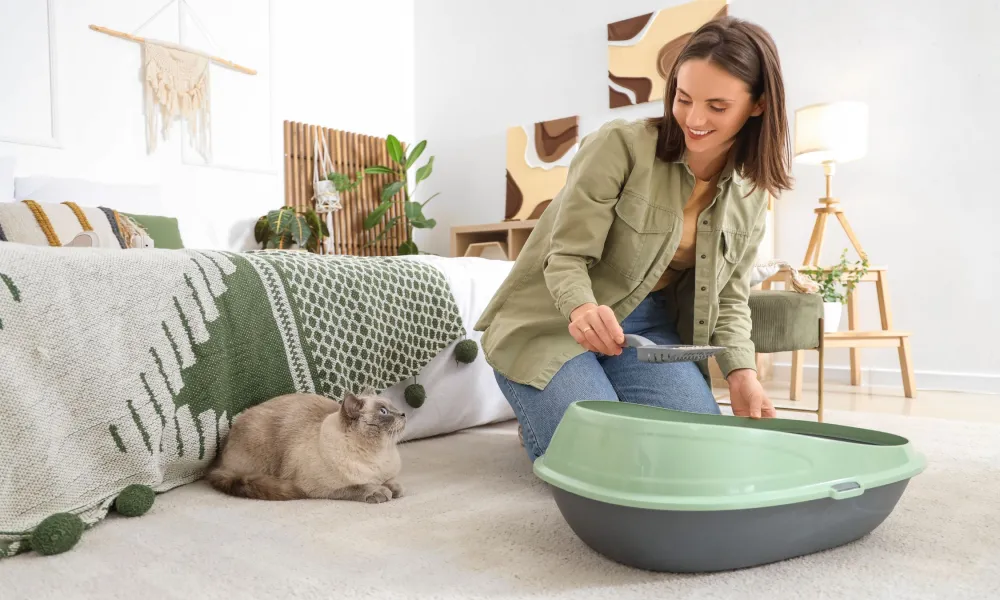

Cats are famously clean animals, but their litter boxes do not always meet their standards. Experts say one of the most common mistakes owners make is choosing a setup that suits them rather than their cat.
The number of boxes, their size and location, the type of litter and how often they are cleaned can all influence whether a cat is comfortable using them.
How many litter boxes?
A widely recommended rule is one litter box per cat, plus one extra. A home with two cats should therefore ideally have three.
In multi-storey homes, having a box on each floor can also help. While some cats happily share, others may avoid a box used by another cat, particularly when there is tension between them.
Get the setup right
Experts recommend a box about 1.5 times the cat’s length, measured from its nose to the base of its tail. This gives it enough room to turn, dig and bury waste comfortably.
Most cats also prefer open boxes, which provide a wider view of their surroundings and do not trap odours as much as enclosed designs.
Location matters too. Choose somewhere quiet and easily accessible, but avoid placing the box in a confined corner where the cat may feel trapped. Keep it away from noisy appliances, heavy foot traffic and the cat’s food and water.
For litter, many cats prefer unscented, clumping varieties with a fine or medium texture. Around five to eight centimetres of litter is generally enough for comfortable digging and covering.
How often should you clean it?
Litter should generally be scooped at least once a day, and more frequently when several cats use the same box.
How often the entire litter needs replacing depends on the type. Some paper or pine products require changing every few days, while clumping clay litter can last considerably longer if maintained properly.
The box itself may need replacing every one or two years, particularly if the plastic becomes heavily scratched, as damaged surfaces can retain bacteria and unpleasant smells.
Signs your cat is unhappy
A cat may be signalling a problem with its litter box if it:
- Perches on the edges instead of stepping into the litter.
- Rushes in and out with little digging.
- Scratches the surrounding floor or walls.
- Cries or meows unusually around the box.
- Starts avoiding the litter box altogether.
The last sign is particularly important.
Cats do not normally eliminate outside their box out of spite. A sudden change could indicate that the box is dirty or uncomfortable, but it can also be a sign of an underlying medical problem.
Owners should avoid punishment and contact a veterinarian if accidents begin suddenly or persist. Keeping the litter box clean is also important for reducing the risk of painful urinary problems.
Ultimately, the simplest rule is to pay attention to what your cat is telling you. A clean, accessible and appropriately sized litter box can make a surprisingly big difference.
Source: The Guardian