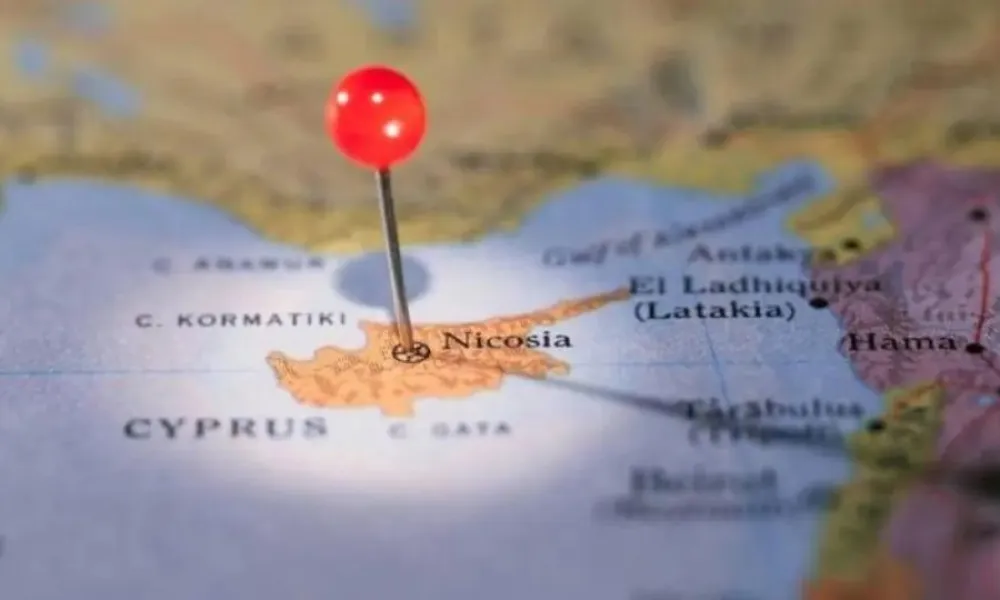
Maria Angela Holguin, the UN Secretary-General’s personal envoy for the Cyprus problem, began on Friday (5/12) separate meetings with Cypriot President Nikos Christodoulides and Turkish Cypriot leader Tufan Erhürman. On Thursday (11/12) she will hold a joint meeting as part of a systematic effort to restart negotiations.
The UN sees that one previously unmanageable obstacle has now been removed: the two Cypriot leaders publicly share the goal of a bizonal, bicommunal federation with political equality. But everyone knows that this alone is not enough. In the past, both sides entered full-scale negotiations very quickly, as in 2008 after the traumatic referendum and the election of Demetris Christofias, and again in 2015 with rapid convergences and great optimism following the election of Mustafa Akıncı.
A pattern of failures
Traditional-style negotiations follow a decades-long pattern. Although they may seem logical for difficult, frozen international conflicts, in the case of Cyprus they often serve as an alibi for perpetuating endless talks. They ultimately collapse because the leaders avoid assuming responsibility for final decisions.
Over time, the Cyprus issue has accumulated layers of deadlock and the credibility of leadership on both sides has been severely damaged. Globally, no one dares predict a positive outcome. The UN and Secretary-General António Guterres still carry the painful memory of the collapse at Crans-Montana in 2017.
The behaviour of key players at the ill-fated dinner, with Nicos Anastasiades unfortunately standing out, stunned international participants. Within moments, everything fell apart. Guterres made the procedural mistake of closing the Conference instead of adjourning it, providing an escape route for those who wished to walk back agreements. The Cyprus issue then entered a deep freeze for almost eight years.
Commitments
Holguin’s mission in the coming weeks is crucial: to record genuine commitments free of evasions and tactical manoeuvres. After Cyprus, she will travel to assess how aligned the guarantor powers are, especially Turkey but also Greece, in preparation for the next step, the third informal expanded meeting under Guterres early next year, the so-called five-party meeting.
Under certain conditions, 2026 could become a decisive year. But immediate steps are also needed. The UN cannot continue to be exposed to fruitless discussions on minor issues without even basic confidence-building measures that would improve the climate. It is no coincidence that after years of inaction, work was suddenly announced on widening the Agios Dometios crossing in western Nicosia, where thousands queue daily to cross the Green Line. A few days earlier, the expansion of the Pedieos linear park toward the Turkish Cypriot sector was also announced. These projects had been shelved for years without interest from Cypriot leaders.
“Different”
The UN knows that even a well-structured negotiation could easily end in another disastrous failure, with consequences even more serious than in the past. This is why Guterres wants things to be done differently this time before any formal negotiations begin. His phrase “this time must be different” reflects the tone of his written reports to the Security Council. But the Greek Cypriot leadership paid little attention, partly because of the hardline stance of Ersin Tatar.
This reference comes from a statement Guterres issued on 25 November 2019 when he last met Anastasiades and Akıncı. Guterres’ aim then was to secure “terms of reference based on the six-point framework of 30 July 2017, which will serve as a starting point for consensual, step-by-step, meaningful and results-oriented negotiations as soon as possible” (UN statement, Berlin, 19/11/2019). This is the mandate he has now given Holguin in an effort to recover the negotiating acquis.
The Guterres framework
It is worth recalling that Anastasiades previously claimed there was no written “Guterres framework”. His closest associates, current President Christodoulides and former negotiator Andreas Mavroyiannis, publicly asserted that there were “two Guterres frameworks” with different dates, relying on notes taken by the Greek Cypriot side.
These tactics were clearly intended to buy time until Turkey sidelined Akıncı. Akıncı later stated (29/11) that he went to Berlin without Turkey’s consent and spoke openly of the “two-state” idea Anastasiades floated to Çavuşoğlu at Crans-Montana. Alexis Tsipras also revealed (24/11) in his book Ithaki that Anastasiades deliberately sought to short-circuit the negotiation and collapse the Conference.
Prerequisites
This review matters because President Christodoulides now faces a dilemma in dealing with Erhürman. He has repeatedly said he wants talks to resume as soon as possible from where they were interrupted, but without offering concrete commitments. Recently he expressed hope “to achieve, without terms or preconditions, the resumption of talks from where they were interrupted in the summer of 2017 and to reach a final solution” (statement 15/11 on the anniversary of the declaration of the pseudo-state). Such a position is unrealistic and insufficient for the UN, which knows exactly where discussions ended regardless of notes or evasions. Guterres expects clear details: where disagreements lie and what deviations exist from previous convergences. Only with such answers can he determine the methodology for restarting negotiations.
But can a political negotiation truly unfold through the equivalent of police-style questioning in separate rooms?
Christodoulides knows that whatever applies to him must also apply to Erhürman and to Turkey. The key difference this time is that the Greek Cypriot side will be expected to bear the responsibility of laying its cards on the table under UN pressure if it genuinely wants progress.
Will it do so?