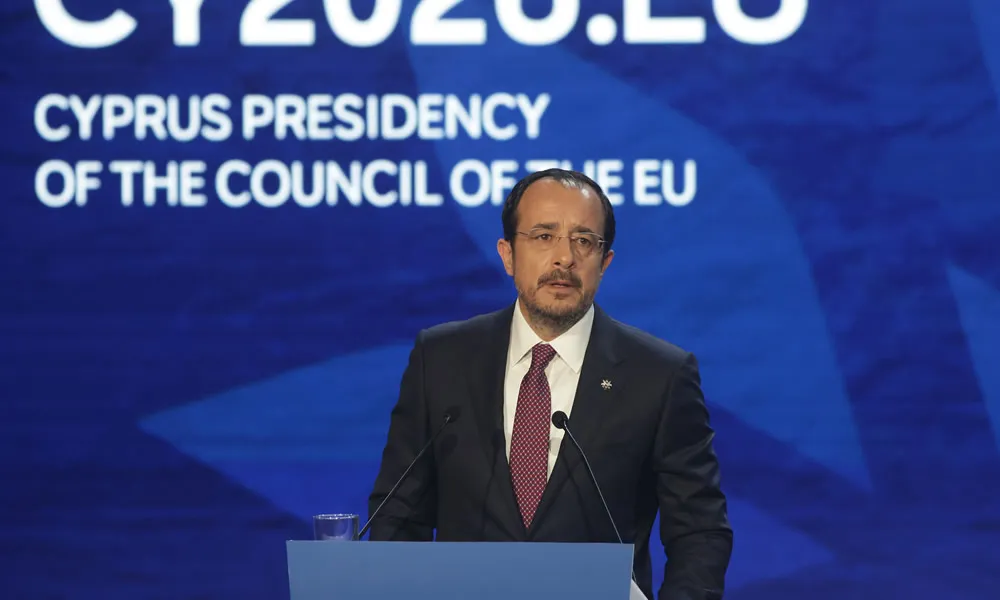

Cyprus’ EU Presidency and the controversial video alleging corruption between government and business have dominated the local news cycle this month, pushing the Cyprus issue down the pecking order.
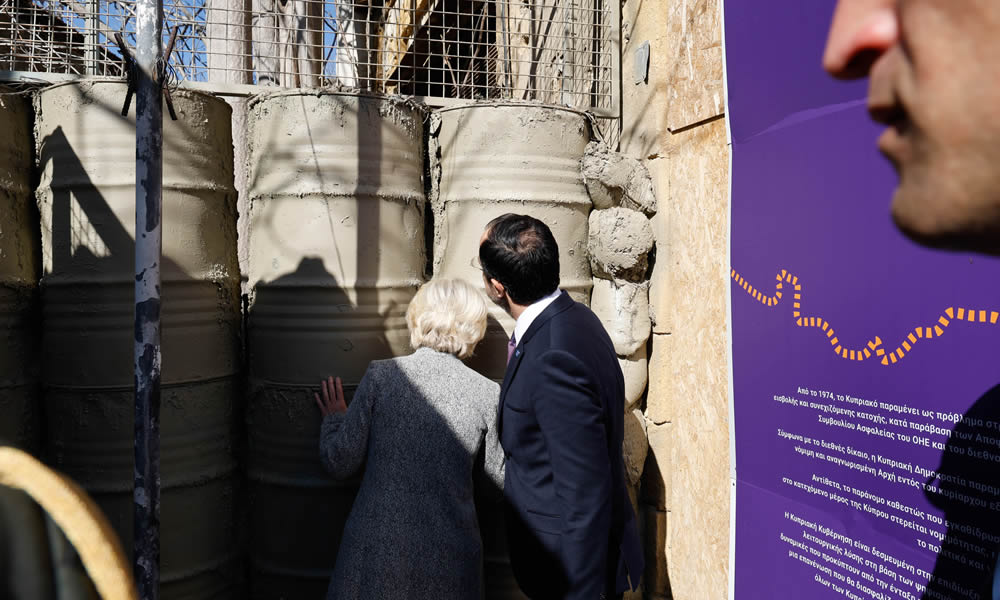
After the pomp and ceremony of the Presidency launch, Tufan Erhürman criticised the government for ignoring the Turkish Cypriots, except when taking EU officials to peek at them through a hole in a wall on the Green Line.
At the same time, Ankara is showing no signs of changing its stance on a solution model. Hence, Erhürman’s focus on confidence-building measures (CBMs) and the methodology of the peace process.
Momentum slipping
The dynamism observed after Erhürman’s election and two meetings with President Nikos Christodoulides has clearly subsided. The negotiators have not made progress on the CBMs still pending after last year’s ‘5+1’ meetings. No new crossing points. No solar energy park.
The UN Secretary-General’s latest report on his Good Offices mission reveals the lack of progress, contradictory positions of both leaders, and insistence on point-scoring.
The two leaders will hold another trilateral this Wednesday with the UN Personal Envoy. Failure to progress on CBMs or issues of process will cement the view that the honeymoon is over, and sclerosis has set in before negotiations have even started.
Last Tuesday, government sources told a group of visiting journalists in Strasbourg that the President has prepared unilateral measures to benefit Turkish Cypriots, relating to health and the economy. The sources added that Christodoulides seeks a positive response from Erhürman before making any announcements, to build a relationship of trust between the leaders.
Building trust
The next day, Erhürman said he heard about Christodoulides’ intentions through the press but has not received any formal proposal. He also noted that unilateral measures do not require joint approval.
On economic issues, he noted that Christodoulides had proposed a measure on VAT, which would give an unfair advantage to one side over the other.
“There is an issue being discussed in the economic field. Within the framework of the CBMs, there was a request concerning the Green Line Regulation.”
He said Christodoulides’ proposal was for the Turkish Cypriots to stop charging VAT on Greek Cypriot products traded north.
“I did not approve this. Such a move would create an unequal practice. It would give an advantage to products coming from the south,” said Erhürman.
Potential unilateral measures
Politis to the point spoke with multiple stakeholders in the health and economic sectors and involved in intercommunal relations but none seemed to have any real sense of what the new unilateral measures for Turkish Cypriots were. So, let’s look at what they might be.
Green Line trade and VAT
On economic measures, it would be odd if the VAT proposal fell under the ‘unilateral measure for the benefit of Turkish Cypriots’ category as it would require Turkish Cypriot action to make Greek Cypriot products cheaper.
To get a sense of the level of trade across the Green Line, in 2024, Turkish Cypriots sold €15.2 million worth of goods to Greek Cypriots, the majority (32%) comprising building and construction materials, but also furniture and mattresses (24%). In the other direction, Greek Cypriot producers sold €1.3 million worth of goods to Turkish Cypriots, the major share comprising chemical products (35%), along with base metals and articles (23%).
There is a significant imbalance in trade between the two communities. Increasing the sale of Greek Cypriot products across the Green Line would ultimately contribute to improved commercial relations while creating closer economic ties.
Alexander Apostolides, former team leader of the EU One Stop Shop for Green Line Trade explained to Politis to the point that the Green Line Regulation covers one-way trade from Turkish Cypriot producers to Greek Cypriot buyers. The Regulation specifies that only products created in the Turkish Cypriot community can cross the Green Line and be sold across the island without paying VAT. If Turkish Cypriot products leave Cyprus to be sold elsewhere in Europe, VAT will be charged.
Regarding trade in the opposite direction, this is regulated by a ‘mirror legislation’ adopted by the Turkish Cypriots. Since selling goods to Turkish Cypriots is not considered an export by the Cyprus Republic, VAT is paid at the point of crossing.
According to sources, the EU considers the imposition of VAT sacrosanct and will not allow for any exceptions to the rule. However, this means Greek Cypriot goods traded north are charged double VAT as a second VAT is levied by the Turkish Cypriots at the point of sale to the end user.
The President’s new initiative might entail subsidising the VAT levied by the Cyprus Republic on Greek Cypriot products traded across the Green Line in exchange for Turkish Cypriots exempting these products from a second VAT charged at the point of sale. But that would not constitute a unilateral measure to benefit Turkish Cypriots.
Restricted list of products
Another possibility is that Christodoulides will announce an expansion of the list of goods that the Cyprus Republic considers permissible to be traded under the Green Line Regulation. Currently, processed items like beer are not on the list. For products already on the list, however, rules and practices such as frequent ‘random’ checks on goods make trade difficult.
The challenges go both ways, as each side seeks to protect the economic interests of its own producers.
“Green Line trade is a positive step to bring the two communities together. However, currently the process of trade suffers from serious structural problems. You need brave decisions in terms of radical changes to the process, if it is to grow to its full potential,” said Apostolides.
“Allowing all food-processed products to cross subject to certain conditions would make a big difference,” he said.
Turkish Cypriot businesses are already voluntarily implementing EU legislation in their factories to sell their products south. If Green Line trade is allowed to flourish, it is amazing what it can achieve, argued Apostolides.
System of payments
Another potential area where the President could provide a solution to the benefit of Turkish Cypriots is to facilitate bank payments. At present, payments to a bank in the Cyprus Republic from a Turkish Cypriot bank are difficult due to a directive of the Central Bank of Turkey, while Cyprus Republic banks cite money laundering concerns to not send payments to the north of the island.
Previously, one option was to send money to the cooperative system through the Cooperative Central Bank but when that collapsed in 2018, the channel of payment stopped too.
There is no easy way to pay a Turkish Cypriot producer for goods purchased through Green Line trade at present. This leaves the option of paying in cash, which has a €10,000 cap. As Apostolides notes, that is “a far greater money laundering risk than bank payments”.
As for Turkish Cypriot individuals, only those working in the government-controlled areas can theoretically open a bank account, putting their workplace as a home address as an ad hoc solution, but only for payroll purposes, not for trade.
One solution would be to provide a direct channel that connects the two communities, “a payment rail” that doesn’t go through Turkey. Apostolides argued this would be a game-changer, allowing people to make their own decisions while also opening up Green Line trade to services too.
Health measures
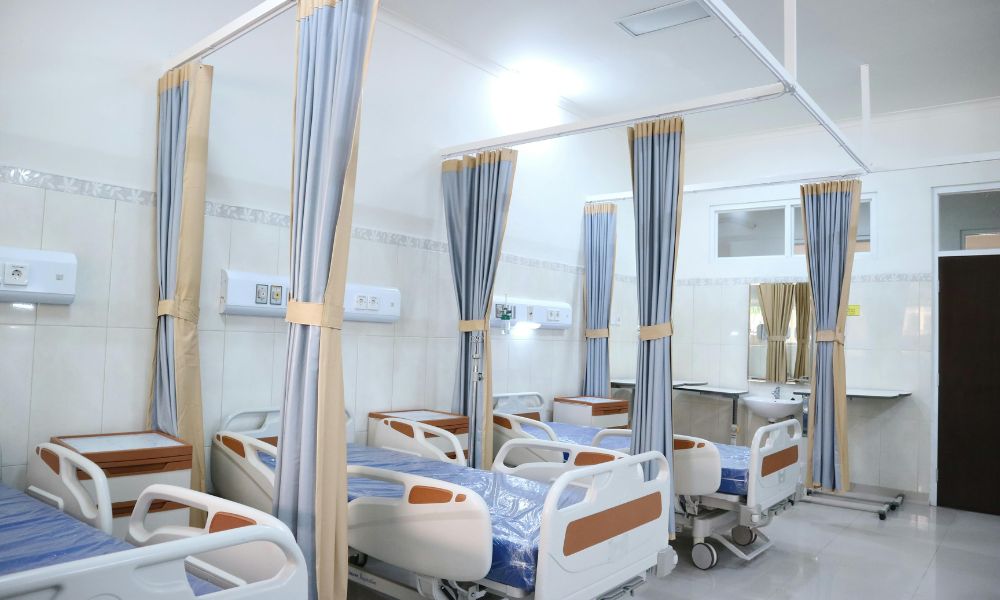
On the question of health, two years ago, Christodoulides announced a series of measures in support of Turkish Cypriots, including two on health. Turkish Cypriots gained access to the clinical services of the Cyprus Institute of Neurology and Genetics (CING) while the government pledged delivery of urgent pharmaceuticals when needed.
Regarding potential new measures, the Health Ministry said it is examining certain issues that the President will announce when the time is right.
Politis to the point understands that the possible access of Turkish Cypriots to the General Healthcare System (GESY) was recently explored, and the conclusion reached was that legal and economic factors made such a measure prohibitive. At present, GESY coverage is only available to those working in the government-controlled areas or receiving a state pension, along with their Cypriot citizen family members.
Another possible measure is to provide limited access to public healthcare services. For example, the State Health Services Organisation (OKYpY) offers non-GESY beneficiaries, such as asylum seekers and Ukrainian refugees, access to public hospitals and health centres.
Currently, Turkish Cypriots living in the north may obtain a Medical Card if they have paid social insurance contributions for at least three years and meet the required income criteria. Card holders have full access to public hospitals, state pharmacies, specialised centres such as the Bank of Cyprus Oncology Centre and CING, and the European Health Insurance Card.
It remains to be seen what the new unilateral measures will be and when they will be announced.