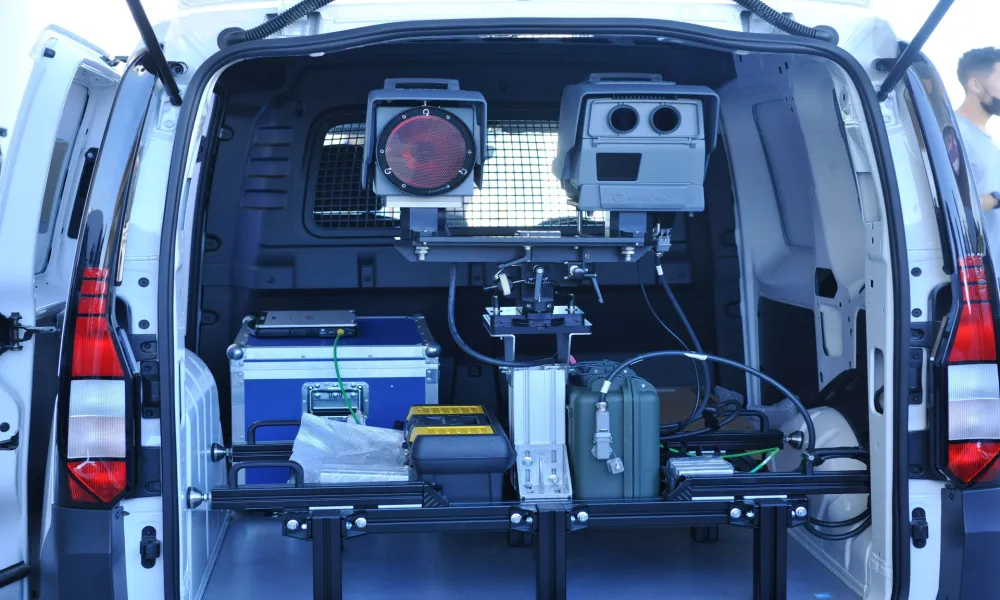
A bill, submitted by DISY MP Nikos Georgiou, would allow the Police, for the purpose of warning the public, to announce and publish in advance, on a daily basis, the general locations where the 20 mobile traffic cameras will operate, without specifying operating times. The original version of the bill had required the Police to issue daily updates on the areas where the camera vans would be placed. However, this mandatory element was changed to optional following guidance from the Legal Service to ensure the bill would not be deemed unconstitutional if approved.
Speaking to Politis, Georgiou, who introduced the bill, said its adoption would bring two main benefits:
1. A significant reduction in traffic offences related to road safety.
The country’s 90 fixed and 20 mobile cameras detect violations such as speeding, running red lights and failing to stop at designated lines at controlled junctions. When an offence is recorded, the system also registers related violations, including failing to wear a seat belt or motorcycle helmet and driving without free hands (holding a phone, coffee or other objects).
2. Greater transparency and increased public trust in the Police, as it would address suspicions that mobile cameras are used primarily to generate revenue rather than to promote road safety.
Pressure expected on Police
Asked whether the Police would actually announce the general areas where the mobile camera vans will be stationed, given they will not be obliged to do so, Georgiou said he believes they will. The very existence of the law, he argued, will create pressure on the Police to act with more transparency.
Why authorities oppose the bill
The relevant ministries and the Police oppose the proposal. During discussion at the House Transport Committee, they presented arguments for maintaining the status quo:
Ministry of Transport:
It expressed reservations, noting that the monthly schedule of planned camera‑van locations often changes due to practical factors such as roadworks or lack of parking space. As a result, it would be impossible to adhere to any pre‑published list. The ministry also raised concerns over the safety of camera operators, warning that publicising locations could expose them to possible attacks.
Police:
The Police echoed these concerns and added that drivers should remain constantly alert. Prevention, they said, depends on public awareness: drivers should both comply with speed limits and know that checks may occur at any time. They also noted that nondisclosure of locations is standard practice in other countries and pointed out that mobile cameras have helped solve other crimes – something that would be jeopardised if locations were published. Additional administrative costs would arise from preparing and updating a daily list of operating areas.
Finally, they noted that mobile cameras tend to be placed in the same general locations, which are already known to the public. Publishing only general areas, therefore, would result in virtually the same list each day.
Ministry of Justice:
It agreed with the concerns raised by the Transport Ministry and the Police.
Lawyers in favour of disclosure
A representative of the Cyprus Bar Association argued that several European countries follow the principle of transparency rather than surprise. This principle, he said, forms part of good administration, which requires citizens to know what measures are being taken for their protection. Publishing general areas would support both good administration and proportionality, and would not raise constitutional concerns.
Warning signs
During debate on Georgiou’s bill, Transport Committee MPs referred to frequent failures to place the required warning signs ahead of mobile or fixed cameras, as mandated by law. This fuels the public perception that cameras are used to raise revenue, not to improve safety.
By law, a warning sign must be placed 100 to 5,000 metres before any camera installation. The sign may be fixed or mobile. However, Committee members noted that many van operators fail to place the sign, leading to drivers being caught off guard.
Beacons and “hide‑and‑seek” restrictions
Last Thursday, the House plenary approved a bill by Green Party leader Stavros Papadouris requiring that mobile‑camera vans carry roof‑mounted beacons during speed checks. It also passed an amendment by MP Andreas Themistokleous prohibiting vans from being parked in the following locations for speed monitoring:
- Less than 300 metres after a change in speed limit on a motorway.
- In any motorway location where the van is not visible from at least 300 metres.
- In any other road location where the van is not visible from at least 100 metres.
These measures aim to prevent camera vans from trapping unsuspecting drivers. The new rules will come into force three months after being signed by President Nikos Christodoulides and published in the Official Gazette – something that has not yet happened.
Bus driver strike over cameras
In a separate development, the SEK and PEO unions representing bus drivers announced a two‑hour work stoppage for Friday, 27 March, from 9am to 11am, in protest over the fixed traffic‑camera system. They argue that, despite repeated appeals to the Transport Ministry, no effective solutions have been provided. The unions stress the need for warning‑light systems at traffic lights to prevent sudden braking, which endangers passengers.