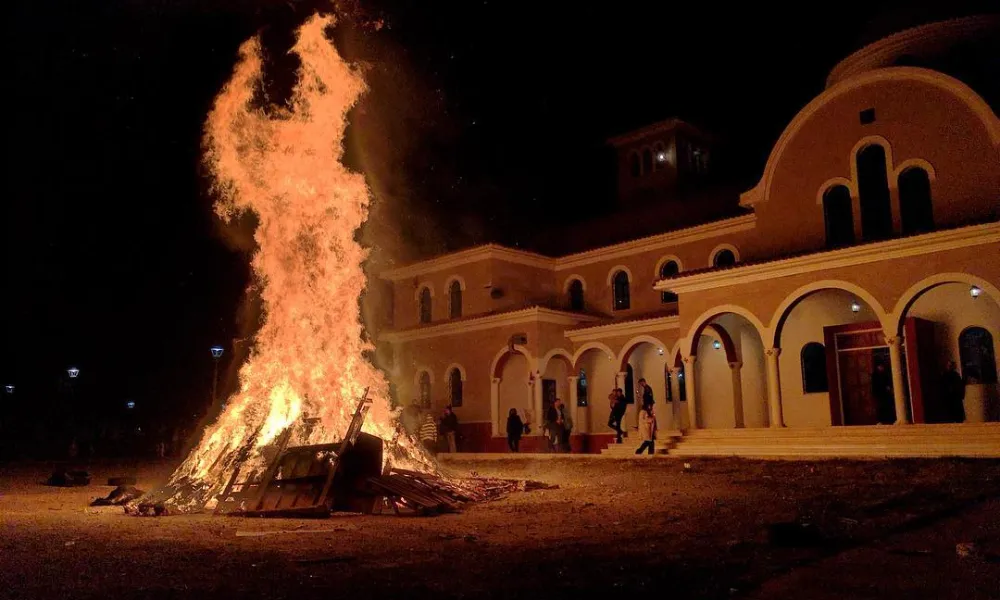

The tradition of Easter bonfires (lambrajies) is an integral part of Cyprus’ Easter customs. In recent years, however, it has become increasingly associated with dangerous and unlawful behaviour. Incidents recorded every year – ranging from uncontrolled fires to the use of firecrackers and even the discovery of improvised incendiary devices – show that this is no longer simply an innocent folk practice. It carries serious risks, as some people, in the name of tradition, endanger hundreds of fellow citizens who gather outside churches.
The authorities appear to be moving in the right direction through intensified patrols, preventive confiscation of materials and swift responses to incidents. Experience shows, however, that enforcement alone is not enough. The problem is not merely operational but deeply social, marked by elements of youth delinquency and a lack of boundaries.
If we genuinely want to curb these phenomena, a more holistic approach is required. First, local authorities should take a more active role in organising controlled lambrajies in designated areas, under clear safety rules. This would remove the incentive for “illegal initiatives” by groups of young people.
Second, there must be systematic information campaigns and awareness‑raising efforts, particularly in schools, to make it clear that these activities involve real risks to life and property. Prevention starts with understanding the danger.
Third, cooperation with local communities is crucial. Residents themselves can act as a deterrent when coordination with the authorities exists and when a sense of collective responsibility takes hold.
Finally, the strict enforcement of the law wherever dangerous practices are identified must be a given, so that a clear message of zero tolerance is sent.
The challenge is not to abolish the tradition, but to redefine it on the basis of safety and responsibility, before it is transformed – if it has not already been permanently transformed – into a source of danger rather than an element of cultural continuity.