Voice Across
The recurring question of whether the Cyprus negotiations have “frozen” once again reveals less about procedural mechanics than about political intent. From the Turkish Cypriot perspective, the answer remains consistent and unambiguous: the process is not frozen. Technical-level contacts continue, preparatory work is ongoing, and the United Nations Secretary-General’s Personal Envoy on Cyprus, Maria Angela Holguin Cuellar, is now formally scheduled to return to the island on January 26.
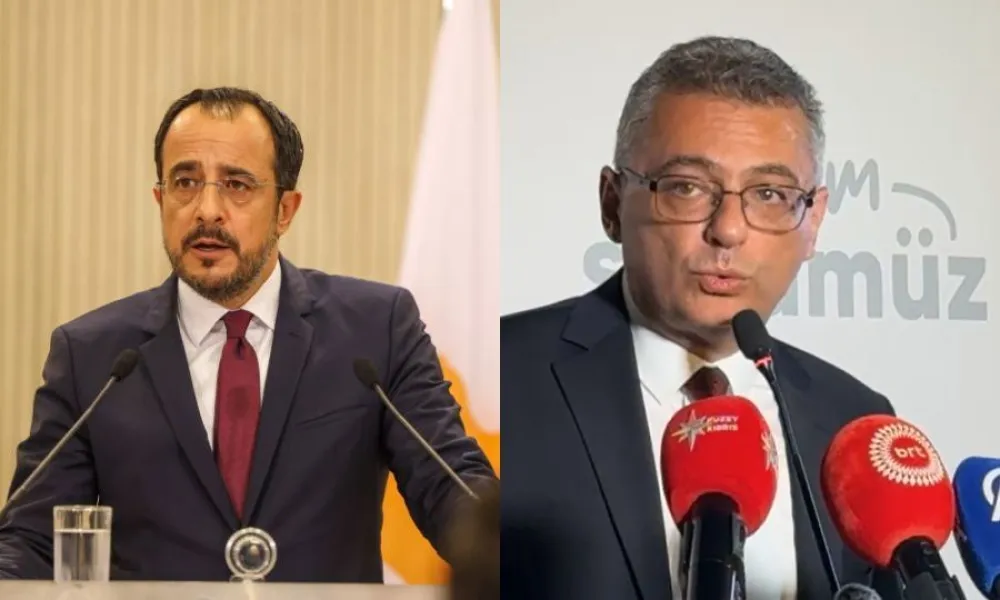
Both leaders have indicated that they will meet separately with Maria Angela Holguin Cuellar during her visit. Holguin is expected to meet Turkish Cypriot President Tufan Erhurman on the morning of the 27th, followed later the same day by a meeting with Greek Cypriot leader Nikos Christodoulides. The sequencing is not incidental. It underscores that the visit is structured to assess positions independently rather than to stage a symbolic encounter at the outset.
The Cyprus meetings follow Holguin’s consultations in Brussels, where she met EU High Representative Kaja Kallas, a reminder that the European Union remains an inescapable part of the Cyprus equation, even though it is not formally a party to the negotiations. From the Turkish Cypriot perspective, this linkage further reinforces the need for coherence between UN-led efforts and the EU’s political posture, particularly given longstanding concerns about asymmetry and exclusion.
Holguin is also expected to hold a joint meeting with both leaders on the 28th, a format intended to test whether sufficient convergence exists to justify direct engagement without prematurely elevating the process.
Erhurman has stressed that he is not opposed in principle to a trilateral meeting with Christodoulides in the presence of the UN envoy, provided such a format is grounded in substantive progress. What he has firmly opposed, however, is the convening of a high-level enlarged meeting unless prior technical and political groundwork produces measurable results. In particular, he has argued that there is no rationale for summoning an enlarged five-plus-one meeting chaired by the U.N. Secretary-General and involving the three guarantor powers -Turkiye, Greece, and the United Kingdom- in the absence of concrete progress on the island itself.
This position contrasts with that of Christodoulides, who has publicly voiced hope that Holguin’s efforts will help set an early date for a five-plus-one meeting. From the Turkish Cypriot perspective, such expectations risk repeating past patterns by attempting to revive talks from where they were left off in 2017 at Crans-Montana without first addressing the structural shortcomings and asymmetries that contributed to that collapse.
What is at issue, therefore, is not the existence of dialogue, but its purpose.
Substance versus symbolism
Erhurman has framed the current phase not as a pause, but as a test of seriousness. His message is deliberately restrained yet politically sharp: meetings for the sake of meetings will not restore trust, nor will symbolic gestures compensate for the absence of measurable progress. If Holguin’s visit is to mean anything, it must be preceded by intensified technical work and followed by concrete outcomes that contribute to a genuine settlement atmosphere.
This insistence on substance over symbolism reflects accumulated frustration. For decades, Turkish Cypriots have been repeatedly asked to demonstrate flexibility, only to see negotiations stall without consequence when the Greek Cypriot side disengaged. The result has not been equilibrium, but structural asymmetry.
Rituals without consequence
It is against this backdrop that Erhurman’s widely cited reference to the “peeking through the hole ritual” should be understood. This was not rhetorical flourish. It was a critique of performative diplomacy: carefully staged visits to the buffer zone, gestures linked to rotating EU presidencies, and choreographed statements that generate headlines while leaving the political core untouched.
After decades of failed talks, Erhurman has made clear that such rituals no longer inspire confidence. Creating a settlement climate in Cyprus is serious work. So is peace itself.
From the Turkish Cypriot standpoint, symbolic acts have too often substituted for political courage. They allow the appearance of engagement while postponing the hard decisions required on political equality, governance, and security.
Engagement without illusions
What is striking in Erhurman’s recent remarks is what they do not contain. There is no rejection of dialogue. No withdrawal from U.N. auspices. No rhetorical escalation. On the contrary, the emphasis is on readiness to engage, patience in diplomacy, and continued contribution to confidence-building efforts.
But there is also a clear red line: sincerity must be mutual.
This is where the Turkish Cypriot narrative diverges sharply from prevailing international assumptions. For decades, the burden of proof has rested disproportionately on Turkish Cypriots. When they endorsed compromise, as in the 2004 Annan Plan, rejection by the Greek Cypriot side carried no political cost. That imbalance was entrenched in March 1964 with UN Security Council Resolution 186, which normalized a constitutionally deficient status quo under the so-called doctrine of necessity.
The result has been a system in which delay is risk-free for one side, while the costs of stalemate are borne almost entirely by the other.
Confidence-building begins with daily life
This structural imbalance now plays out most visibly in the debate over confidence-building measures, particularly crossing points.
In the days preceding Holguin’s visit, Erhurman personally inspected ongoing infrastructure work at the Metehan Crossing, emphasizing that easing daily congestion is not a technical detail but a political signal. He confirmed that works on the Turkish Cypriot side, carried out jointly with Turkish and Greek Cypriot contractors, are nearing completion, and that preparations have been made to increase cabin and personnel capacity in line with commitments previously conveyed by the Greek Cypriot side.
Erhurman reiterated that expanding capacity at Metehan, alongside completing arrangements at Bostanci and Derinya, would significantly ease traffic and benefit both communities. He also underlined that Turkish Cypriot proposals for new vehicle crossings at Haspolat and Akincilar remain on the table, pending approval from Christodoulides.
“Lefkosa cannot function with a single vehicle crossing,” Erhurman said, warning that the inability of the two leaders to agree even on such practical steps would cast serious doubt on expectations of progress toward a comprehensive settlement.
Unilateralism and the erosion of trust
Tensions have been further aggravated by reports that Christodoulides intends to implement certain measures unilaterally in areas such as health and trade, while simultaneously presenting them as confidence-building initiatives.
Erhurman responded with legal and political clarity. Measures that are genuinely unilateral, he said, do not require his approval. But initiatives affecting trade flows across the Green Line cannot be imposed without consent from the elected authorities of the Turkish Cypriot side.
He warned in particular against proposals that would allow goods produced or imported in the south to enter the north freely, while Turkish Cypriot products continue to face restrictions when crossing southward. Such an arrangement, he argued, would create structural imbalance, undermine local producers, and distort the original logic of the Green Line Trade Regulation and the long-stalled Direct Trade Regulation, both designed to support, not weaken, the Turkish Cypriot economy.
If the logic of these regulations is altered through unilateral practices, Erhurman cautioned, confidence is not built. It is eroded.
Holguin’s visit as a credibility test
Against this backdrop, Holguin’s Jan. 26–29 visit takes on heightened significance. Erhurman has stressed that he is not opposed to talks, including a possible tripartite meeting with Christodoulides during the envoy’s stay. However, he has been equally clear that “talks for the sake of talks” are not on the table.
Any higher-level engagement, he argues, must be underpinned by substantive progress at committee and technical levels, and by meaningful interaction between the two leaders. Absent such groundwork, convening an enlarged five-plus-one meeting with the U.N. Secretary-General and the guarantor powers would merely recycle optics without content.
Erhurman has expressed hope that Holguin’s visit will yield concrete and measurable results rather than symbolic reassurance. The envoy’s role, in his framing, is not to manufacture optimism, but to test whether conditions exist for progress by clarifying parameters, accelerating preparatory work, and assessing whether both sides are genuinely prepared to move beyond procedural maintenance.
If the visit produces no tangible outcome, the risk is not collapse but the normalization of inertia, a dynamic Erhurman has repeatedly described as the most corrosive outcome of all.
Beyond patience
Patience has long been demanded of Turkish Cypriots. Erhurman does not reject patience, dialogue, or diplomacy. What he rejects is the expectation that patience must be endless, unreciprocated, and politically cost-free for the other side.
The position articulated in recent weeks is neither maximalist nor confrontational. It is grounded in experience. It insists that peace cannot be built on selective memory, symbolic rituals, or asymmetrical legitimacy.
If the Cyprus problem is truly a priority, then the environment for its resolution must reflect that priority not only in speeches, but in choices. The coming weeks will reveal whether international actors are prepared to move from managing the process to enabling a result.
The credibility of yet another diplomatic cycle may depend on it.