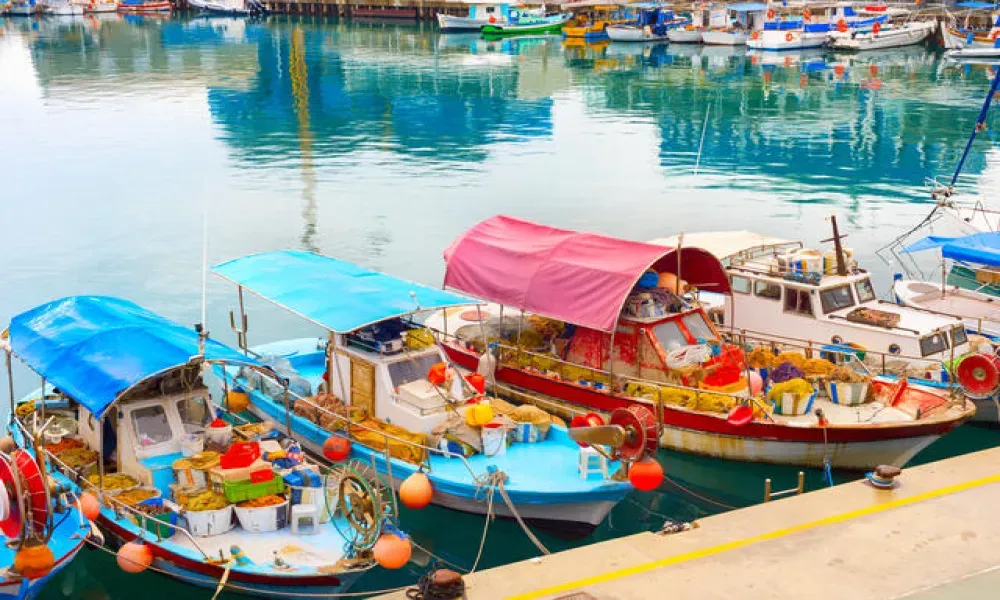
Unrest is growing at fishing shelters across Cyprus, as the serious problems facing professional fishermen continue to multiply and the sector gradually slips into decline. Against the backdrop of compensation issues and a series of long standing problems that remain unresolved, the Pancyprian Association of Professional Fishermen will meet next Tuesday, 27 January, with agricultural organisations to evaluate how to proceed.
As the Association’s president, Christodoulos Charalambous, who was recently elected for a third term, told P, the measures under consideration include dynamic mobilisations, even a protest outside the Presidential Palace. The cause is the intense anxiety among fishermen about whether there will be a future for their families. Beyond the problems they face at sea, they feel that in recent years they have been subjected to systematic injustice by the Ministry of Agriculture and the Department of Fisheries.
“They treat us like outcasts. As soon as we get near their offices, they see us and pull a face,” he said characteristically.
Compensation for dolphin damage
At the centre of the discontent is the compensation scheme for damage caused by dolphins to fishing nets. According to fishermen, the scheme was locked in for five years without everyone being informed in good time, leaving out professionals who, for one year, were forced to stay ashore because for various reasons, such as health issues, they were unable to go to sea and declare catches.
“One operation, one serious problem, and you are out. If you cannot work for a year, are you punished for five years?” they ask, estimating that between 50 and 100 people were affected this year.
The compensation amounts to 1,900 euros. However, people in the sector insist that both the criteria and the sums involved do not reflect today’s reality.
“There are no fish to declare as income,” they say, accusing the Department of Fisheries of ignoring the real situation at sea. As for the licensing system, according to Charalambous, it is governed by strict and often irrational criteria. This pushes fishermen into distorted practices, as some are forced to issue false invoices in order not to lose their licence.
“I have one thing to say. Those who depend solely on fishing for their livelihood are the ones being treated unfairly,” he noted.
This remark, and the depth of the prevailing disappointment, is confirmed by testimonies from people who are at sea every day, or rather whenever weather conditions allow.
Pushed to the limit
Thirty four year old Rafaellos Charalambous, one of the youngest professional fishermen, has held a professional licence for 12 years and is the father of two children. “The average age of fishermen is over 60,” he told Politis, explaining that very few young people are entering the profession today. Not because they do not love fishing, but because they see no prospects.
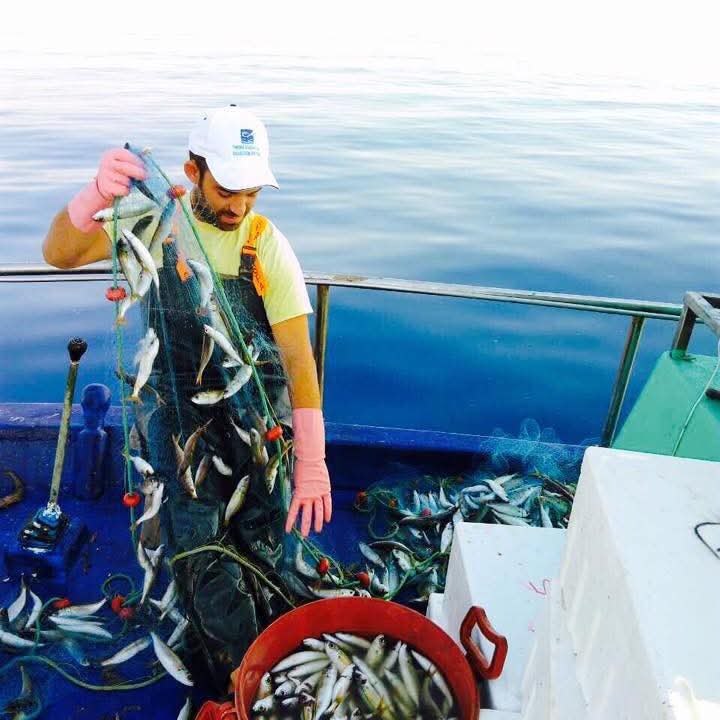
“There are no incentives and no security for the future,” he stressed, also referring to the impact of climate change on marine resources. “Prime fish, such as red mullet that we used to catch in the past, have disappeared. We are forced to chase invasive species with lower commercial value, such as lionfish, just to survive.”
“They do not take us into account. They cut and stitch everything on their own,” said the Association’s vice president, Panikos Peratikos, noting that in the past there was more dialogue and willingness to cooperate. Today, in his view, decisions are taken without fishermen’s involvement.
It is noted that in recent years Panikos Peratikos, together with a small group of colleagues, has made use of the scheme targeting pufferfish, focusing on their capture as one of the few available ways to secure an income.
On the financial side, the figures he shared are revealing. Daily expenses such as fuel, bait and equipment maintenance reach 80 or even 90 euros, while a day’s income sometimes does not exceed 40 or 50 euros. And this does not include the endless hours spent ashore repairing nets, fixing equipment and preparing for the next outing.
“We work long hours and in the end the day’s pay just does not add up,” Rafaellos Charalambous said.