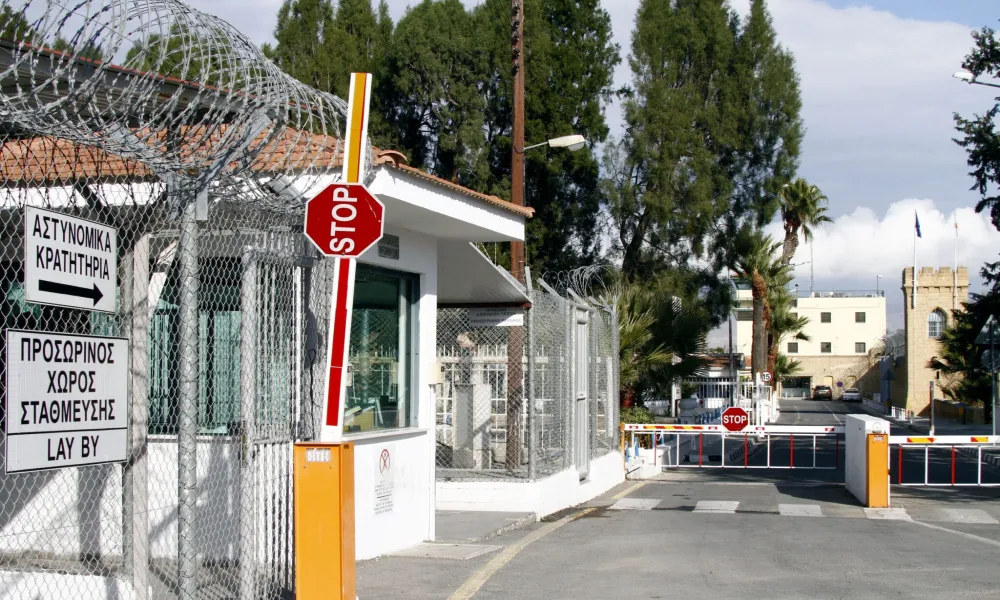
Sixteen detainee escapes and repeated cases of drugs being passed to prisoners by relatives or friends during court appearances have been recorded in the past five years, exposing significant security gaps.
In response, Cyprus Police Headquarters has issued a revised and stricter directive containing detailed instructions for officers responsible for transporting detainees and convicted prisoners to and from courts.
Revised police directive
The updated directive strengthens inspection protocols, tightens supervision procedures and sets specific steps to be followed before, during and after prisoner transfers.
The objective is to prevent similar incidents in the future.
The revised police order, dated 11 March 2026, came into force immediately.
Sixteen escapes recorded since 2021
Since 2021, sixteen detainees under police custody have escaped.
According to police data, the highest number of escapes occurred in 2022, when six detainees managed to evade police supervision.
Most incidents took place within court premises, where detainees had been transported for court proceedings, revealing weaknesses in security measures during their presence there.
Authorities also recorded cases where relatives or friends supplied detainees with narcotics while they were in court buildings, hiding the substances inside food or clothing.
No stops during prisoner transfers
The revised directive gives clear instructions and places particular emphasis on constant and strict supervision of detainees.
During the transfer of detainees and convicted prisoners from the Central Prison to the courts, the directive explicitly states that no stops or relaxation of security measures are allowed at any stage of the journey.
The co-driver of the transport vehicle is responsible for continuously monitoring detainees through the internal surveillance camera, ensuring constant visual contact and immediate response to any suspicious movement or attempt to breach procedures.
Both prisoner transport vehicles and accompanying security vehicles are strictly prohibited from stopping during the journey.
In the event of an emergency, vehicles must proceed to the nearest police station while informing the officer in charge of the Prisoner Escort Unit.
The directive also prohibits smoking inside prisoner transport vehicles.
Food provided by the prison must not be consumed during the transfer and may only be given to detainees once they are in the temporary holding areas of the courts.
Special emphasis is also placed on selecting safe routes in order to reduce risks and strengthen the overall security of prisoner transfers.
Strict supervision inside court premises
Police officers are instructed that while detainees are inside court buildings they must not allow them to:
- Receive visits or come into contact with relatives, friends or any other persons during their movement inside court premises or while in supervised waiting areas, unless the court orders otherwise. In such cases, the contact must take place in the presence of a member of the escort team. Lawyers may meet their detained clients in the specially designated room within the court building, depending on conditions such as the number of detainees present. Meetings must not take place during prisoner movement to and from the courtroom.
- Receive any food or drinks from other persons without thorough inspection beforehand. Detainees must also not receive personal belongings in bags, such as clothing, shoes, jewellery or hygiene items. Relatives should instead deliver such items directly to the Department of Prisons.
Security checks at all stages
The directive states that police officers responsible for escorting and supervising detainees must maintain heightened vigilance and professionalism throughout the process.
Officers must conduct thorough inspections of court restrooms before and after they are used by detainees, as well as inspect areas inside the courtroom where detainees will be seated.
They must also carry out body searches after any contact or meeting with other persons, including lawyers.
Continuous supervision of detainees is required, with officers monitoring their movements, behaviour and reactions both in court premises and in supervised holding areas.
All necessary measures must be taken to prevent escape attempts.
If administrative procedures are required before a detainee leaves the court, officers must ensure that the detainee remains in a secure location within the court building under constant supervision and with the use of handcuffs until the procedures are completed.