


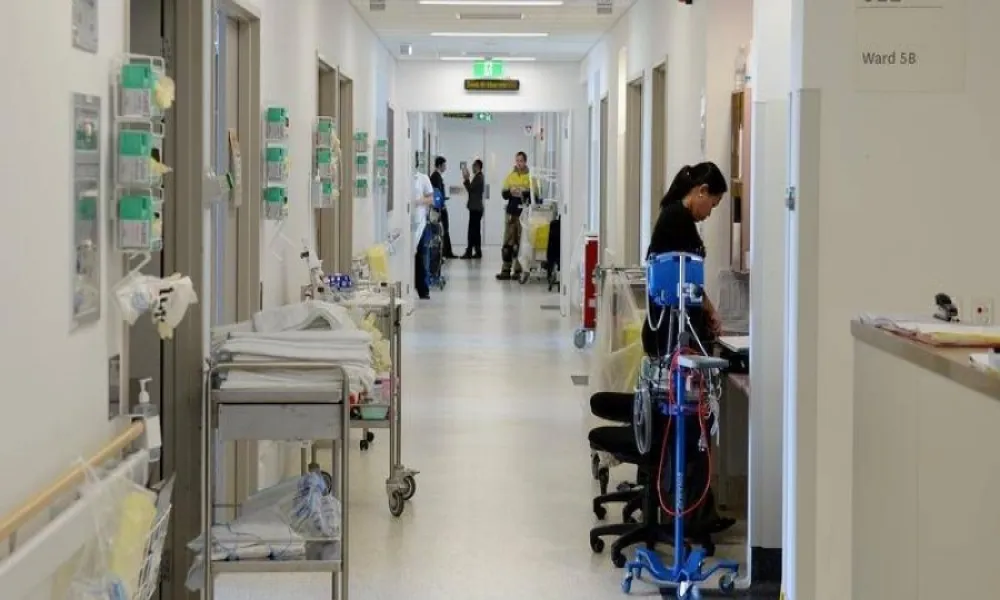

Patients attending Accident and Emergency Departments are undergoing X-rays, being discharged and only receiving formal radiology reports up to two days later, according to findings by the Audit Office of the Republic of Cyprus.
The issue is documented in a report following an unannounced midnight inspection at the emergency departments of the Nicosia General Hospital and the Limassol General Hospital.
The report states that in several cases doctors in emergency units were required to make clinical decisions without having a confirmed radiology diagnosis, as reports were finalised after patients had already left the hospital. The Audit Office warns that this practice increases the risk of delayed identification of pathological findings and raises serious concerns regarding proper medical documentation.
In its response, the State Health Services Organisation said that on-call radiologists prioritise urgent and complex examinations such as CT scans and ultrasounds, while simple X-rays may be formally reported later. It also maintained that emergency physicians conduct an initial clinical assessment of imaging and that final reports are completed within what it described as a medically acceptable timeframe.
Overtime payments under scrutiny
The Audit Office also examined overtime compensation for radiologists. According to the report, radiologists receive €5 per medical report issued outside regular working hours, a practice in place since at least 2021.
On 4 August 2025, one radiologist reportedly issued 159 overtime reports for X-rays conducted two to three days earlier, receiving €795. During August 2025, the same radiologist completed 716 overtime reports, earning €3,580. In June 2025, another radiologist issued 1,416 overtime reports, receiving €7,080.
The Audit Office noted that due to incomplete or improper use of the PACS imaging system, it was not possible to accurately verify the exact time reports were prepared for overtime documentation purposes. It expressed concern that delayed reporting outside normal hours, combined with per-report compensation, could create incentives unrelated to immediate clinical need.
The organisation responded that overtime reflects increased workload and the need to cover emergency departments beyond regular hours. It said it would examine setting a maximum permissible timeframe for issuing reports and strengthening internal control mechanisms.
Diagnosis from Greece
Particular concern was raised over cases in which CT scan reports were issued via tele-diagnosis by a company in Greece, despite an on-call radiologist being present at Nicosia General Hospital.
The Audit Office questioned whether available staff were being fully utilised and whether the practice was justified. The organisation said the measure was adopted after hospital radiologists declined to provide services, citing practical and medical reasons. It added that tele-diagnosis was used as an emergency operational solution, including during periods when the CT scanner was malfunctioning.
The report also refers to repeated breakdowns of the CT scanner in Nicosia, the transfer of patients to private hospitals for imaging and the existence of a new €1.5 million CT scanner that remains unused.
Legal framework gaps
Beyond operational issues, the Audit Office highlighted the absence of a clear and comprehensive legal framework governing tele-diagnosis in Cyprus. It noted uncertainty regarding legal liability in the event of medical error, as well as concerns over quality control and personal data protection.
The State Health Services Organisation said tele-diagnosis is not solely its responsibility but a broader issue affecting the entire health system and regulatory framework. It stated that it acted within the options available pending wider legislative intervention.
Long waiting times
The midnight inspection also recorded prolonged patient stays in emergency departments. At Nicosia General Hospital, waiting times exceeding five hours were documented, with one case reaching 11 hours and 28 minutes.
The Audit Office attributed delays in part to waiting for specialist input and disagreements between clinics over responsibility for cases. The organisation argued that such timeframes fall within internationally accepted limits, particularly in cases involving multiple conditions requiring input from more than one specialty. It said mechanisms exist for resolving disputes through intervention by senior management.
Admissions without specialist signature
The report further highlighted concerns over hospital admissions from emergency departments. At Nicosia General Hospital, only one of 15 admissions reviewed bore the signature of an on-call specialist, while in Limassol nine of 11 admissions were signed by a specialist.
The Audit Office warned that this practice raises patient safety and legal responsibility issues.
In response, the organisation said the relevant procedural manual is under revision to clarify the role of resident doctors. It added that new instructions will be issued to ensure strict compliance with documentation procedures.
Emergency consultation by fax
The report also cited a case at Limassol General Hospital in which a patient required neurosurgical consultation. As the specialty is not provided in Limassol, a written opinion was requested from Nicosia and sent by fax with a delay of one hour and 45 minutes. By that time, the patient had already been transferred to Nicosia.
The Audit Office questioned the speed and effectiveness of emergency case management through such procedures.
The organisation replied that neurosurgery is not a core specialty required in all public hospitals but is centrally provided based on international practice and population criteria. It said the time taken reflected the review of imaging and preparation of a written report, regardless of the communication method used.