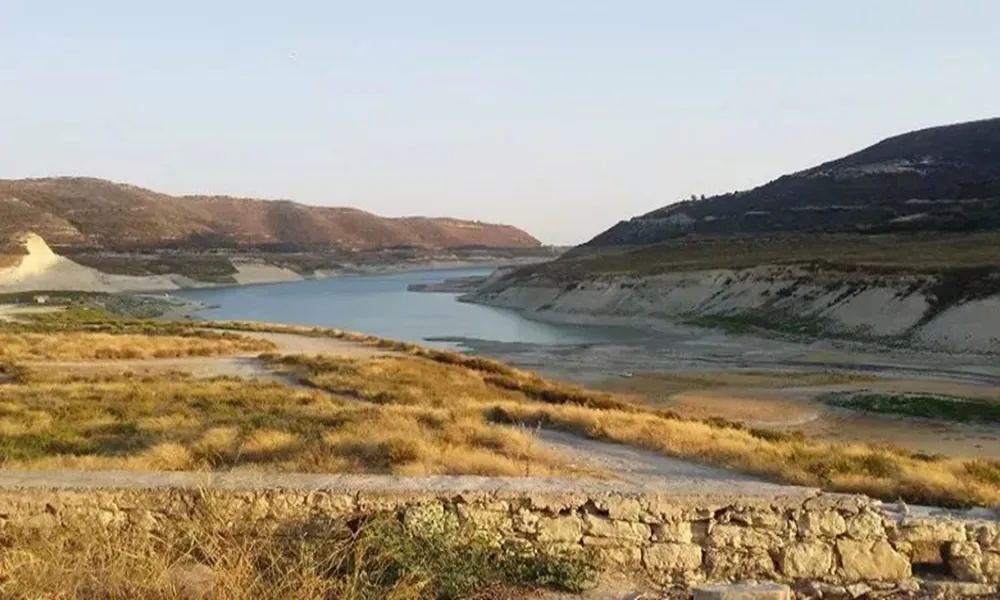

Despite water inflows into dams over the past three days, several more rainfall events are still required at this stage - when the ground is already saturated - before it can be said that Cyprus is moving out of the drought period. As a result, citizens are urged to continue conserving water and to make use of rainwater where possible, Senior Officer at the Water Development Department, Gianna Oikonomidou, told CNA.
Meanwhile, Senior Fisheries Officer Vasilis Papadopoulos told CNA that, beyond the contribution of rainfall to the water balance, rainwater flowing into the sea is also necessary and beneficial for marine ecosystems and coastlines.
Improved water capacity, more rain needed
Oikonomidou said that total inflows into dams over the past three days amounted to approximately 2.4 million cubic metres of water, of which 1.2 million cubic metres were recorded in dams in Paphos district. She added that as of 26 January, total water stored in dams stood at 34 million cubic metres, corresponding to 11.8% capacity, compared with 26.1% on the same date last year. The total storage capacity of Cyprus’ dams is 335 million cubic metres, she noted.
On Friday, the Water Development Department’s Chief Technical Engineer, Marios Hatzikostis, had told CNA that rainfall had contributed only 400,000 cubic metres to dam reserves, with overall storage at 11%.
Oikonomidou stressed that despite the improvement in the water balance, stronger and more substantial rainfall is needed for dams to reach sufficient reserves for Cyprus to be considered out of drought. She added that any rainfall occurring while the soil remains saturated is more likely to flow into dams.
Highest number of dams
Referring to the island’s 110 dams - 56 of which are classified as large by international standards - she said Cyprus has the highest number of dams in Europe relative to its size, with almost all major rivers already utilised.
She also explained that it should not be viewed negatively that some rainwater flows into the sea, as water must follow its natural course. This process enriches underground aquifers, from which water is extracted and contributes to the overall water balance, while also acting as a natural defence against seawater intrusion, as many aquifers have already been salinated. Sustainable water management, she said, must strike a balance between storage and environmental protection.
Asked about projects aimed at improving water management efficiency, Oikonomidou said studies continue on increasing overflow capacity at additional dams, as part of infrastructure projects exceeding €200 million in value. These include pipelines, reclaimed water projects, and water supply and irrigation works, all contributing to strengthening the water balance.
Regarding how citizens can assist with water collection and storage, she said farmers are encouraged under the Common Agricultural Policy to collect rainwater - a practice that can also be adopted by households, particularly for garden irrigation. She stressed that the most important contribution citizens can make is water conservation, in order to avoid unplanned supply cuts during the summer.
Marine life
Asked whether new boreholes could reduce water loss through evaporation from dams, she explained that drinking water sources include dams, desalination plants and boreholes, while irrigation relies on dams, reclaimed water and boreholes. She added that the Water Development Department, in cooperation with the Geological Survey Department, has already drilled boreholes and plans to drill additional ones to integrate new groundwater sources into the water balance.
She concluded that the Department is pursuing all available options to ensure sufficient water supplies for both irrigation and domestic use.
Papadopoulos clarified that his department does not measure the volume of rainwater flowing into the sea and has no responsibility for water collection. However, he said it is estimated that the volume of rainwater reaching the sea in recent days was significant and highly beneficial for marine ecosystems and coastlines.
He explained that rainwater runoff plays a crucial role in maintaining marine ecosystem balance, as it transports nutrients from land to sea, renews surface waters and helps regulate salinity, particularly in coastal areas. It also supports marine biodiversity, strengthens the hydrological cycle and contributes to the natural renewal of seawater, which is essential for marine life.
He added that sediment carried by rainwater helps protect coastlines from erosion.
Asked whether fishermen could expect an increase in fish stocks, Papadopoulos said that while rainfall undeniably carries nutrients and organic matter into the sea, unrealistic expectations of dramatic increases in fish populations should be avoided.
Fish population
Sediment transported by rainfall - including fine soil particles, clay and organic material - forms a fundamental structural and nutritional component of coastal and marine ecosystems. It enriches waters and seabeds with nutrients that feed phytoplankton and, through the food chain, the entire marine ecosystem.
At the same time, sediment contributes to the formation and preservation of deltas, wetlands and sandy beaches, protecting coastlines from erosion. On the seabed, it provides a substrate for marine organisms, supports carbon storage and regulates biogeochemical cycles, reinforcing long-term ecological balance.
Rainfall also plays a multi-layered role in supporting fish populations, as nutrient inflows enhance phytoplankton growth - the base of the marine food chain - increasing food availability for higher trophic levels. Increased freshwater runoff also creates favourable conditions in coastal and estuarine areas, which function as natural nurseries for many fish species, offering shelter, food and suitable conditions for reproduction and juvenile development. These processes strengthen biodiversity and population stability, benefiting both ecosystems and fisheries.