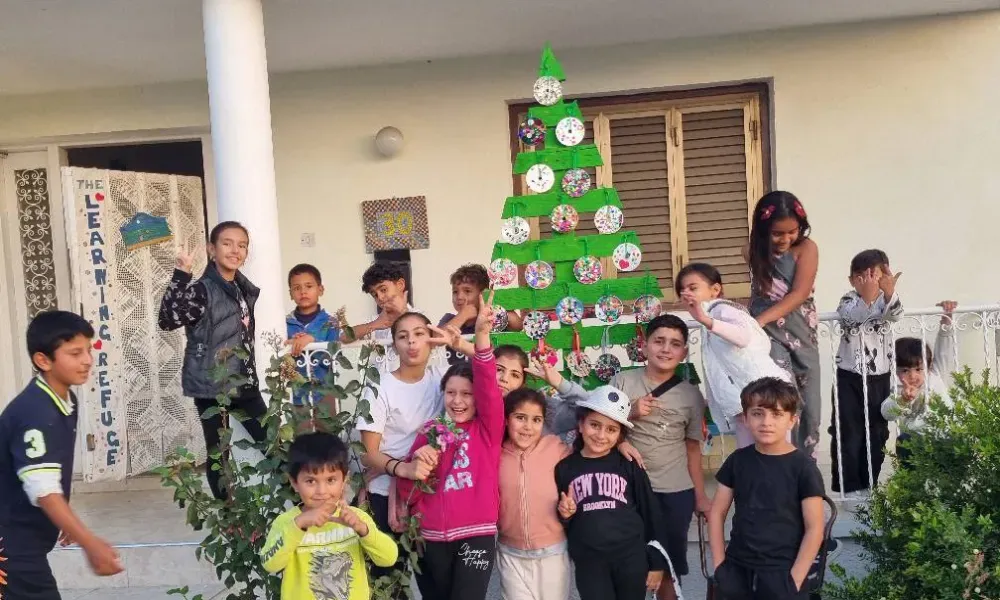
Along a busy avenue in Paphos stands a humble single-storey house, one of those scattered across the older neighbourhoods of Cyprus. It may once have been an ordinary family home. Today it hosts a different kind of family. The rooms that once framed festive dinners and children’s games now shelter The Learning Refuge, a haven where asylum seekers and refugees come together to connect, learn and regain some stability in their daily lives.
Mary Chnojnowski, originally from London and living in Cyprus for the past 18 years, opens the door and welcomes me inside. “Come in,” she says, as visitors come and go in the background. “Come in. I’ll be with you in a minute. It might take some time. This always happens when I want to have a proper conversation,” she adds with a laugh, while women with small children and volunteers move about. “This is our garden,” she says, leading the way. “I will show you around first so you can see our space.”
The atmosphere is warm and delightfully chaotic. “Give me five minutes, I will show this lady around the house,” she tells a young mother seeking her attention. The tour continues through the different areas: the donation room, where visitors can find clothes and household items; a small room stacked with art supplies; and across from what may have been the living room, the teaching area with work tables surrounded by bookshelves. This is where children gather on Wednesdays for crafts, guided by volunteers. Marina, from Russia, describes the refuge as “a wonderful place. It runs smoothly even in the chaos of children, parents and endless displacement stories.”
The Classes
Marina recalls when a sudden influx of unaccompanied minors arrived in Paphos. “Most were boys from Africa staying in a hotel. That is when I started.” Many were French-speaking, and because she speaks French, she offered to help. She began with sewing lessons that evolved into creative workshops, especially for girls, later adding mathematics and English lessons. Some young people, particularly from Afghanistan, proved extremely talented and now aim for top positions after turning 18. Volunteers help them write CVs and learn enough English to find work and progress. “The children often come late in the afternoon. Some women take crafts home, finish them and return them on Wednesdays. Today we are doing sewing,” she explains. These handmade items are sold at small fairs, with proceeds going back to the creators.
Plans for future activities continue to evolve depending on the number of available volunteers. “It all depends on how many volunteers can be here,” says Mary, acknowledging the tireless effort behind the scenes.
Recently, an impressive school programme allowed them to provide shoes and uniforms for around 60 families thanks to a €10,000 donation from a church group that volunteer Jackie is part of. Such support extends far beyond the hours of the workshops and requires coordination, energy and dedication from the volunteers.

The Support
Beyond donations, the help provided is often immediate and practical. “From assisting families facing eviction or unpaid bills to accompanying someone to a public office or simply holding their hand so they do not feel alone or rejected. It is like going to your grandmother’s house,” Mary says. “Even if we cannot fix everything, here they feel safe.”
Mary, a mosaic artist and full-time stay-at-home mother, explains how it all began. “It was around 2015 to 2016. A lady from my church knew a Syrian mother whose children were struggling in school. They were having a hard time. So some of us, three mothers at first, decided to do something. I said, ‘I cannot teach language, but I can do art, mosaics, something creative.’ Another took on teaching Greek and a third just came to help wherever needed.”
At first, lessons were held at a Syrian woman’s home. Gradually, the initiative grew. One volunteer found a small apartment in another part of Paphos, more suitable for their needs. Years of collaboration with Caritas followed, including meal programmes serving up to 30 families a month, which continues today, primarily in food distribution. Support from the local church helped fund the space.
“When we were thinking about moving, the Covid pandemic broke out. We continued operating during lockdowns, driving and delivering items to families. Once restrictions eased, I saw this old house being renovated and thought, why not? I went inside and asked. During the pandemic, I finally had time to apply for funding. We were incredibly lucky. A UK organisation called Passionists Congregation UK and Ireland saw our work on Facebook. I thought, I have nothing to lose, let us ask. They responded positively and offered to help with rent for two or three years. The head of the organisation at the time was very committed to the idea. They continue to support us today.”
Mary notes that the Learning Refuge may need new sources of funding in the future, whether local, governmental or church-related. “We are a valuable community organisation,” she says, reflecting on their unique role that cannot easily be replaced by larger NGOs or welfare agencies.
In many cases, they fill gaps left by official systems, from regular support for single mothers to addressing domestic violence issues discreetly and sensitively. One example is a woman they assisted for over a year after escaping an abusive relationship and struggling to access social services. Despite the complexity of challenges, legal cases, integration difficulties and emotional strain, the team persists. They support families regardless of status, including those without papers, because without this basic support people have no way to survive.
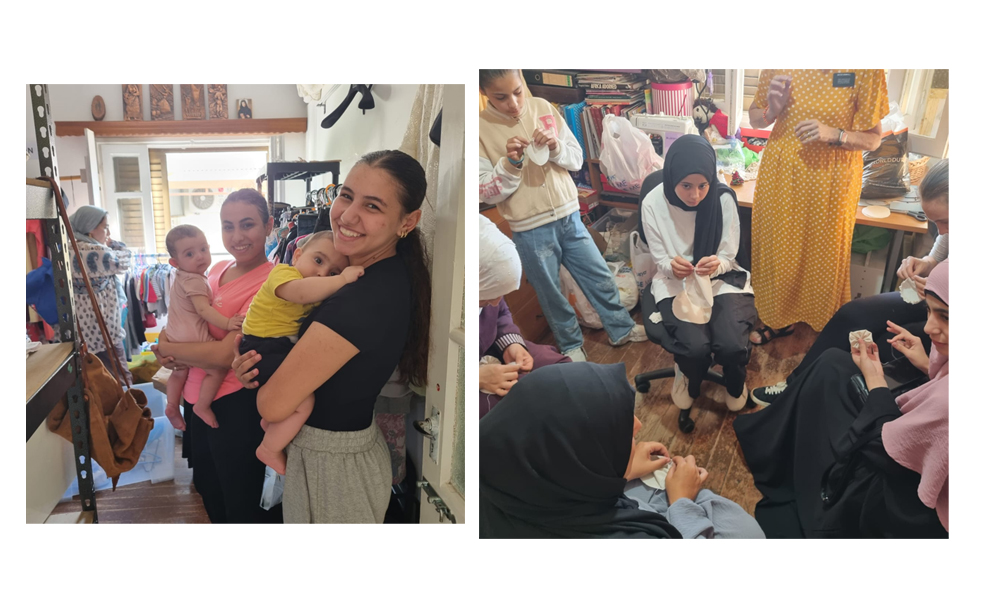
The Learning Refuge now operates as a registered association with more than twenty members and a board. Mary describes its operation as “coordinated in a slightly chaotic way.” The model relies on volunteers offering their skills. “Everyone can contribute as they wish, with the time they have,” she says.
The volunteer team is as multicultural as the community it serves. Women from Syria, Russia, Sri Lanka, the United States, England and Cyprus form a dynamic team, with a core group remaining constant. Marina, Sathya, Lin and Rahab are key members. Rahab, an Arabic-speaking volunteer from the initiative’s start, serves as both a translator and communication bridge for dozens of families.
The centre also cares for children at risk of dropping out of school or being marginalised. One boy frequently visits the centre. “I know he could go the wrong way, but we do not give up on him. We give him small jobs, talk to him. He needs that attention.”
“If you take your eyes off a community, everything collapses,” Mary says, recalling events in Chloraka three years ago. “Support and responsibility must go hand in hand.” She believes the city needs more places like this. “If every area had its own small centre, I do not think negative situations would happen. Personal contact brings respect naturally.” She offers a practical solution. “A municipality could take an empty house, hand it to volunteers and say, ‘Let us see what you can do with this.’ We have nothing to lose, only to gain.”