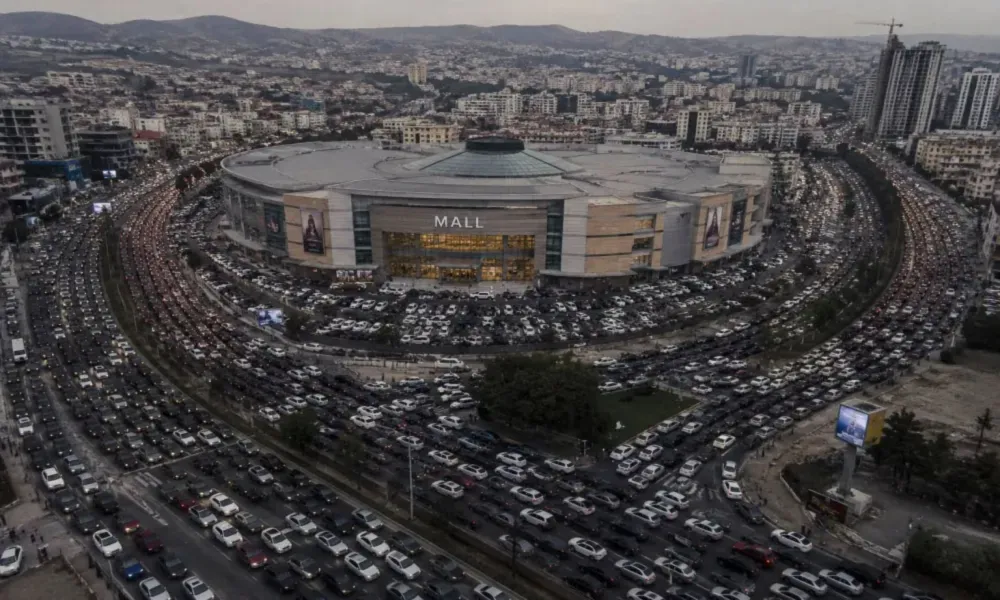

Limassol today faces more problems than any other city in Cyprus. Problems of such scale and intensity that they have altered the city's character and are gradually driving thousands of locals away. The cost of living, particularly housing, combined with the unbearable traffic situation, is making Limassol increasingly inhospitable for Limassolians. This is not an exaggeration. Anyone who knows Limassol or knows people from the city will be aware of residents who have left, despite not wanting to, for financial reasons.
And what is the government doing about it? Not only is it doing nothing, but it appears so provocatively indifferent that it almost seems intent on punishing the city whenever the opportunity arises. What else can explain the decision to grant a planning exemption for a new mall in Limassol?
It is a permit that defies common sense, overrides fundamental planning principles and represents a complete abuse of the exemption process. Public consultations were held, albeit during working hours on a weekday morning. The objections were heard, yet the authorities proceeded regardless. Opinions were sought from the local authority, negative responses were received, and the project moved forward as if nothing had happened.
One cannot help but wonder why the public is consulted at all. And at that Cabinet meeting, if nobody else was listening, do the ministers from Limassol not experience the city's traffic problems themselves? Have they tried getting through Linopetra during rush hour? The last time I checked, ministers still travel by car. They have not switched to helicopters.
Traffic is not the only issue
The discussion has largely focused on traffic congestion. But does anyone care about the city's social cohesion? Is anyone prepared to take responsibility if hundreds more small and medium-sized businesses across the city are forced to close? Another key issue is that of planning zones. Imagine buying a plot of land in a city for €10,000, with permission to build three storeys. Then, because you are influential and powerful, you submit plans for an eight-storey development with significantly greater building density.
Does that make sense? No. Nor would you normally receive planning permission. Yet that is effectively what is happening through the exemption granted for this mall. The ministry is functioning as an ad hoc planning authority, adjusting planning parameters at will and without regard for existing planning policies.
Why did the authorities not undertake a comprehensive review of the area's local plan, allowing all landowners to benefit equally from updated planning rules? The person who sold the land to the mall developers would surely have demanded a higher price had they known a mall would eventually be permitted. Who misled whom, and with the government's official approval?
The issue of compensatory benefits
Perhaps the worst aspect of all is the issue of so-called compensatory measures. This is where major business interests effectively purchase the state's indifference for their own benefit. Instead of being embarrassed by the area's dreadful traffic conditions, caused in large part by years of delayed infrastructure projects, governments simply acknowledge their own shortcomings and allow private developers to pay for the solutions.
In this case, around €10 million may be enough to secure planning approval, after which developers will be able to claim credit for building roads that should have been constructed 15 years ago. Roads that the state neglected to build. Public squares it never prioritised. Museums it ignored. Roundabouts that would not have been necessary in the first place.
Lessons from abroad
It is also worth noting that shopping malls are closing across much of the world, particularly in the United States, often described as the home of the modern mall. Yet in Cyprus, we continue placing malls within the urban fabric and attempting to square the circle. Later, when commercial streets decline and lose activity, people will wonder what went wrong, and blame will likely be shifted elsewhere.
Time for the government to act
Given the current state of Limassol, one can almost imagine mayors searching for private investors to build the northern bypass road, operate bus services, or construct proper cycling infrastructure.
The government must finally assume its responsibilities towards the city that contributes more to the economy than any other, often at the expense of its own residents. Limassol needs projects that can still save what remains to be saved. The practice of governing the city remotely and deciding from offices in Nicosia how Limassol's residents should live must come to an end.