Last weekend I sat in a room with Turkish journalists. Professionals who have learned, through long practice, to navigate the labyrinth of what can and cannot be said. These were reporters who described the architecture of silence their profession now inhabits. They described fearmongering as a political climate that will not be shifting any time soon.
Then I flew back home, turned on the television, and watched most of our celebrated new political movements and their figures refuse, with extraordinary elegance, to answer a single direct question.
The new realpolitik in Cyprus does not intimidate journalists with consequences; it simply renders the question irrelevant. It is a politics of spectacle and deflection, a theatre so lavishly costumed that the audience does not realize there is just sound and no dialogue.
The new phenomena
Consider the phenomenon of Fidias Panayiotou: MEP, YouTube personality, man of the people, human content strategy. He has turned the evasion of accountability into something approaching performance art. The question is asked; Fidias responds with warmth, with humour, with an anecdote, with an appeal to the ‘ordinary’ citizen who is sick of ‘ordinary’ politicians. He is, technically speaking, always talking. He is, substantively speaking, saying nothing. It is a masterclass in the new fluency: the ability to occupy every second of a media appearance without once being pinned down.
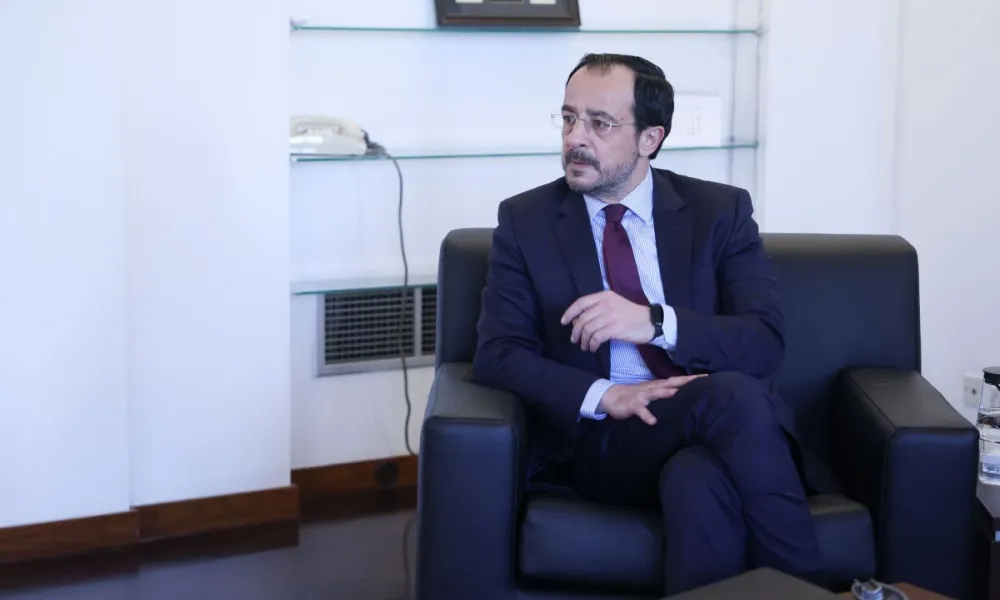
President Christodoulides and his government is a subtler case, and therefore a more instructive one. Here is a man who built his public identity on institutional rigour, the right-hand man of a long established Disy administration, now finding, in the softer light of electoral politics, that questions are inconveniences best managed rather than answered. Journalists in Cyprus report something more dispiriting than outright hostility: a studied unavailability, a courteous brick wall, the sense of a door being closed.
Trump, again
There is a word for this, and the word is Trumpian, though one says it in Cyprus with some hesitation, as though the comparison might be considered excessive but I would argue that it is structurally precise.
What drifted across from the American political theatre, and has since been adopted, with local modifications, by a constellation of European populists, has become the new political operating system. The logic runs as follows: the media is not a public institution worthy of engagement; it is a constituency to be managed, an obstacle to be routed around, a stage to be commandeered for one's own performance and abandoned the moment it demands reciprocity. The journalist who asks a hard question is recast as an antagonist. The politician who refuses to answer is recast as a victim of elite hostility. The audience, exhausted and entertained in equal measure, cheers or tunes out.
This logic requires a particular kind of politician, one fluent in the language of authenticity, skilled at projecting the texture of openness while maintaining the substance of opacity. Cyprus, a small island with a large appetite for personality, has proved fertile ground.
The Turkish journalists I met were describing the absence of press freedom in the way people describe lost things, with the kind of detail that only comes from having once possessed them. The right to put a question and receive an answer. The right to publish without pre-emptive management. The right, in short, to be treated as a representative of a public that is owed an account.
In Cyprus, none of this is formally under threat. Our journalists are still receiving callbacks. Our advertisers are not withdrawing. And yet something is eroding, something softer, harder to litigate, but no less consequential. The expectation that power will submit, however reluctantly, to scrutiny. The understanding that the interview is not a favour the politician extends to the journalist but an obligation the politician owes to the citizen.
A performance
When Fidias performs his way through a press encounter, he is teaching his audience that questions are performance too, that the journalist is a bit player in a show whose star has already decided the narrative. When the government door closes, they are signalling to every politician watching, that unavailability carries no cost.
The political fabric being woven in Cyprus is cut from the finest cloth of relatability, stitched with threads of manufactured spontaneity, hemmed with gestures toward the ordinary citizen.
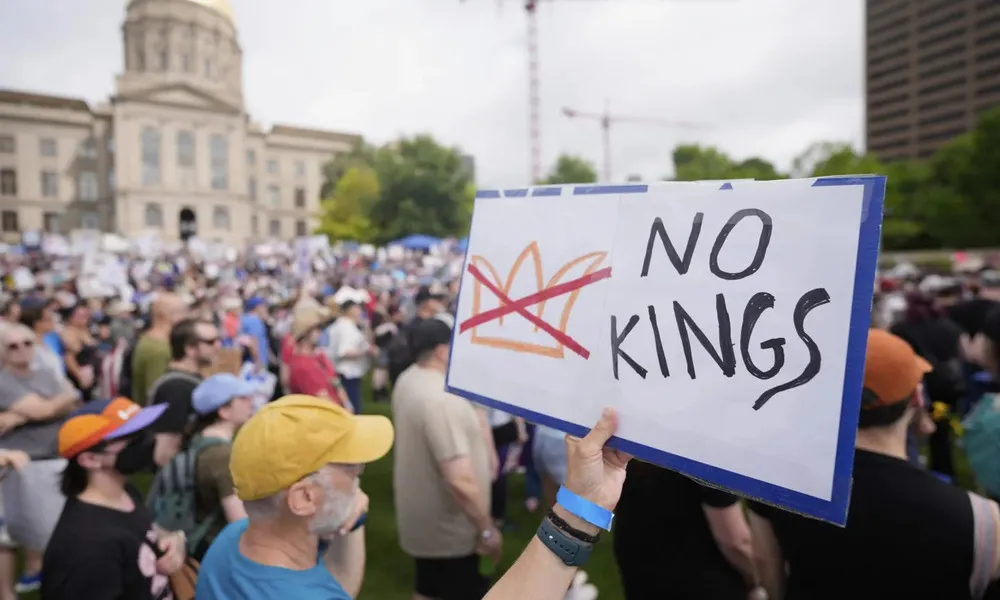
A democracy fit for an unabashed king. The same conditions will apply to whoever sits on the throne.