


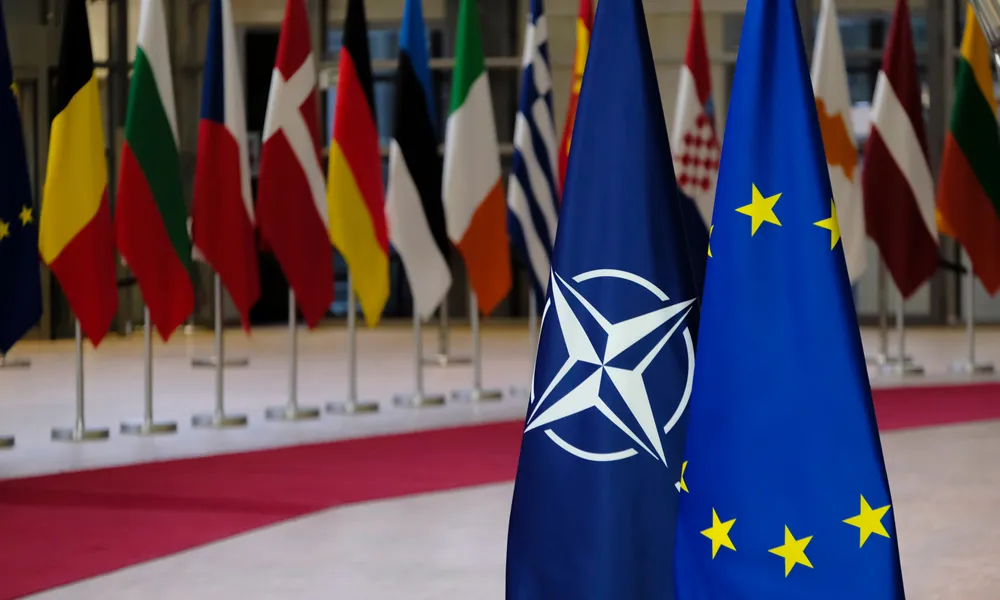
European NATO countries are meeting in Helsingborg, Sweden, on Friday to assess Washington’s position on a possible reduction of US troops in Europe, amid growing tensions with President Donald Trump over the war in the Middle East.
One of the main questions facing the ministers is whether relations with Washington are moving beyond what one European diplomat in Brussels described as a “punishment phase”, following Trump’s anger over Europe’s refusal to follow the US into the war launched alongside Israel against Iran.
On Thursday, Trump announced the deployment of 5,000 US troops to Poland, saying the decision was linked to his good relations with the country’s nationalist President, Karol Nawrocki.
Before arriving in Helsingborg, US Secretary of State Marco Rubio criticised countries that, in his words, “refuse to do anything” to support the United States in the Middle East. He said Trump was “very disappointed” with NATO members that had not allowed the US to use their bases for the war, specifically naming Spain.
“There are countries like Spain that deny us the use of those bases. Then why are you in NATO? That is a very fair question,” Rubio told reporters in Miami. He added that other NATO countries had been “very helpful”, but said the issue would have to be discussed.
NATO Secretary-General Mark Rutte said on Wednesday that European and Canadian allies had taken note of the US call for action. Warships have already been positioned near the Strait of Hormuz, which has been blocked by Iran, as part of an international coalition formed by London and Paris.
NATO could also take on a role in that operation, although no decision has yet been made. “I am thinking about it,” the alliance’s Supreme Allied Commander Europe, US General Alexus Grynkewich, said on Tuesday.
Trump has continued to press European allies to act to reopen the strategic sea route, through which around one fifth of global hydrocarbon production normally passes.
The European ministers are also expected to reaffirm their support for Ukraine. Rutte has proposed that NATO countries, excluding the US, commit at least 0.5% of their GDP to military support for Kyiv.
Rutte acknowledged on Wednesday that he did not believe the proposal would be accepted, but said he wanted it discussed, arguing that countries such as the Netherlands and Germany currently carry a disproportionate share of the burden.
“There are also many who are not spending enough,” Rutte said on Thursday during a press conference in Stockholm.
Source: CNA