
A Libyan appeals court in Tripoli has acquitted 31 former officials from Muammar Gaddafi’s regime over charges linked to the violent suppression of protesters during the 2011 uprising.
The verdict, issued on Monday, brings to an end a case that opened in 2014 and centred on allegations that senior figures from the former regime ordered or carried out attacks on demonstrators during the revolt that ended Gaddafi’s 42-year rule.
The defendants had faced 37 criminal charges, including killing unarmed protesters, inciting civil war, looting, destruction and genocide.
Among those acquitted were former intelligence chief Abdullah al-Senussi, former Prime Minister Baghdadi al-Mahmoudi, Mansour Daw, Mohamed Abu al-Qasim al-Zawi and Mohamed Ahmed al-Sharif.
The court also dropped proceedings against several defendants who died before the verdict, including former External Security Agency chief Abu Zeid Dorda and former Deputy Prime Minister Abdelhafiz al-Zlitani.
Charges against Saif al-Islam Gaddafi, Muammar Gaddafi’s son, were also dropped after his death in February. He had been among the defendants sentenced to death in 2015.
A disputed trial
On 28 July 2015, a Tripoli court sentenced nine defendants to death by firing squad, including al-Senussi, Saif al-Islam, al-Mahmoudi and Dorda. Another 23 defendants received prison sentences, while four were acquitted.
The trial was criticised by human rights organisations, including Human Rights Watch and the International Federation for Human Rights, which said the proceedings were marked by due process violations and took place amid armed conflict and institutional collapse.
The International Criminal Court had issued arrest warrants for Saif al-Islam and al-Senussi in 2011 and sought to try them in The Hague. Tripoli, however, argued that national proceedings should take precedence.
The death sentences were later appealed to Libya’s Supreme Court, which overturned the convictions and referred the case back to the Tripoli Court of Appeals. Deliberations continued for more than four years before Monday’s acquittal.
Despite the ruling, some of those named still face separate cases. Al-Senussi, who was extradited from Mauritania to Libya in 2012, remains on trial over the Abu Salim prison massacre, a separate case involving the killing of an estimated 1,200 inmates at a Tripoli jail in June 1996.
Anger over accountability
The acquittal has sparked strong reactions in Libya, where victims and their families have waited years for accountability over crimes committed during the 2011 uprising.
Human rights groups warned that the ruling, issued in the context of Libya’s fragile and divided judicial system, risks deepening impunity for abuses committed during the revolution.
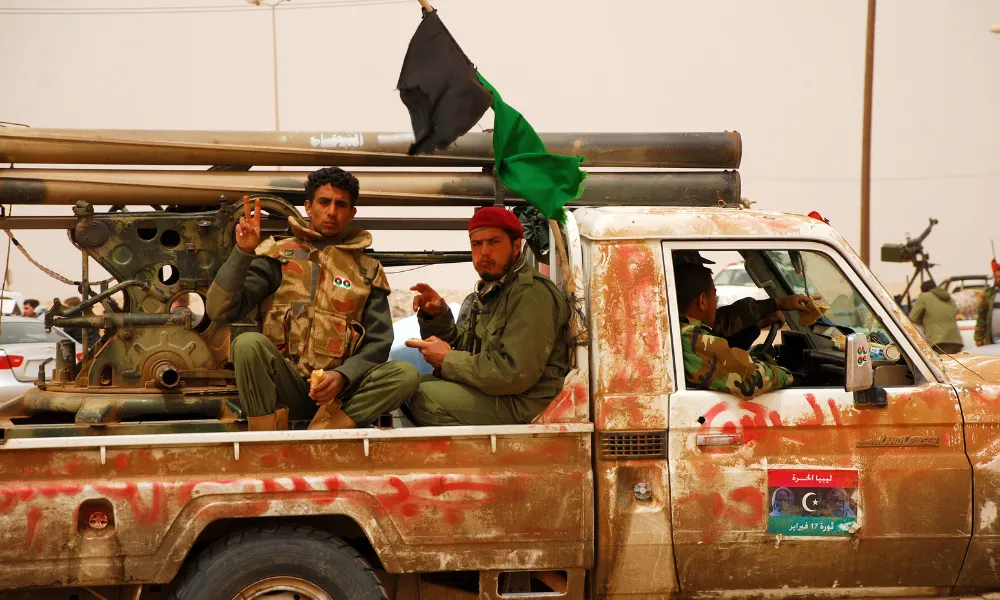
Libya’s February 2011 uprising began as peaceful protests before escalating into an armed conflict. Gaddafi was captured and killed by rebel fighters on 20 October 2011.
The country has remained divided since, with the internationally recognised Government of National Unity, led by Prime Minister Abdul Hamid Dbeibeh, based in Tripoli, and a rival administration in the east aligned with General Khalifa Haftar and parliament speaker Aguila Saleh. Armed groups continue to compete for territory, influence and resources across the country.
Source: Euronews