


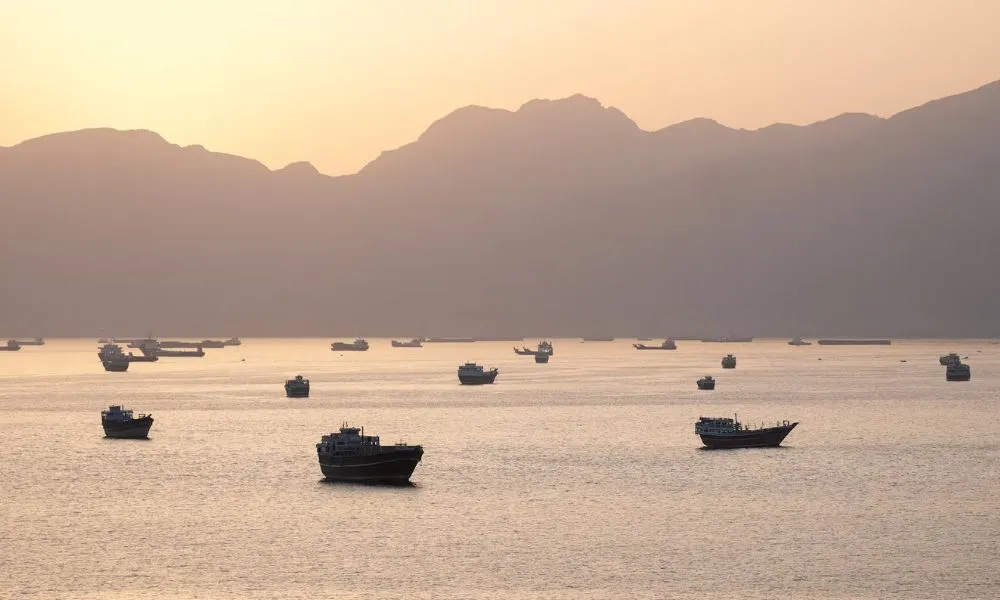
Iran’s state broadcaster reported on Saturday that European countries are in talks with Tehran regarding the passage of vessels through the Strait of Hormuz.
“Following the transit of ships from East Asian countries, particularly China, Japan and Pakistan, we have now received information that Europeans have also begun negotiations with the naval forces of the Islamic Revolutionary Guard Corps,” the state network said, without specifying which countries are involved.
Iran has largely restricted shipping through the strategic passage since the start of its conflict with the United States and Israel on 28 February. A fragile ceasefire has been in place since 8 April.
Tehran’s control over the route has unsettled global markets and provided it with significant leverage, while the United States has imposed its own naval blockade on Iranian ports.
In peacetime, around one‑fifth of global oil and liquefied natural gas shipments pass through the Strait of Hormuz, along with other key commodities.
In recent days, Iran has allowed dozens of vessels to pass, including Chinese ships, “following agreements on management protocols,” according to the Guards.
Tehran has repeatedly stated that navigation through the strait “will not return to pre‑war conditions,” and last month announced it had begun collecting revenue from transit fees.
On Saturday, Ebrahim Azizi, head of the Iranian parliament’s national security committee, said Iran has prepared a “professional mechanism” for managing traffic through the strait, which will be presented soon.
He added that only commercial vessels and those cooperating with Iran will benefit from the system, which will include fees for specialised services.
He also said the route “will remain closed to participants in the so‑called ‘freedom project,’" referring to a temporary US military operation to escort commercial vessels trapped in the area.
Source: CNA