

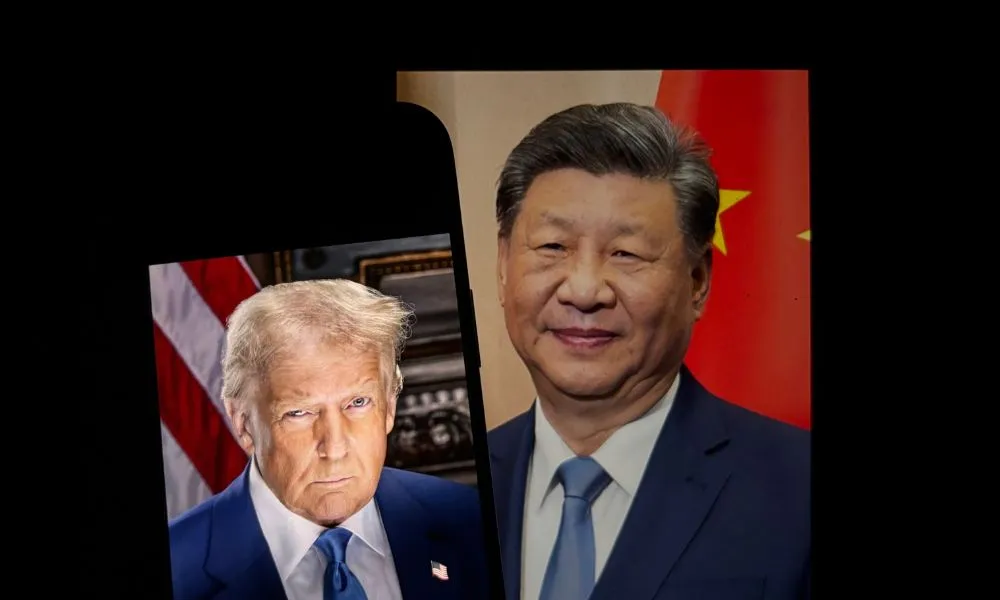
The first China–United States summit in a decade has been described as a display of soft diplomacy. A warm tone, absence of major trade agreements and a restatement of red lines on key issues marked Donald Trump’s two‑day visit to Beijing. Iran and Taiwan remained points of tension, despite the US president rating the visit as “almost perfect.”
“A lot of things have happened and you'll be hearing about them,” Trump said upon returning to the White House.
President Trump: I can say is that was a great success.
— Donald J Trump Posts TruthSocial (@TruthTrumpPost) May 15, 2026
A lot of things have happened and you'll be hearing about them. I think it really was a historic moment. pic.twitter.com/6mm8pX6Up2
He also said he was considering lifting sanctions on Chinese companies purchasing Iranian oil and would take a decision soon. Speaking to reporters aboard Air Force One, Trump added that he supported a 20‑year suspension of Iran’s nuclear programme but stressed the need for a 'real' commitment from Tehran.
Both sides appeared to converge in their official statements on keeping the Strait of Hormuz open. According to Trump, China committed not to send military equipment to Iran.
However, Chinese President Xi Jinping warned that any mismanagement of the Taiwan issue could lead to escalation. Trump said US policy on Taiwan remains unchanged and that no decision has been taken on supplying new weapons to Taipei, while warning Taiwan against declaring independence.
On trade, Xi agreed to purchase 200 Boeing aircraft, significantly fewer than the 500 previously announced by Trump. There were also no signs of progress on high‑technology and artificial intelligence issues.
Uncertainty also remains over the fragile 'trade truce' reached after last year’s tariff war, with Trump stating that tariffs were not discussed with Xi.
During the visit, Xi hosted Trump at Zhongnanhai, the compound that serves as the official residence and headquarters of China’s Communist Party leadership, often compared to the White House or the Kremlin. Xi said he chose the venue as a gesture of appreciation for Trump’s hospitality at Mar‑a‑Lago in 2017.
Xi also drew attention to the site’s history, noting that Chinese leaders from Mao Zedong to Hu Jintao had been based there, and highlighting centuries‑old trees within the complex.
Business developments also featured during the trip. Nvidia chief Jensen Huang lobbied for approval of sales of less advanced chips to China, while Tesla, led by Elon Musk, continues to lose market share in China to rival BYD.
Apple chief Tim Cook is facing increased competition from Chinese smartphone manufacturers such as Huawei and Xiaomi. Trump, however, said tariffs were not even raised during talks with Xi.
Source: ERT