


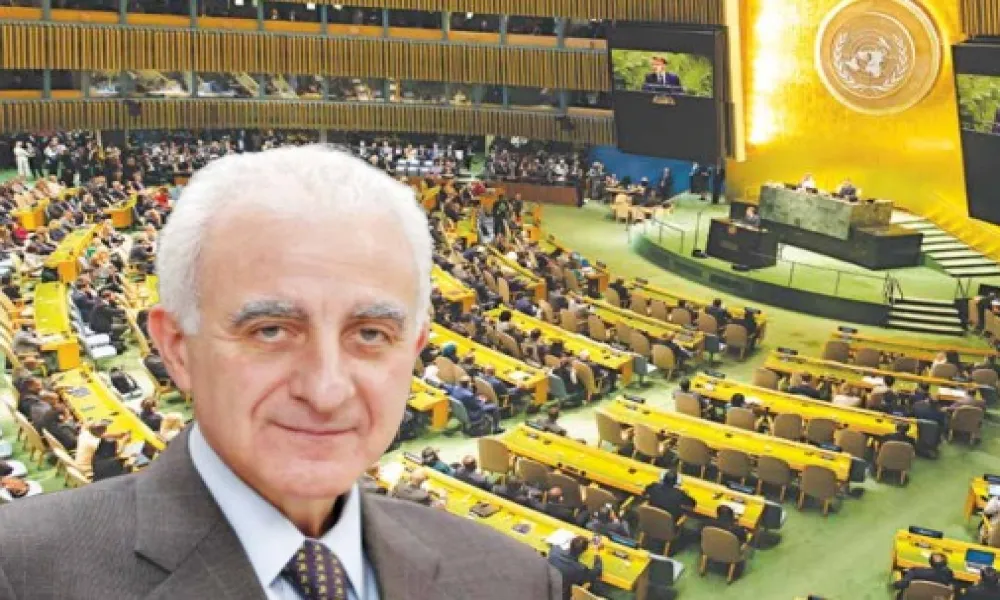
Cyprus’ candidate for the presidency of the 81st session of the United Nations General Assembly (UNGA), Andreas Kakouris, presented his vision on Wednesday during an informal interactive dialogue convened by the President of the 80th session of the General Assembly, Annalena Baerbock.
Kakouris said the next General Assembly would be “consequential”, given the convergence of major processes, including the selection of the next UN Secretary‑General, ongoing UN reform efforts, the UN80 initiative, the Pact for the Future and the implementation of the Sustainable Development Goals.
At the heart of his vision is the idea of the United Nations as “our home, our future, our responsibility”. Kakouris said he chose those words carefully, describing the UN not as a building or a construct but as “a sense of belonging”. He stressed that the organisation remains indispensable, arguing that “if we didn’t have a United Nations, we would need to have one”, while adding that the health of multilateralism ultimately depends on how member states choose to treat it.
Small island
Referring to Cyprus, Kakouris described the country as “a small island in the Eastern Mediterranean” and a “lighthouse whose beam reaches Africa, Asia and Europe”. This position, he said, has allowed Cyprus to engage with diverse partners and attempt to bring them together. He added that Cyprus is “not North, not South, not East, not West”, but “all of those” and therefore “globally central”.
New UNSG
On the selection of the next UN Secretary‑General, Kakouris said the process is “vitally important” and may extend into the next General Assembly session. He emphasised that the General Assembly’s role is not simply to “rubber stamp” Security Council decisions, arguing that any recommended candidate should be given the seriousness and attention the position deserves. He suggested that an additional dialogue with the proposed candidate could be considered.
Kakouris, a career diplomat, described himself as a firm believer in the United Nations and in multilateralism, values he said are deeply shared by Cyprus. He made particular reference to small states, noting that Cyprus has never held the UNGA presidency and arguing that “everybody, small or large, should be given that opportunity to serve”. For smaller countries, he said, the UN Charter represents “our sword and our shield”, grounded in respect for international law.
If elected, Kakouris pledged to serve as a “full‑time President” of the General Assembly, stressing the importance of listening, dialogue and inclusivity. He also called for shifting perceptions of the UN away from a “narrative of failure” towards one highlighting what the organisation “has delivered, is delivering and will deliver”.
Baerbock, for her part, said the 81st UNGA session would be “particularly consequential”, citing institutional reforms, leadership transitions and ongoing global crises. She stressed that the next president would need to promote cohesion, inclusivity and realistic alignment between the Assembly’s ambitions and available resources.
Source: CNA