


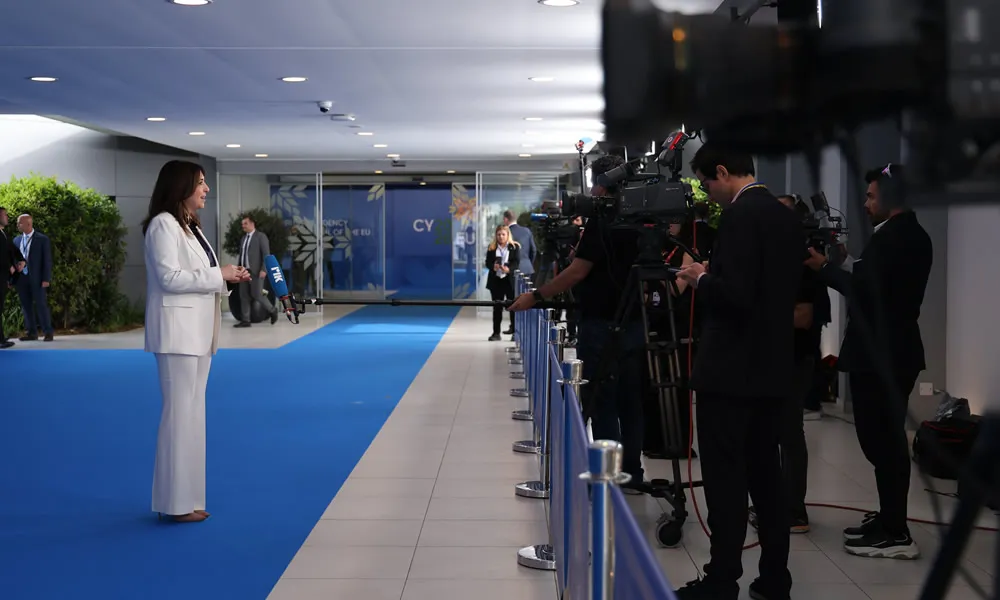
EU ministers for European Affairs held an informal meeting in Nicosia on Sunday, gathering at the Filoxenia Conference Centre to discuss three issues at the top of the bloc's agenda: the 2028–2034 Multiannual Financial Framework, EU enlargement, and cooperation with the United Kingdom on countering foreign information manipulation and interference. The meeting was chaired by Cyprus's Deputy Minister for European Affairs, Marilena Raouna, and also included European Commissioner for Budget Piotr Serafin, ministers from candidate and potential candidate countries, and a UK representative.
A budget built for crisis
The first session centred on the EU's next long-term budget and its capacity to respond to unforeseen crises. Ministers called for a more agile framework that would allow the Union to act decisively in the face of geopolitical shocks, with discussion covering both overall budgetary flexibility and dedicated instruments for crisis prevention and response. Raouna said the objective of the Cyprus Presidency is to present "a reasonable and well-thought-out negotiating box with the first figures in June 2026," describing the MFF as the key instrument for enabling collective and effective crisis response.
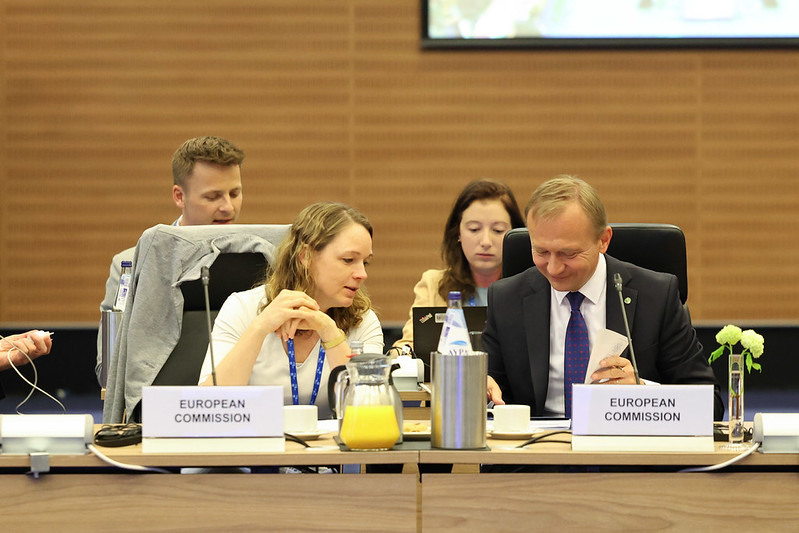
EU enlargement featured prominently on the agenda, with candidate and potential candidate countries participating directly in the session. Ministers underlined that enlargement represents a strategic investment in European security, resilience and unity, while stressing that geopolitical urgency must not lower the bar for accession. The rule of law, fundamental rights, democratic institutions, public administration reform and economic criteria were reaffirmed as the structural foundations of membership, not mere technical benchmarks. The meeting emphasised that progress must be recognised and rewarded, and that the process must remain credible for candidates and comprehensible for EU citizens. "When enlargement is built on shared values and solid institutions, it makes the entire Union stronger," Raouna said.
EU and UK unite against disinformation
The final session brought together EU ministers and UK Minister for the Constitution and European Union Relations Nick Thomas-Symonds to discuss the growing threat of foreign information manipulation and interference. Ministers agreed that the challenge is shared and evolving, requiring coordinated responses particularly given the increasing misuse of emerging technologies including artificial intelligence. Discussions focused on strengthening information sharing, coordinating international efforts and building democratic resilience, including through the European Democracy Shield and the recently launched European Centre for Democratic Resilience. Raouna described foreign information manipulation as "a cross-cutting challenge affecting our democracies internally and externally," noting that the Centre, launched in February on the margins of the General Affairs Council, aims to strengthen EU coordination and preparedness.