


A set of elections held across Britain on 7 May has redrawn the country's political map with a force that few precedents can match. Labour suffered what several commentators described as a historic drubbing in English local elections, Plaid Cymru ended Labour's 26-year grip on Welsh government, and Reform UK posted results that have transformed it from a protest vehicle into a credible force for national power.
Reform party surges, Labour haemorrhages
With 113 of 136 councils having declared, Reform UK won 1,257 seats and took control of 10 councils, while Labour lost 1,121 councillors and 28 councils. By the time all results were in, Reform had taken 1,428 seats, an increase of 1,426, while Labour fell to 954 seats, a decrease of 1,375. The Liberal Democrats gained 105 seats and one council, the Conservatives lost 488 seats and control of six councils, and the Greens gained 287 seats and three councils.
Reform made sweeping gains in working-class areas across England's north, wiping Labour out in places like Hartlepool that were once solid party turf. Among the more symbolic losses was Labour's Camden in north London, a borough associated with Prime Minister Keir Starmer's own political base, which fell to the Greens. Labour also lost Preston, Cambridge, Oxford and Wandsworth. According to Sky News's national equivalent vote, Reform took 27% across England, ahead of the Conservatives on 20%, Labour on 15%, the Greens on 14% and the Liberal Democrats on 14%.
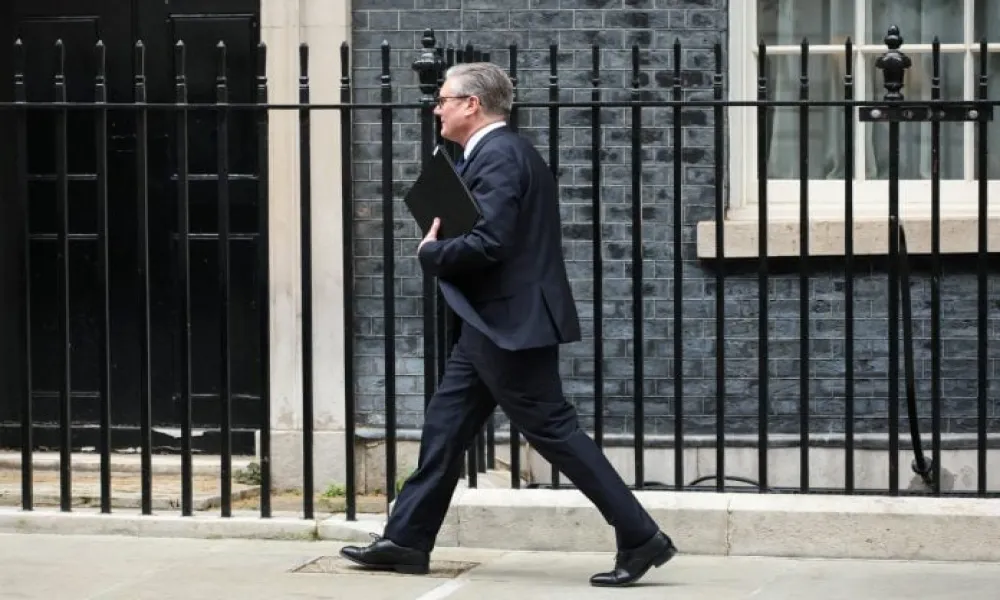
Nigel Farage described the results as "a truly historic shift in British politics," saying Labour was being "wiped out by Reform in many of their traditional areas." Starmer acknowledged the picture was "very tough" but said he had no intention of stepping down. Chancellor Rachel Reeves called the results "difficult" while insisting the government retained a mandate for change. Defence Secretary John Healey conceded the results had fallen short of expectations but warned against the party turning inward.
Wales: Plaid ends Labour's era
In Wales, Labour lost power for the first time, with Plaid Cymru coming first and Reform second in the Senedd elections. The result ends more than a quarter century of Labour dominance in Cardiff Bay since the Senedd was established in 1999, though Plaid fell short of an outright majority in the expanded 96-seat chamber, making coalition negotiations the next order of business.
In the Scottish Parliament election, also held on 7 May, the SNP won 58 seats, down five on notional 2021 figures, while Reform UK took 17 seats in its first Holyrood election. Labour won 17 seats, the Greens 15, the Conservatives 12 and the Liberal Democrats 10. The SNP remains the largest party but falls well short of the 65 seats needed for a majority in the 129-member parliament, leaving First Minister John Swinney needing to seek support from other parties to govern. Reform's arrival as a double-digit force at Holyrood, with the same tally as Labour, signals that the realignment now visible across Britain has reached Scotland as well.
Source: CNA / Reuters