Environmental concerns over the proposed crossing
Environmental circles have questioned whether the widening and improvement of an old road, currently only three to four metres wide, justify the potential loss of an important wildlife habitat.
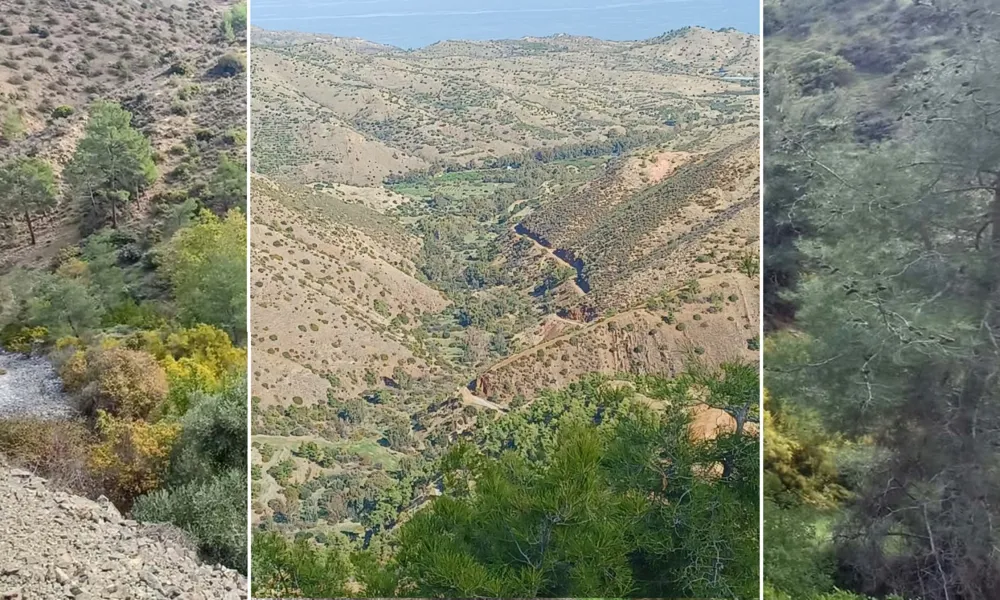
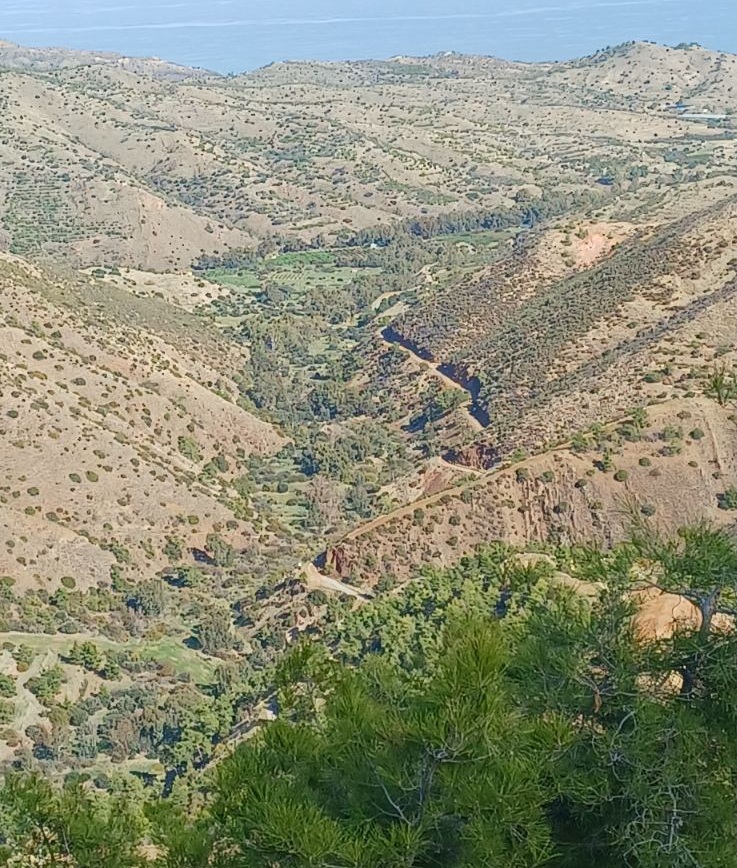
The area supports species including the Cyprus mouflon, while land clearance could also degrade the Paphos Forest. Concerns have focused on whether a substantial area of natural habitat should be affected to provide faster winter access to the Troodos snow for some Turkish Cypriots.
Given the need for environmental assessments and the difficult terrain, the crossing is not expected to provide an immediate benefit to either community. The announcement of the measure has therefore prompted questions about its practical delivery and the potential environmental damage associated with it.
According to information obtained by Politis, the political decision to proceed with the Kampos-Karavostasi crossing was taken without seeking the views of the government departments responsible for environmental protection.
Six planning and environmental designations
Sources from environmental organisations who spoke to Politis identified six planning and environmental characteristics of the area that are relevant under the legislation of the Republic of Cyprus.
The sources did not take a position for or against establishing a crossing in the area and said they supported the opening of crossing points. However, they raised the question of whether a Special Ecological Assessment is required before roadworks can proceed.
The six designations and characteristics are:
-
Planning Protection Zone Z3: A strict protection zone covering areas of particular ecological, natural or landscape value, including areas of natural beauty, forests and river systems.
-
Paphos State Forest: The area falls within the main state forest of Paphos.
-
Special Area of Conservation (SAC) Paphos Forest: The area forms part of Cyprus's Natura 2000 European network.
-
Special Protection Area (SPA) Paphos Forest.
-
Important Cyprus mouflon habitat: The area is among the most significant locations in terms of mouflon population density and is therefore considered a vital habitat for the species.
-
Bonelli's eagle territory: The area includes an active territorial range and a no-disturbance zone for the Bonelli's eagle.
These characteristics have raised questions about the environmental procedures that may be required before construction begins.
Road widening and tree removal
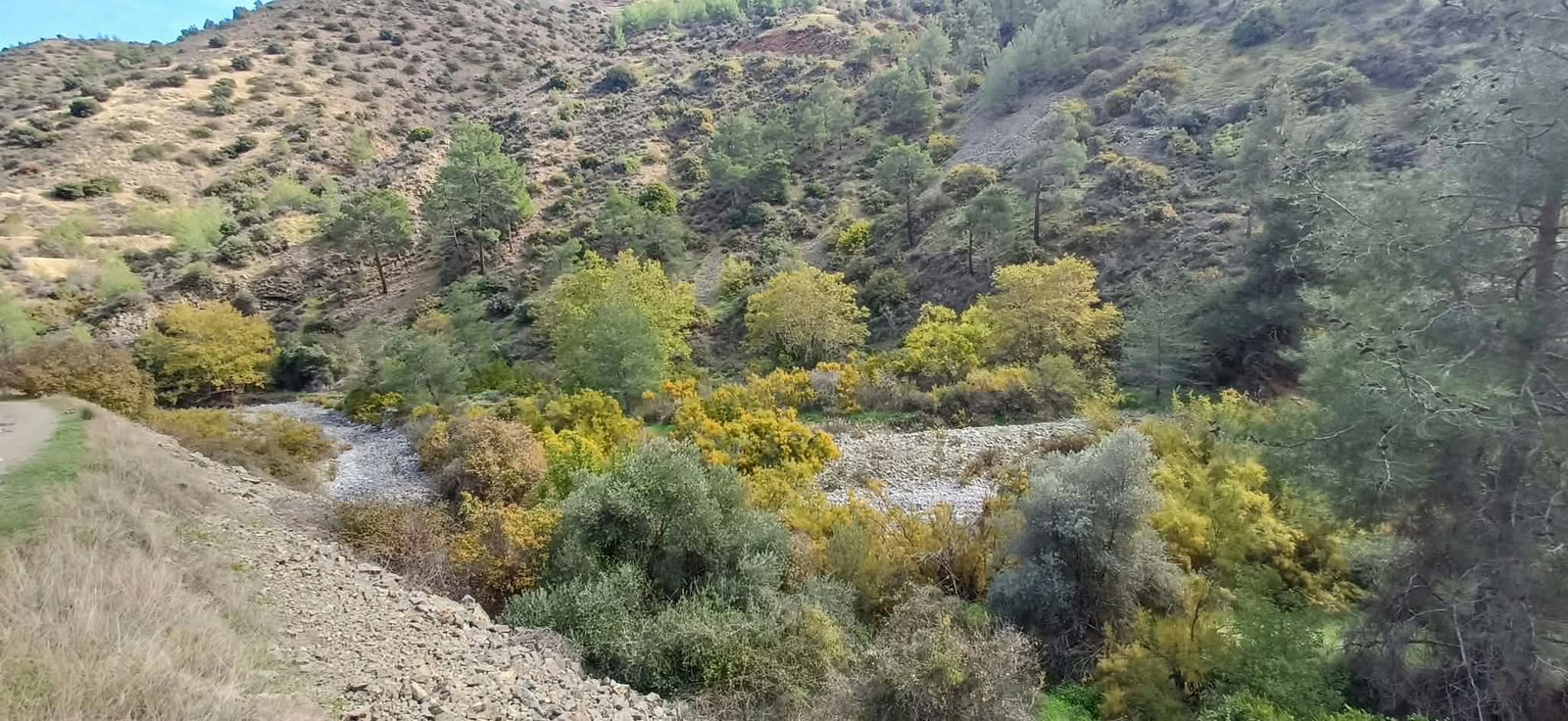
The existing dirt road was abandoned after 1974 and is currently used as a firebreak. According to the environmental sources who spoke to Politis, it is approximately three to four metres wide.
To function as a crossing road, it would need to accommodate traffic in both directions, requiring widening to approximately six or seven metres.
The sources questioned the environmental consequences of this expansion, particularly the loss of habitats through the removal of hundreds of trees and the clearance of low-growing woodland vegetation.
The proposed works would therefore involve more than resurfacing the existing road, with the necessary widening potentially affecting a considerable area of forest and surrounding vegetation.
Potential impact on the Cyprus mouflon
A person involved in nature conservation who spoke to Politis said that even if environmental studies were carried out beforehand, the project would still cause substantial damage while offering limited benefits to the everyday lives of Greek Cypriots and Turkish Cypriots.
According to the source, widening and improving the road would:
-
Degrade the Paphos Forest.
-
Fragment the habitat of the Cyprus mouflon.
-
Increase the risk of vehicles colliding with mouflon.
-
Cause disturbance to wildlife during construction and subsequently through increased vehicle traffic.
The source questioned the practical benefit of the project, particularly if its use was primarily to allow some Turkish Cypriots to reach the snow in Troodos during the winter.
The road improvements would also require the removal of a substantial section of the mountain and the installation of safety barriers along cliffs above the river.
According to the source, these interventions are expected to cause significant environmental damage.
Environmental authorities not consulted
In communication with Politis, the Department of Environment confirmed that it had not yet been asked to provide its opinion on the proposed crossing.
The department said that, when consulted, it would submit a documented position on the matter.
According to information received by Politis, the Game and Fauna Service, which is responsible for the management of the Cyprus mouflon, was also not informed before the political decision was taken.
The absence of prior consultation has added to questions about the environmental assessment process and the involvement of the competent authorities in the planning of the project.
Kampou community leader seeks political support
After being informed of the concerns raised by environmental organisations and biodiversity specialists, Kampos community leader Ioannis Papadopoulos said he had sought the support of a group of MPs from a particular political party.
Speaking to Politis, he said he wanted to prevent second thoughts from emerging about a project strongly desired by the community.
Papadopoulos also said he had contacted the Greek Cypriot negotiator, Menelaos Menelaou, to express his view that it would not be prudent for environmental issues to arise.
In his view, one of the problems facing the community is its inclusion in the European Natura 2000 network. He attributed this decision to actions by civil servants who, he claimed, did not know where Kampou was located or had never spent even a single day in the countryside.
He also said he had been informed that a meeting with officials from the Department of Public Works, who will be involved in the project's planning, would be scheduled in the coming days.
Existing road route through state forest and private land
Regarding the section of the old road located in the government-controlled areas, Papadopoulos said that approximately five to six kilometres of it pass through state forest.
A further three to four kilometres run alongside privately owned plots of land.
The route and the terrain involved are among the factors that will need to be considered as the project's planning progresses.