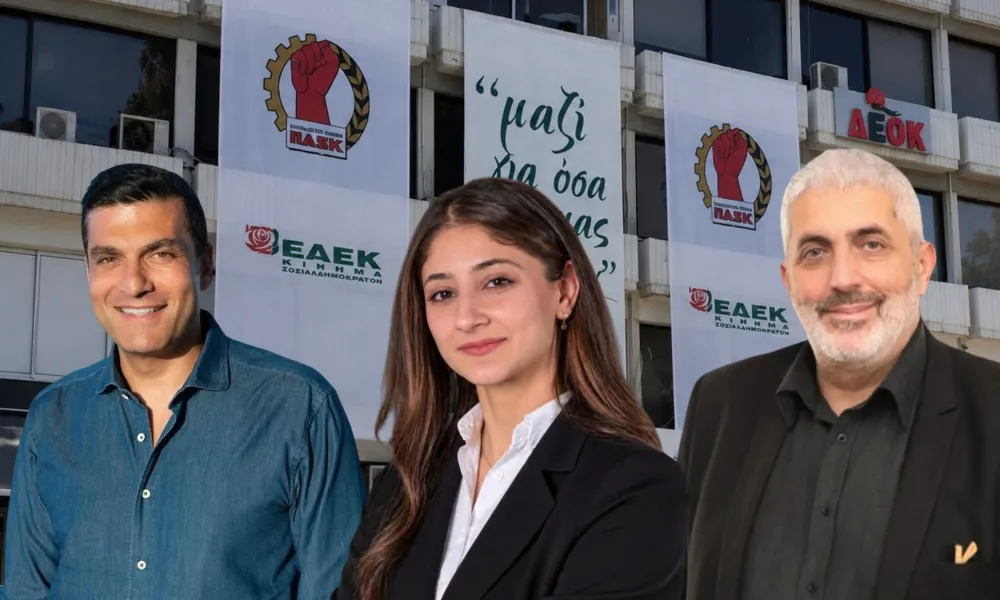

Kostis Efstathiou announced yesterday that he will not contest the Edek leadership at the party's electoral congress in December.
Speaking on RIK's Third Programme, the former MP said the party needs unity and collective decision-making rather than another contest for the presidency.
"The last thing the party needs is to enter another internal electoral process," he said.
Efstathiou had previously indicated that he would decide within 10 days whether to run and had revealed that he proposed a co-leadership arrangement with Sophia Christodoulou Makri, an idea she rejected.
Outside the competing camps
Efstathiou has remained outside the two factions currently clashing within Edek.
He was expelled from the party during the presidency of Marinos Sizopoulos and, after his expulsion was lifted, attended the Constitutional Congress held on 25 October, which was boycotted by Sizopoulos' associates.
At the same time, he described the congress as rushed.
With Efstathiou stepping aside, the leadership race loses a figure capable of appealing to both sides. If an opposing candidacy emerges, the contest is now expected to become a direct confrontation between the current leadership and those challenging it.
Attention turns to Hannides
Attention is now focused on Marios Hannides, a member of Edek's Political Bureau, who has expressed interest in running but has not yet made a final decision.
In September, Hannides submitted a candidacy but later withdrew in support of Koullis Mavronikolas.
He is also one of the eleven associates of Sizopoulos who, in letters dated 16 and 20 October, accused Christodoulou Makri of anti-institutional behaviour and raised concerns about financial management.
The group challenged the legitimacy of the October congress and refused to attend. Hannides later wrote that Edek belongs neither to any leadership nor to any faction.
Looking ahead to December
The party's grassroots membership appears to have already signalled a preference for change.
The election of Sofia Christodoulou Makri in the first round in September, following the resignation of Nikos Anastasiou, was widely viewed as a vote for renewal in a party marked by years of internal divisions and expulsions.
The October Constitutional Congress, which attracted strong member participation despite the boycott by the group of eleven and saw the return of previously expelled or inactive members, suggested that a significant section of the party wants to turn the page.
The December contest is expected to show whether that mood will prevail against supporters of Sizopoulos and will help shape Edek's course as it seeks to rebuild after losing its parliamentary representation in May and looks ahead to the 2028 presidential election.
Efstathiou acknowledged that difficult decisions lie ahead for the party but said that, before anything else, "we need to come together."