Cyprus enters the final stretch before Sunday’s parliamentary elections, with Chief Returning Officer Elikkos Ilias saying the state mechanism is fully prepared for the vote and urging citizens to take part.
Speaking at a press conference, Ilias said 569,182 citizens are eligible to vote, an increase of 11,081 compared with the 2021 parliamentary elections. Of these, 568,587 are registered on the permanent electoral roll, including 859 Turkish Cypriots, while 595 are on the special roll for enclaved voters and 414 on the roll for prisoners.
Particular emphasis was placed on young voters, with 11,733 citizens eligible to vote in general elections for the first time. Ilias said abstention was not merely a choice, but amounted to giving up a fundamental democratic right.
A total of 1,217 polling stations will operate for the election, including 1,204 in Cyprus and 13 for the election of the representative of the Maronite religious group. Another 13 polling stations will operate abroad, five in Athens, three in Thessaloniki, four in London and one in Brussels, serving 6,501 voters who have registered to vote outside Cyprus.
Around 9,000 people will work on the electoral process, including 5,618 officials at polling stations, 2,100 police officers and 809 staff responsible for recording and issuing results.
Voting in Cyprus and Greece will take place from 7am to 6pm, with a break from noon to 1pm. In the United Kingdom and Belgium, voting hours have been adjusted so that polling stations close at the same time.
Voters must present either their electoral booklet or Cypriot identity card. For the first time, the digital identity card through the Digital Citizen application will also be accepted. Those who have lost both their identity card and electoral booklet can still obtain an immediate replacement booklet from district offices.
A record 752 candidates are contesting the 56 seats in the House of Representatives. Of these, 743 are running on party tickets and nine as independents, while nearly three in ten candidates are women.
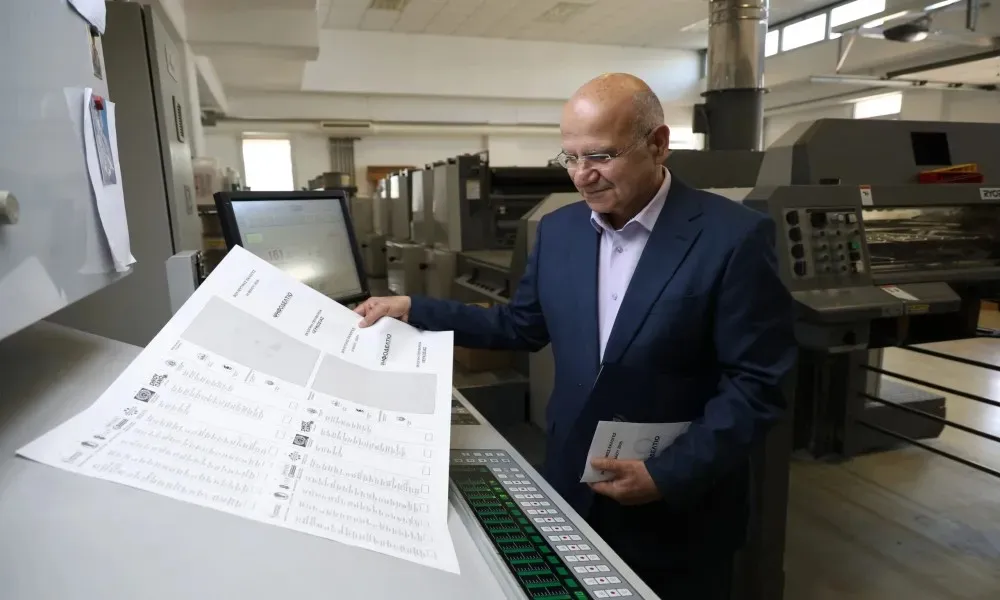
Due to the increased number of candidates, ballot papers will be double-sided for the first time in most electoral districts. Ilias urged voters to familiarise themselves with the ballot papers in advance through the elections website to avoid mistakes.
He also reminded voters of the basic voting rules, noting that they may vote for only one party ticket or one independent candidate. Otherwise, the ballot will be invalid. The number of preference votes varies by district. If a voter marks more preference votes than allowed, the ballot remains valid for the chosen party, but the preference votes are not counted.
Ilias issued a particular warning over mobile phone use inside polling stations, stressing that it is strictly prohibited. The presiding officer has the authority to remove offenders or even request their arrest. The only exception concerns the use of the digital identity application for identification purposes.
Political rallies and party activities must end at midnight on Friday. From Saturday and on election day, political advertising, statements and election-related posts are prohibited, including on social media.
The first results are expected between 6:30pm and 7pm on Sunday, while the picture on party percentages and seat allocation is expected to become clear by around 9:30pm. The names of elected MPs are expected after 1:30am on Monday, as additional time will be needed to count preference votes.
The official proclamation of the elected MPs will take place on Monday, May 25, at the Nicosia Municipal Theatre.