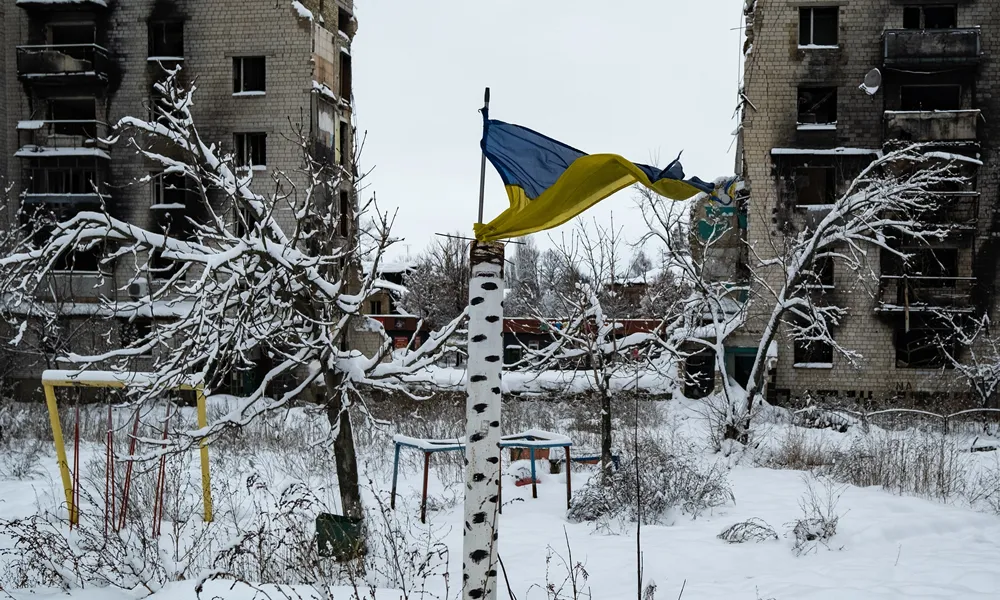

The Republic of Cyprus has reaffirmed its unwavering support for Ukraine despite the economic impact and consequences of sanctions against Russia, according to a statement issued by the House of Representatives following a meeting between senior Cypriot and Finnish officials.
The statement said the position was reiterated by Haris Georgiades, chairman of the Parliamentary Committee on Foreign and European Affairs, during talks with senior officials from Finland’s Ministry for Foreign Affairs.
EU security
The Finnish delegation included Ambassador Mikko Kivikoski, Deputy Director General and Senior Director for Russia, Eastern Europe and Central Asia, as well as Vilma Peltonen, head of the Ukraine political affairs team. Finland’s Ambassador to Cyprus, Päivi Peltokoski, was also present.
During the meeting, the participants exchanged views on European and international issues, focusing on the war in Ukraine, European security, hybrid threats and the crisis in the Middle East.
According to the statement, Georgiades “reaffirmed the unwavering support of the Republic of Cyprus for Ukraine despite the cost, including the consequences arising from the implementation of sanctions against Russia”.
He also stressed that “the defence of international legality constitutes a collective responsibility in every case of its violation resulting from the revisionist policies of any state”.
New geopolotical reality
Georgiades added that “Russia’s war against Ukraine has clearly highlighted the need to strengthen European security and the strategic autonomy of the European Union”.
For his part, Kivikoski referred to the major changes brought about by the new geopolitical reality in Finnish security and defence policy, noting that “the European Union can no longer rely on third countries for its security”.
The discussions also covered hybrid threats and migration, with Kivikoski accusing Russia of weaponising migration, while Georgiades said Cyprus was facing similar pressure through the Turkish-occupied areas of the island. He added, however, that migration flows had decreased as a result of EU assistance and support.
Regarding the situation in the Middle East, Georgiades highlighted the need for a stronger European Union presence in the region, as well as timely European responses and the meaningful application of conditionality in the bloc’s relations with third countries.
Source: CNA