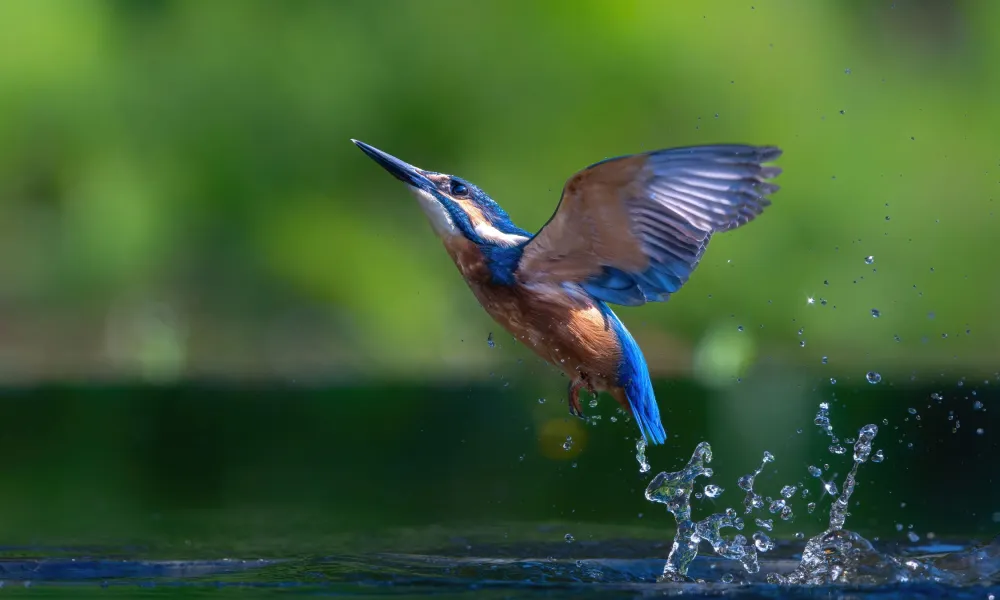

Most people have imagined what it would be like to fly. For birds, however, flight is an everyday activity. Yet scientists have long struggled to answer a seemingly simple question: do birds actually enjoy flying?
A team of researchers from Utrecht University sought to investigate the issue by studying a group of galahs, a species of pink-and-grey Australian cockatoo, living at the Avifauna Bird Park in the Netherlands.
According to behavioural biologist Jorg Massen, the study was inspired by a lifelong curiosity about why birds often take flight even when there appears to be no immediate need to do so.
Measuring emotions in animals
Determining whether animals experience emotions is notoriously difficult because feelings cannot be observed directly.
Researchers instead assess emotional states through a combination of behaviour, decision-making and physiological responses. This approach is based on methods commonly used in human psychology, where emotions influence how individuals behave, make choices and respond physically.
As Massen noted, scientists cannot simply ask animals how they feel. Instead, they look for measurable indicators that may reveal changes in mood.
Birds repeatedly chose to fly
The study focused on 17 galahs that participate in a daily free-flight programme at Avifauna.
Importantly, the birds were never forced to leave their aviary. They could remain inside and still receive food, meaning flying was entirely voluntary.
Despite having that choice, the birds almost always opted to fly. Across the study period, only two birds chose not to participate on a single occasion each.
The researchers said this consistent preference suggests that flying may offer benefits beyond basic survival needs.
Flying was linked to optimism
To assess mood, the team used an optimism test previously developed for birds.
The cockatoos were trained to associate one colour with a preferred reward, a walnut, while another colour signalled a less desirable seed. Researchers then presented an intermediate colour and observed the birds' responses.
Birds experiencing a more positive emotional state were expected to take a chance on receiving the better reward.
A single flight session had little effect. However, after several consecutive days of flying, the galahs became noticeably more optimistic in their choices. Birds that remained grounded for several days showed the opposite trend, becoming less likely to expect a positive outcome.
Behavioural signs of a positive mood
The researchers also observed behavioural changes following flight.
After flying, the birds spent more time searching for scattered seeds despite already having access to food. Scientists described this as a natural behaviour often associated with animals that feel comfortable and secure.
The galahs also raised their crests more frequently, a behaviour commonly linked with excitement and heightened engagement in cockatoos.
In addition, the birds displayed increased scratching behaviour. While scratching can sometimes be associated with stress, researchers concluded it was more likely related to feather maintenance following flight.
Hormone results were less clear
The final part of the study examined levels of a by-product of corticosterone, a hormone associated with stress in birds.
Researchers analysed samples from the birds' droppings, expecting that positive experiences might reduce stress levels.
The results, however, showed little difference between flying and non-flying days.
The team noted that the measure may have been influenced by the physical demands of flight itself. Flying can temporarily increase hormone levels even when the activity is not emotionally negative, making the results more difficult to interpret.
Implications for bird welfare
While not all the evidence pointed in the same direction, two of the three measures used in the study suggested that flying promotes a positive emotional state in galahs.
The findings also have implications for the care of captive birds. Researchers say the results reinforce the importance of providing birds with sufficient space and opportunities to fly whenever possible.
Massen added that further studies are needed to determine whether similar effects are seen in other species, particularly birds with different lifestyles and ecological roles.
For example, birds of prey may view flight differently, as they often fly primarily to locate and capture prey rather than for frequent social or exploratory movement.
Study findings
The researchers concluded that while it remains difficult to prove whether animals experience emotions in exactly the same way humans do, the evidence suggests that flying may contribute positively to the wellbeing of at least some bird species.
The study was published in the journal Behaviour.
Source: earth.com