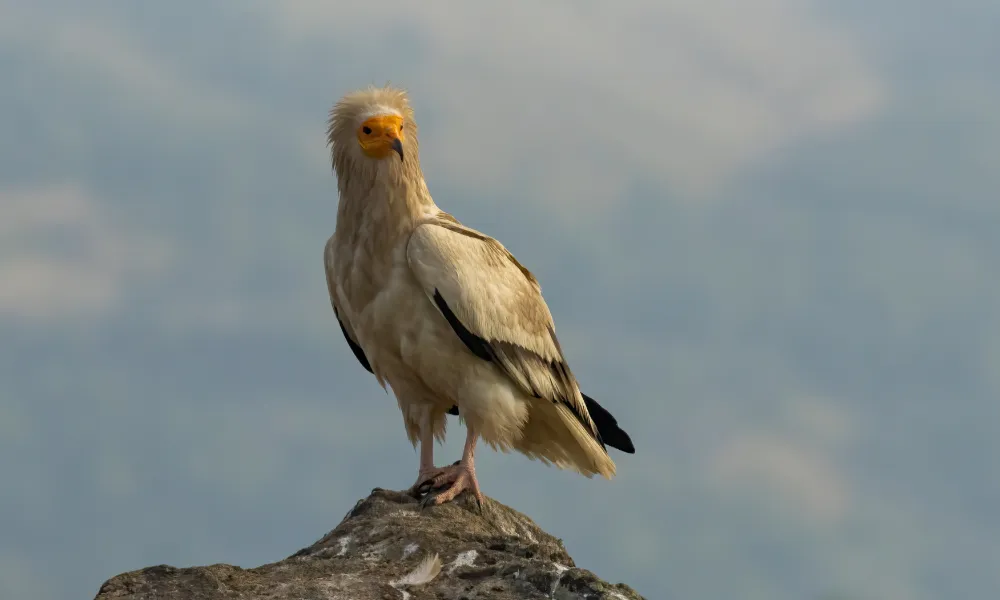

Conservationists fear that continuing wars in the Middle East may have further disrupted the already perilous migration of endangered Egyptian vultures to and from Africa.
The birds, known for their bright yellow faces and white plumage, usually return to nesting sites in the Balkans in significant numbers by April. In recent weeks, however, experts have struggled to locate them, with numbers appearing lower than expected.
“War adds to the existing dangers along the migration route of this species,” Nikolay Petkov, project manager at the Bulgarian Society for the Protection of Birds, told AFP.
Egyptian vultures face a range of threats during their annual 5,000-kilometre journey to breeding grounds in the Balkans, from electrocution to poaching.
“The Middle East is a critical migration corridor and war can have a significant impact on this already sharply declining population,” said Xhemal Xherri, from Albania’s Protection and Preservation of Natural Environment group.
Experts say bombing can disturb not only vultures but many other migratory birds passing through the region. Over the past 30 years, the Balkan population of Egyptian vultures has fallen by 80%, according to Petkov. The International Union for Conservation of Nature lists the species as globally endangered.
Because vultures play a crucial role in removing carcasses, helping to prevent the spread of disease, environmental groups and NGOs have long called for stronger protection across their range. Measures to protect resting sites, along with breeding programmes, have helped numbers recover slightly in Bulgaria, where most of the Balkans’ remaining Egyptian vultures now nest.
Source: CNA