

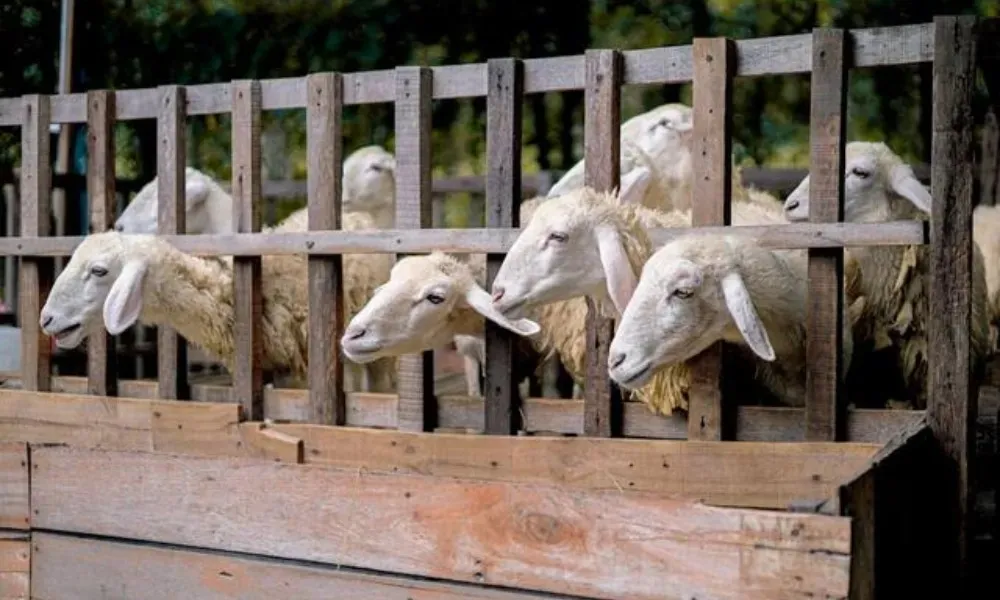
The veterinary services announced on Wednesday that fat-tailed sheep in a Dromolaxia farm will be exempted from the ongoing culling across swathes of cattle, in line with Article 12 of the relevant regulation, in line with provisions permitted under European legislation.
The authorities said the decision was taken following a comprehensive assessment of the epidemiological data, taking into account the findings of the epidemiological team, recommendations from specialist scientific staff at the Cyprus University of Technology (TEPAK), and a report by the Agricultural Research Institute on the importance of the Cypriot fat-tailed sheep breed.
Strict conditions
Officials also considered conditions within the Dromolaxia livestock zone, as well as commitments made by the farmer to fully implement all required measures.
The Veterinary Services stressed that the decision would apply under strict conditions and with the full implementation of all biosecurity measures, inspections and obligations set out by the authorities.
These obligations apply both to the owner and operator of the farm and to the farm’s scientific advisers, with the aim of safeguarding the unit’s health and epidemiological management.
The measures also take into account neighbouring farms that remain free of the disease, as well as affected farms currently undergoing sanitisation procedures, the statement added.
Red cows
The Veterinary Services said they would continue to closely monitor the situation and carry out ongoing evaluations of the epidemiological data.
The authorities also thanked the epidemiological team, TEPAK and the Agricultural Research Institute for their contribution to what was described as a serious issue.
Regarding the case of the red cows, the Veterinary Services said any decision would be taken within the wider framework for managing similar cases.
“Other similar requests have already been submitted to the Competent Authority and will be examined using the same scientific, epidemiological and legal criteria, on the basis of protecting public health, animal production and the public interest,” the statement concluded.
Source: CNA