
Community leaders from the Limassol wine villages have expressed support for the planned development of Trozena by a foreign investor, provided the project complies with the legislation and regulations governing Natura 2000 areas.
At a press conference held on Tuesday morning in Arsos, community leaders, members of the investor’s family and residents who sold their properties in Trozena defended the project, following reports of illegal interventions and the reactions that followed.
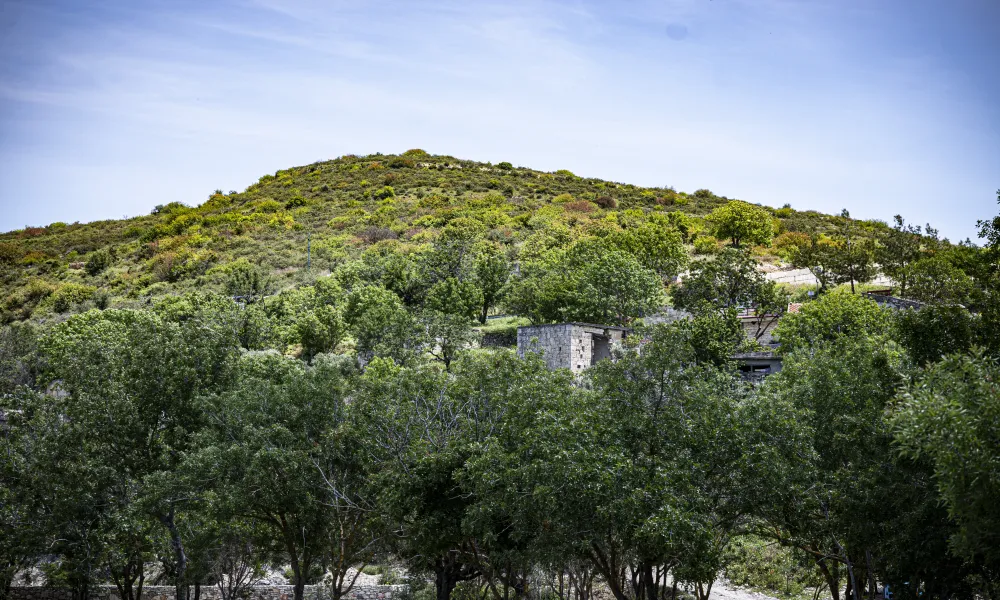
Arsos community leader Yiannakis Yiannaki said Trozena had become “a classic example” of state neglect, noting that the settlement was abandoned in the 1980s due to the lack of basic infrastructure, including electricity.
“As a community council, we are positive towards any development in our area, in any community, wherever it comes from,” he said, adding that the project could help Arsos and neighbouring villages “come out of isolation” by bringing life and economic activity back to the area.
Yiannaki attributed some of the reaction to pre-election motives and criticised what he described as damaging commentary on social media. He also said the issue had been picked up by Turkish and Turkish Cypriot media, with reports claiming that a Turkish Cypriot settlement had been sold to create a “Jewish ghetto”. He stressed that Trozena had always been a Greek Cypriot settlement, unlike nearby Gerovasa, which he said had been Turkish Cypriot.
Questions over access and legality
Yiannaki rejected claims that people had been prevented from entering Trozena, saying the area remains territory of the Republic of Cyprus and that citizens and visitors have free access.
He also said the church of Agios Georgios had not been transferred to the investor, but had been maintained at the investor’s expense. According to Yiannaki, the investor also intends to grant the church part of a parking area that belongs to him.
Asked whether works had been carried out without the required permits, Yiannaki said community councils were not responsible for identifying such violations, adding that this was the responsibility of the district self-government organisation and the Environment Department.
“What I see is not environmental damage, but that the area has been beautified,” he said, adding that Trozena had been cleaned up after years of neglect and now had plants, trees, benches, dry-stone walls and kiosks. If any irregularities exist and can be corrected, he said, that is a matter for the competent authorities.
Investor cites delays
Support for legal development in the area was also expressed by Pachna community leader Andreas Savva, president of the cluster of communities, and by Omodos community leader Evgenios Michael, representing the Union of Limassol Communities.
The investor, 72-year-old Uriel Curtis, said he had fallen in love with the area and decided to invest there, “as thousands of other foreigners do”. He said his dream was to create a beautiful village where everyone would be welcome.
Curtis also referred to bureaucratic delays in the examination of 11 applications submitted over the past three years, saying he had received no clear response from the competent authorities.
“I bought the land three years ago and it is just sitting there while I lose money. I have lost €300,000 in interest over these three years and no one responds,” he said, adding that the project was a risky investment but that he knew how to manage the risk.
Source: CNA