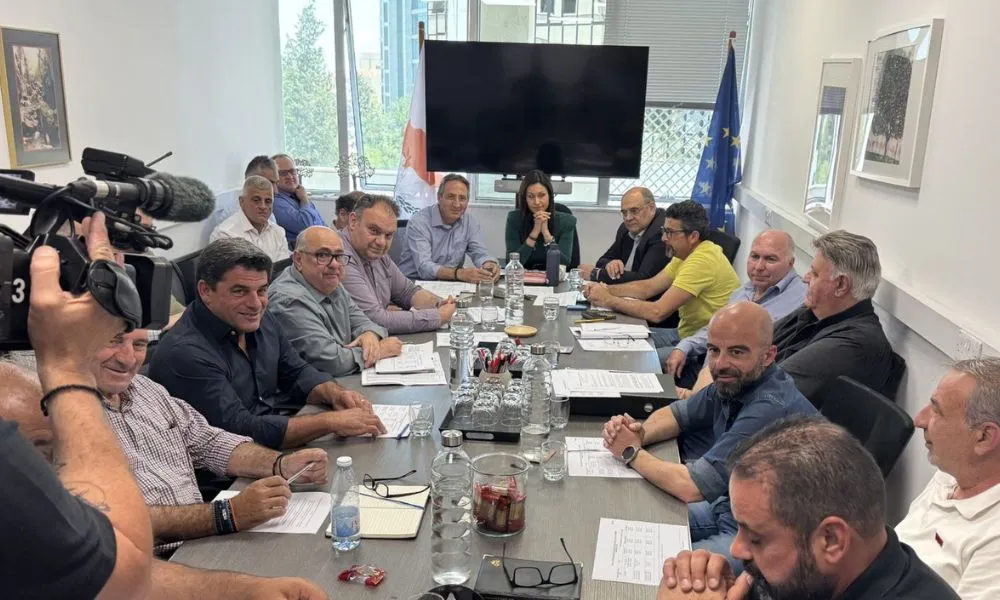

A long meeting between independent livestock farmers and the Minister of Agriculture, Maria Panayiotou, resulted in agreement on a package of easing measures, focusing on restrictions imposed due to the foot‑and‑mouth disease situation.
According to information, it was decided to proceed with relaxations concerning grazing and the movement of animals in districts where no cases of foot‑and‑mouth disease have been detected. However, before implementation, a new round of sampling in all districts will take place and, provided results are negative, the measures will be applied.
“We spent considerable time listening to the livestock farmers and their requests and, through discussion, agreed to proceed with sampling,” the Director General of the Ministry of Agriculture, Andreas Grigoriou, told Politis.
Both sides agreed to return to the negotiating table next Monday to continue discussions on outstanding issues.
Positive climate but tensions
The president of the 'Voice of Livestock Farmers' Neophytos Neophytou, said farmers reiterated their request for easing restrictions, describing the meeting as generally positive, although moments of tension occurred, which he said was expected given the seriousness of the situation and the pressure faced by the sector.
He also referred to the issue of rare breeds, stressing that they are an integral part of Cyprus’ livestock identity and should be protected. As he noted, solutions are being examined to exempt these breeds from culling, provided they are kept in isolated units without contact with other livestock facilities.
The general secretary of the Panagrotikos Association, Tasos Giapanis, also described the meeting as positive, noting that answers were given to farmers’ questions and specific decisions were taken, including sending detailed information to each affected farmer about the number of animals impacted and the compensation provided.
Demand to cancel halloumi decree
Beyond foot‑and‑mouth disease, the farming community is also concerned about the issue of halloumi, particularly a revised decree issued on 13 May due to the disease, which reduces the proportion of goat and sheep milk in PDO halloumi from 25% to 15%.
Disagreeing with this decision, agricultural organisations PEK, EKA and the New Agricultural Movement, together with groups of sheep and goat farmers, sent a letter to the President of the Republic requesting the immediate cancellation of the decree. They argue the decision was taken without the consent of the ad hoc halloumi committee, despite their objections and questions to the relevant ministries. Instead of answers, they say, the Ministries of Agriculture and Commerce proceeded with the change, creating serious distortions in the market.
Questions raised
The organisations are seeking clear explanations regarding the increased use of cow’s milk, as indicated by Ministry of Agriculture data, at a time when cow numbers and production have declined due to foot‑and‑mouth disease.
They also question why the share of goat and sheep milk is being reduced when halloumi production increased by 10% over the past year and raise concerns about a possible exceeding of the agreed ceiling for cow’s milk use.
They are also requesting answers on whether inspections have been carried out to detect the use of milk powder in production and what the findings are.
“Halloumi should not become a commercial product”
In their letter, the organisations warn that PDO halloumi risks losing its authentic character as a Cypriot product and becoming a mass commercial product. They argue that halloumi should not operate solely under market conditions or cater to HORECA sector needs at the expense of producers, especially at a time when livestock farmers are already under pressure due to foot‑and‑mouth disease.
They call on the President to intervene to cancel the 13 May decree and safeguard both PDO halloumi and Cyprus’ livestock sector.