
The Road Safety Council has decided to commission a study to upgrade the capabilities of the existing speed‑camera system, following its most recent meeting. The study will be carried out in coordination between the Traffic Department of Police Headquarters and the company managing the traffic camera system.
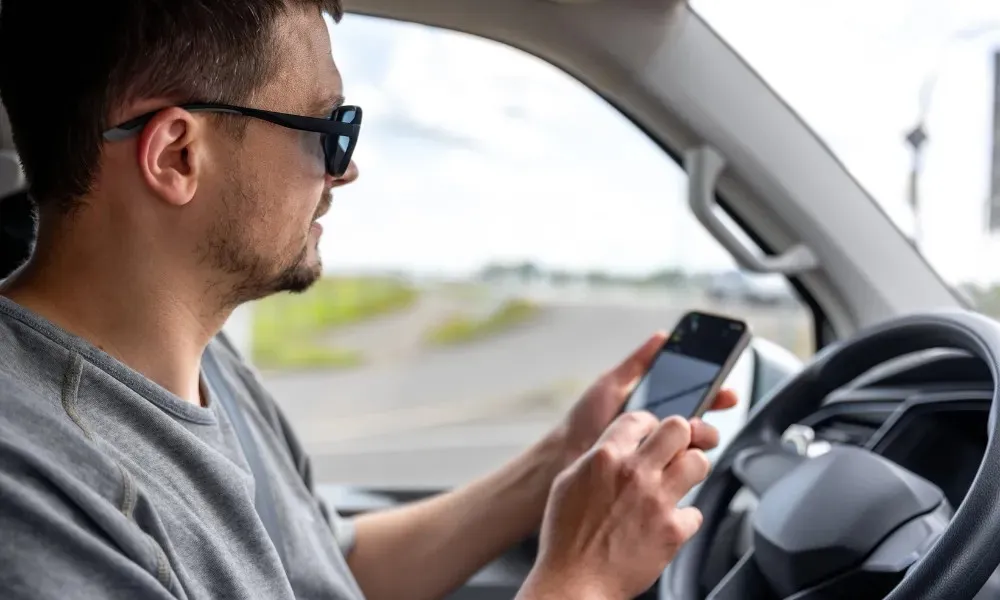
The decision was preceded by an examination of whether it is technologically feasible for camera flashes to be activated solely by the use of a mobile phone by drivers.
Under the current system, violations relating to speed limits, running red lights and breaching the mandatory stop line at monitored junctions are detected and prosecuted. When one of these violations is recorded, additional checks are carried out for mobile phone use and seat‑belt compliance. The study that has been approved aims to upgrade the system so that drivers using mobile phones can be detected even when none of the three core violations recorded by the speed‑camera system have been committed.
According to information obtained by Politis, the proposed upgrade will involve the integration of artificial intelligence tools into the existing speed‑camera system. Essentially, the system will identify whether the driver is holding the steering wheel and activate the camera accordingly. For example, if a driver’s hand is close to their ear, the camera flash will be triggered. In a second stage, footage will be reviewed by personnel of the managing company to verify the offence. The procedure will then continue as it does today, with a registered letter sent to the driver for the collection of the out‑of‑court fine.
The specific measure is expected to be implemented on a pilot basis once the relevant study has been completed. In any case, before the new feature is activated within the speed‑camera system, the public will be informed by the Police Traffic Department.
It is recalled that when the speed‑camera system records one of the three core violations, it also detects offences relating to failure to wear a seat belt and failure of motorcyclists to wear a helmet.
Following the implementation of the plan to issue fines solely for mobile phone use, the issue is expected to be examined further in order to identify ways in which drivers not wearing seat belts could also be detected independently, without camera flashes being triggered by other violations.
Meanwhile, the Road Safety Council also examined the issue of motorcyclists as victims of road collisions. Of the traffic collisions recorded in 2026, 15 people lost their lives, seven of whom were motorcyclists, representing nearly half of the total. Of the seven deceased motorcyclists, four were proven not to have been wearing helmets, while there is a possibility that six of the seven were not wearing helmets, as helmets were found nearby at the scene of the accidents.
Specifically regarding motorcyclists, following the warning signs recorded during the early months of 2025, a decision was taken to promote a new subsidy scheme for the purchase of safety equipment. The possibility of introducing a scheme to withdraw older motorcycles lacking essential safety mechanisms will also be examined.