
A total of three million water-saving devices will be distributed free of charge to citizens in Cyprus, Agriculture, Rural Development and Environment Minister Maria Panayiotou has said, stressing that even a 10% reduction in individual water use could have a major impact nationwide.
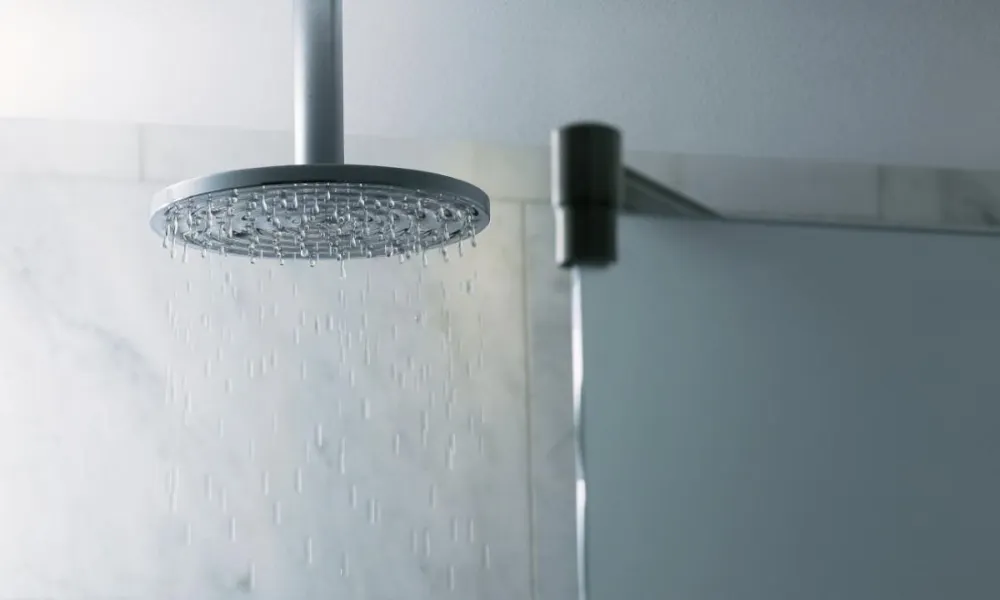
Speaking at a press conference organised by EKO to present its initiative for tackling water scarcity through the free distribution of water-saving nozzles, Panayiotou said the programme includes 2 million tap nozzles and 1 million shower flow reducers. The equipment, she said, can significantly reduce water consumption without affecting citizens’ quality of life. The wider distribution campaign began on a pilot basis in the first months of 2026, targeting businesses and professional premises with high water use. In the coming weeks, it will be expanded to households, public buildings and army camps.
“The message of this campaign is that if each person reduces water consumption by even 10%, the overall benefit for Cyprus will be enormous,” Panayiotou said.
Desalination at the centre of water policy
The minister said EKO’s initiative was particularly important because it showed that dealing with water scarcity is a matter of collective responsibility and joint action. She also outlined the government’s broader planning to address the issue, saying desalination remains a central part of Cyprus’ water security strategy.
For a country such as Cyprus, she said, water security now depends on the ability to produce water in a stable and reliable way. Panayiotou noted that, despite improved inflows into reservoirs this year, the government’s approach continues to rest on three pillars: increasing water supply through non-conventional sources such as desalination, improving the water network and strengthening public awareness around water use. She said that, within two years, three additional mobile desalination units had come into full operation in Moni, Kissonerga and Limassol Port, covering important water supply needs. A fourth unit is expected to become operational within May, while further mobile units are planned for 2026 and 2027. At the same time, four new permanent desalination units are being promoted in eastern Limassol, Ayia Napa-Ayia Thekla, Polis Chrysochous and Dhekelia, along with the expansion of existing facilities. The aim, she said, is to create a more resilient and flexible water system for the coming decades.
Funding for network upgrades
Panayiotou also referred to the long-standing problem of water losses in supply networks, mainly due to ageing infrastructure and increased maintenance needs. She said projects worth €10.5 million were approved in 2025 for district self-government organisations, along with an additional €1 million for communities, to replace old pipelines, reduce leaks and improve water supply networks. An extraordinary additional state grant of up to €300,000 for each district self-government organisation has also been approved, allowing immediate interventions to identify and repair leaks and respond more quickly to faults. Referring to high levels of water consumption, Panayiotou said average daily consumption in Cyprus stands at around 140 litres per person, compared with an EU average of about 124 to 125 litres.
She said the “Water, for tomorrow too” campaign, implemented by the Press and Information Office and the Water Development Department, aims to reinforce the message that saving water is everyone’s responsibility. In cooperation with the KIOS Centre of Excellence, the “Stagonometrο” application has also been developed to help households understand and calculate their daily water consumption.
Panayiotou also announced that a new website on Cyprus’ water issue will be launched this week, bringing together information on water scarcity, climate pressures, government planning, projects and the progress of interventions to strengthen water adequacy. The website will also include practical information and advice for citizens on saving water and using it responsibly in daily life.
Source: CNA