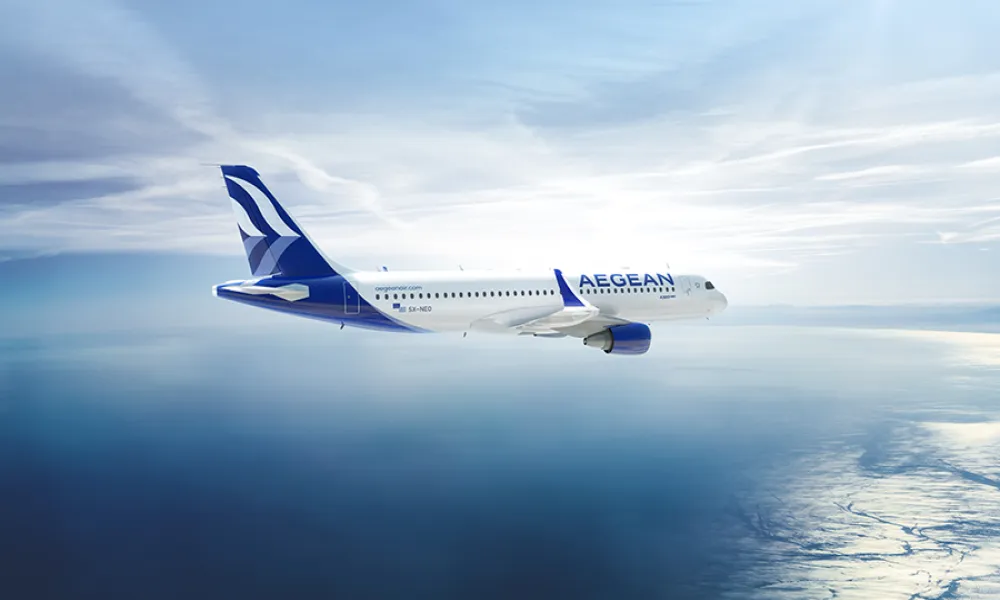
AEGEAN recorded higher revenue and passenger traffic in the first quarter of 2026, despite operating in what is traditionally the weakest period of the year for the airline industry.
The group’s consolidated revenue rose by 5% year on year to €320.7 million, while passenger traffic increased by 4% to 3.2 million passengers, broadly in line with the rise in available seats. The load factor stood at 80.8%.
Group EBITDA reached €46.6 million, up from €43.8 million in the first quarter of 2025. However, losses after tax widened to €21.7 million from €6.6 million a year earlier.
According to the company, the increase in losses was mainly due to negative foreign exchange valuations of €8.1 million, compared with foreign exchange gains of €8.3 million in the same period last year.
Although March was affected by the suspension of flights to markets in the Middle East and a significant increase in fuel costs, the positive performance recorded in January and February helped offset the impact, supporting growth in both revenue and EBITDA.
Fleet investment continues
During the first quarter of 2026, AEGEAN took delivery of two new A321neo aircraft. A total of seven A321neo aircraft are scheduled to be delivered within the first nine months of the year.
Cash, cash equivalents and other financial investments stood at €891.6 million on 31 March 2026, following the repayment on 12 March of the company’s €200 million common bond loan. This figure includes financial investments of €283.3 million.
AEGEAN chief executive Dimitris Gerogiannis said the conflict in the Middle East and the subsequent closure of the Strait of Hormuz had placed significant pressure on fuel prices, creating a difficult environment for the aviation sector in 2026.
He said the company was maintaining flexibility in its operational planning in order to limit the impact on operating performance, while continuing to support its long-term market position and passenger needs.
Gerogiannis added that the impact of higher fuel costs would be more pronounced during the second quarter. However, he said demand for the summer period appeared to remain resilient despite the uncertainty created by the energy crisis.
“Despite the difficulties of 2026, we remain optimistic about AEGEAN’s prospects,” he said, pointing to the company’s investment in a new-generation fleet, strong capital base, ability to adapt and the quality of its workforce.