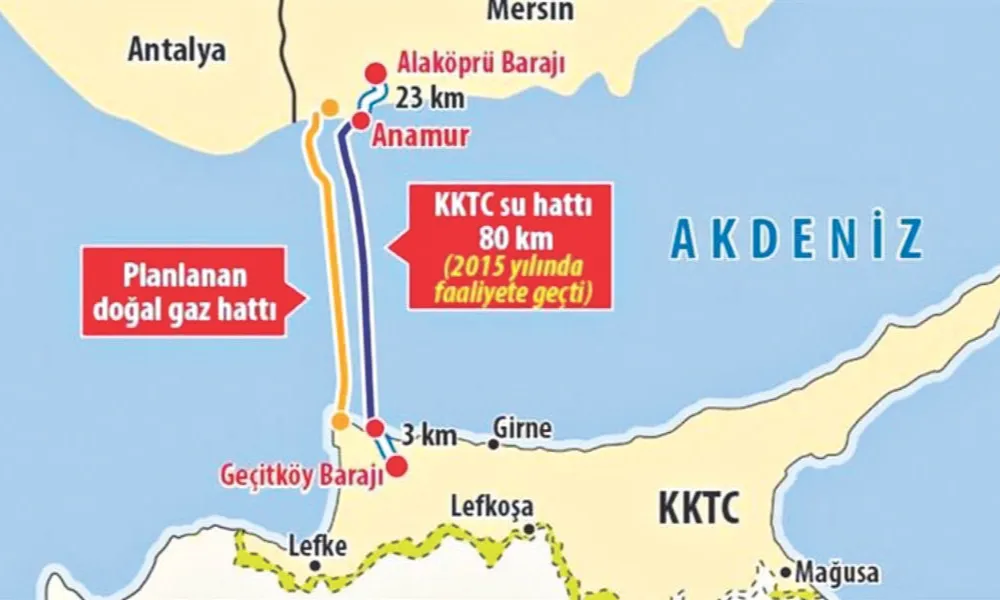

The Turkish Cypriot administration has announced a comprehensive energy interconnection plan linking the occupied areas of Cyprus with Turkey, following a high-level meeting in Ankara between Turkish Cypriot official Unal Ustel and Turkish Vice President Cevdet Yilmaz. The strategic initiative includes a subsea electricity cable and a new proposal for natural gas transmission via pipeline.
The announcements from the Turkish capital represent a concerted effort to deepen the integration of the occupied areas into Turkey's energy infrastructure. Ustel described the project as the new project of the century, drawing a direct parallel to the existing undersea water pipeline that connects Turkey to northern Cyprus. By establishing this secondary critical infrastructure link, Ankara seeks to cement a long-term energy dependence, altering the geopolitical dynamics on the island through control of vital utilities.
Electricity, natural gas and emergency supply
According to the details presented in Ankara, Turkey is evaluating two parallel energy supply routes. The first involves an electricity interconnection via an undersea cable, while the second encompasses natural gas delivery, either through a dedicated pipeline or via liquefied natural gas transport vessels to fuel local power generation.
The justification presented by Turkish authorities focuses on mitigating chronic energy insecurity in the occupied areas, which face frequent power outages due to aging generation plants. Vice President Yilmaz also announced immediate short-term support, including the deployment of mobile power generation units, infrastructure maintenance and fuel cost subsidies to ensure supply stability ahead of peak summer demand.
Diplomatic warnings to Nicosia and Brussels
A central element of the joint statements was a direct appeal to the Republic of Cyprus and the European Union to refrain from blocking the infrastructure plans. Ustel stated that feasibility studies for the subsea electricity cable have been completed, but claimed that licensing and regulatory procedures are facing obstruction from European mechanisms. Yilmaz similarly indicated that the electricity cable project faces regulatory challenges related to the European Union.
The timing of the announcement is viewed as highly strategic. As the Eastern Mediterranean remains a focus of geopolitical competition over energy resources, Turkey is reasserting its own regional infrastructure alternative. The joint initiative demonstrates that Ankara is looking beyond the internal energy requirements of the occupied areas, using infrastructure to create permanent political, economic and geostrategic facts on the ground.