


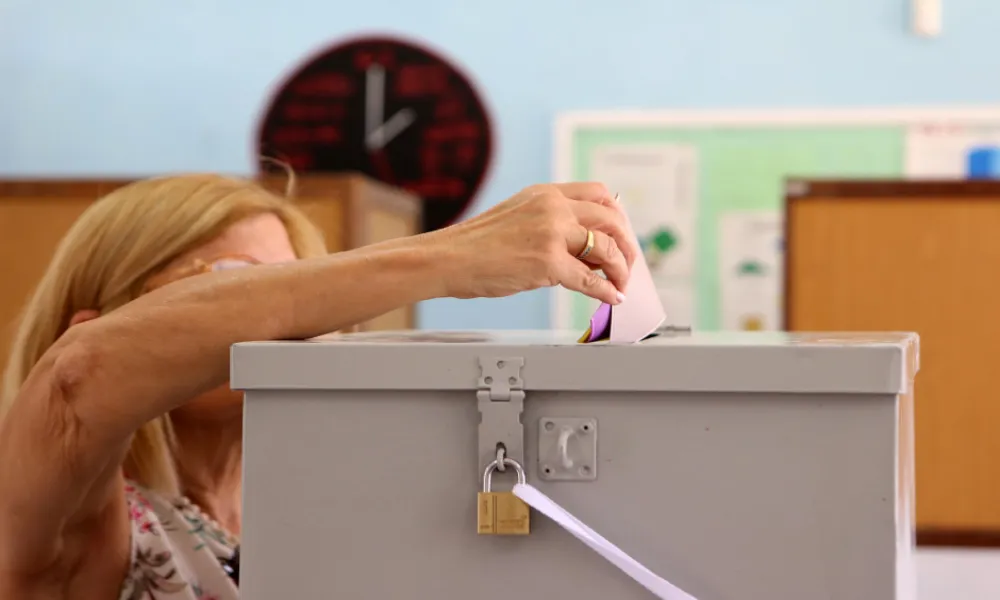
The upcoming parliamentary elections on 24 May are shaping up to be one of the most unpredictable and politically interesting contests in recent years. This is not because a dramatic upheaval is expected at the top of the party system, but because deeper shifts below the surface could significantly alter the composition of the next House of Representatives and the political landscape of the day after. Since legislative elections are widely viewed as a precursor to the presidential contest, these new balances will face an immediate test during the election of the new president of parliament, and may even define alliances ahead of the 2028 presidential elections.
Recent polling data, despite minor variations, converges on several key conclusions: a high percentage of undecided voters, intense volatility, an increased appetite for a protest vote, heavy pressure on traditional parties, and significant uncertainty surrounding final participation. Against this backdrop, five core factors are set to determine the final outcome.
Undecided voters and hidden ballots
In every election cycle, undecided voters represent a critical mass. In this campaign, however, their significance is magnified as their numbers remain remarkably high just days before the ballot boxes open. This segment continues to hover near 20 per cent one week ahead of the vote, signalling not just electoral uncertainty but a deeper political alienation. Roughly one in five citizens does not easily identify with any political camp or deliberately chooses to conceal their intention.
This hidden vote gains extra weight in an environment of political disillusionment. Some voters avoid public disclosure because they are turning toward anti-establishment parties or wish to escape social and political labeling. Meanwhile, another category of citizens claims to be undecided but is actually in the final stages of making a choice.
The key question is where these voters originate and where they will eventually migrate. If they are primarily disgruntled supporters of the main factions, the final result could hold major surprises. Polls show that the largest pool of undecided voters comes primarily from the right-wing Democratic Rally (DISY), followed by the communist Progressive Party of Working People (AKEL) and the centrist Democratic Party (DIKO). If these citizens return to their traditional bases, DISY and AKEL might achieve higher percentages than current measurements indicate. Conversely, if they lean toward staying home, overall participation will become even more decisive.
The battle for first place
Although parliamentary elections do not determine the executive branch, the race for the top spot carries immense political weight and provides crucial political validation.
For DISY, retaining first place will be interpreted as proof of party resilience after losing executive power in the last presidential election. It will serve as a clear sign that the party maintains its role as the central pillar of the political system, even from the opposition benches. Polling indicates that its lead over AKEL has widened in recent weeks, though the gap still hovers within the statistical margin of error.
For AKEL, pulling off a reversal or even substantially narrowing the margin will be viewed as a major political gain and a sign of successful regrouping. It would strengthen the narrative that the party is regaining momentum and remains a primary contender for the political center of gravity. Beyond mere numbers, this battle is about psychological dominance for the next day, as the winner will use first place as political capital for internal consolidation or broader institutional leverage.
Surge in protest voting
A defining characteristic of this election is the strong desire to challenge the traditional political establishment. Past corruption scandals, institutional mistrust, a pervasive sense of impunity, and general disillusionment with political bickering have created fertile ground for a robust protest vote.
This discontent does not follow a uniform political direction. The protest vote is fracturing across diverse spaces, ranging from nationalist and anti-establishment outfits to new political movements presenting themselves as alternatives to the legacy party system.
The importance of this factor lies in its power to alter the structural balances of parliament rather than just individual party percentages. A strong wave of punitive voting could further shrink the traditional heavyweights and empower smaller actors, leading to a highly fragmented legislature. According to opinion polls, the collective share for self-described anti-establishment options—such as Direct Democracy, ALMA, and Volt—could reach up to 30 per cent. However, this specific electorate (particularly for ALMA) appears highly volatile, meaning final decisions could be made at the absolute last minute based on breaking news, emotion, or late campaign impressions.
The threshold for smaller parties
The technical race for parliamentary entry is perhaps the most critical political variable. In an electoral system where minor shifts in vote share can trigger significant reallocations of seats, the success or failure of parties hovering near the entry threshold takes on outsized importance.
The centrist Democratic Alignment (DEPA), for example, appears to be struggling based on aggregate data. Nevertheless, a recent poll by Politis newspaper placed its support in Nicosia at 3.8 per cent, a figure that climbs to 4.8 per cent when adjusting for projected voter turnout. If this local performance edges up to 5.25 per cent, the party will successfully secure parliamentary seats.
If multiple small or new parties manage to secure a legislative presence, the next parliament will become highly fragmented and the process of building majorities far more complex. On the flip side, if several groups fall short, their votes will be indirectly redistributed to the benefit of the parties that clear the threshold. This dynamic means that every decimal point carries disproportionate weight, as a party missing out by a fraction can alter the distribution of seats far more than its overall percentage suggests.
Abstention versus mobilization
Turnout remains the ultimate wild card. Citizen alienation from the electoral process has become a permanent fixture in recent contests, with abstention hitting 33.26 per cent in the 2016 legislative elections and climbing past 36 per cent in 2021.
The question for the upcoming vote is whether this trend will intensify or if the current political volatility will instead mobilize more citizens. Low turnout generally favors established parties with highly disciplined machinery, as reliable voters show up regardless of the political climate. In contrast, higher turnout clears the path for surprises by activating younger or less partisan voters.
Abstention is also a potent political message. A historically low turnout will reinforce the narrative of a deep crisis of confidence in the political establishment, while a contained abstention rate would suggest that this election successfully convinced citizens that vital political balances were truly at stake.
The broader picture
The upcoming vote is far more than a simple numbers game. It is a contest that will map the true relationship between citizens and the state, test the endurance of legacy parties, measure the momentum of new movements, and gauge the depth of societal dissatisfaction.
The next parliament could easily emerge more fragmented, unpredictable, and politically difficult to manage. This reality forms the core stakes of the upcoming ballot: it is not just about who wins, but about the kind of political landscape that will be born from the verdict of the public. This fragmentation is not inherently negative, as it can mirror a more democratic representation of all trends within society. The challenge will lie in communication and legislative efficiency, but that is a game the political system must learn to play better.