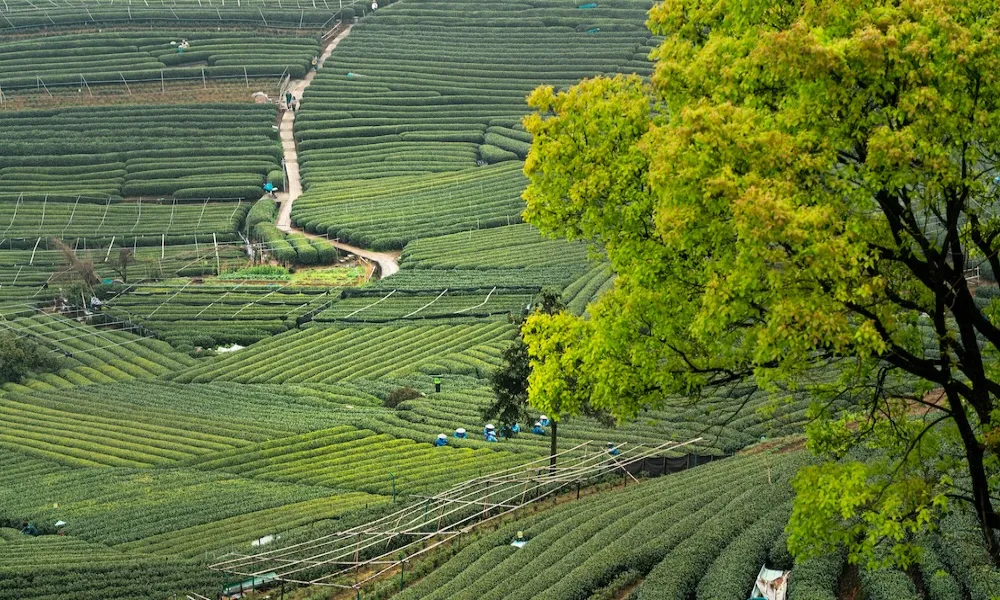
Longjing, or Dragon Well, is one of China’s most celebrated green teas, prized for centuries for its delicate flavour and connection to the misty hills surrounding West Lake in Hangzhou. Yet as traditional production methods decline and counterfeit versions flood the market, the best way to experience authentic Longjing is increasingly at its source, BBC Travel reports.
Each spring, tea growers across Zhejiang Province prepare for the brief harvest season, when the year’s most valuable leaves emerge. The earliest buds, picked before the Qingming festival in early April, are known as mingqian tea and are especially sought after for their subtle sweetness and gentle chestnut aroma. Timing is everything: even a few days can dramatically affect flavour, quality and price.
Traditional producers
In villages such as Longwu, generations of farming families still harvest the leaves by hand. The cool, damp conditions of early spring help the shoots grow slowly, producing tea with a clean, smooth taste free from bitterness. But the harvest window is short and increasingly unpredictable as climate patterns shift.
The defining step in Longjing production comes after picking, when the leaves are pan-fired in large woks heated to around 200C. Skilled tea makers sweep and press the leaves by hand, shaping them into Longjing’s signature flat, spear-like form while locking in their fresh green character. Although machines are now widely used to speed up production, many traditional producers believe hand-firing creates a fuller fragrance and a softer, lingering sweetness.
Authenticity has become a growing concern in recent years. Genuine West Lake Longjing can only come from a tightly protected production area around Hangzhou, and verified growers now use government-issued QR code labels to prove origin. Despite this, demand for premium early-harvest tea far exceeds supply, fuelling a thriving counterfeit trade.
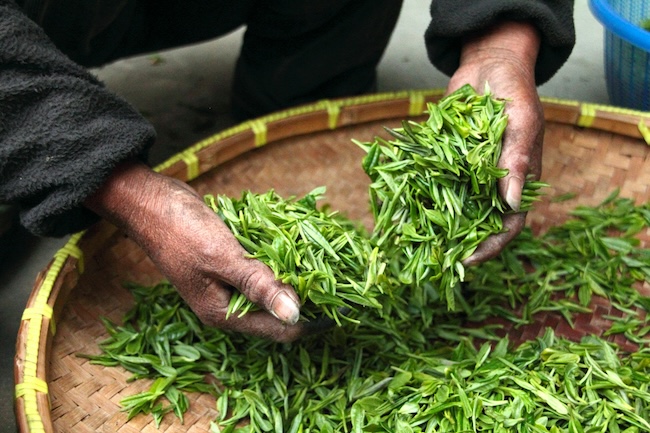
For visitors, late March to early April offers the best chance to witness the harvest firsthand. Tea villages and education centres around Hangzhou host tastings, farm tours and firing demonstrations, allowing travellers to see the craftsmanship behind one of China’s most iconic teas.
Longjing’s appeal lies partly in its restraint. Unlike stronger teas or coffee, its flavour unfolds slowly: softly floral, faintly nutty and subtly sweet. It is a tea that rewards patience and attention, qualities that have helped sustain its reputation for generations.
Today, there are signs that younger people are returning to the tea villages to continue family traditions once at risk of disappearing. As interest in Chinese heritage products grows, so too does the desire to preserve the craft and culture behind authentic Longjing - a seasonal ritual that remains deeply tied to the landscape and identity of Hangzhou.
Source: BBC Travel