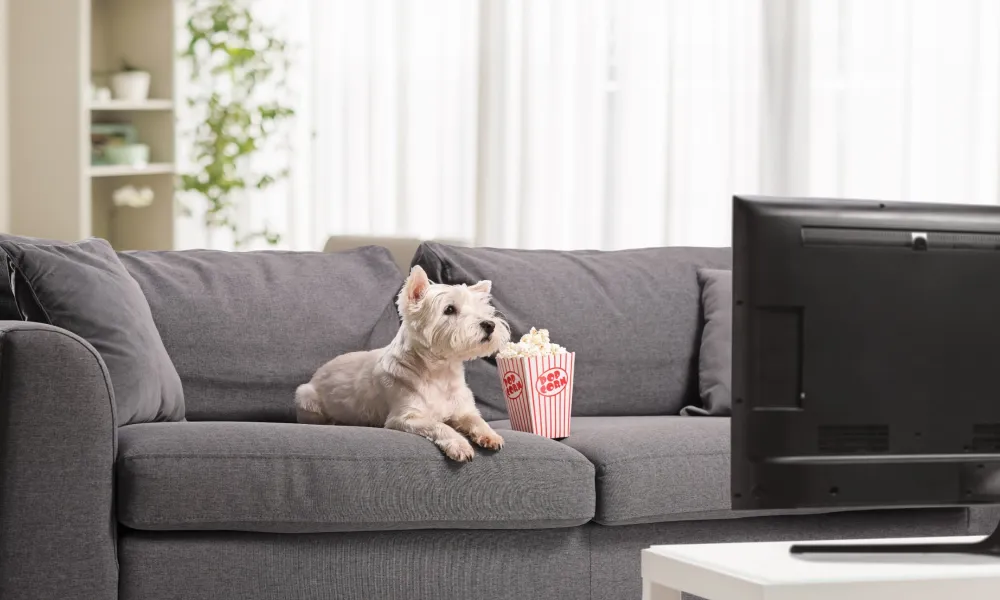

Six years ago, Italian pilot Luca Carano left his puppy, Luna, home alone while he went out to dinner and wondered whether there was anything he could play on YouTube to keep her company.
When he couldn't find what he was looking for, he created it himself.
Today, his channel Siesta Dog TV attracts millions of views with dog-focused videos featuring animated canines, calming music and colours designed around canine vision. One video alone has been viewed more than 3.5 million times.
Carano is part of a rapidly growing industry built around a surprisingly simple idea: television for dogs.
A new market for anxious pet owners
Dedicated pet channels now offer everything from dogs playing in parks and squirrels darting through forests to slow-paced relaxation videos designed to soothe nervous animals.
According to canine behaviour experts, the trend reflects changing attitudes towards pets.
"People are more closely attached to their dogs than ever before," says Nicholas Dodman of the Center for Canine Behavior Studies in Connecticut. Concerns about separation anxiety have helped create demand for content aimed at keeping dogs occupied while owners are away.
Technology has accelerated the trend, with many creators now relying on artificial intelligence to generate canine-friendly scenes set anywhere from city parks to tropical beaches.
What the science says
The key question remains: are dogs actually watching?
Research suggests that some are, though perhaps not for as long as their owners imagine.
A study conducted by researchers at Queen's University Belfast examined the behaviour of 50 shelter dogs exposed to televised images of dogs, humans and other animals. The researchers found that dogs spent only 10.8 per cent of the available observation period looking directly at the screens, and their interest declined over time. However, the videos did reduce barking and movement compared with control conditions.
The researchers concluded that television may influence canine behaviour but should not replace more important forms of enrichment, particularly interaction with humans and other dogs.
Dogs may be more engaged than previously thought
More recent research paints a different picture.
A study published in Scientific Reports by researchers at Auburn University analysed owner reports from 453 dogs that were already known to watch television. The researchers found that 88.3 per cent actively responded to content on screen and that many showed clear preferences for particular types of programming.
Dogs were especially likely to react to images of other animals, while personality traits appeared to influence viewing habits. More excitable dogs were more likely to follow moving objects on screen, while anxious dogs tended to respond more strongly to non-animal sounds such as doorbells or vehicles.
The researchers concluded that dogs "experience a meaningful, object-filled world when they view television" and suggested that TV could provide enrichment when used appropriately.
Can television reduce stress?
Companies in the sector certainly believe so.
One of the pioneers, Arizona-based DogTV, has spent more than a decade creating programming specifically tailored to canine audiences.
The company points to research from Purdue University indicating that kennel dogs exposed to specially designed audiovisual content spent less time pacing and more time resting and grooming, behaviours commonly associated with reduced stress. The channel also modifies colours to suit canine vision and produces videos intended to gradually familiarise dogs with potentially stressful situations such as car journeys and fireworks.
Not every dog is a viewer
The evidence suggests there is no universal canine response to television.
Some dogs appear captivated by moving animals on screen. Others pay little attention at all.
Researchers increasingly believe that personality, breed, age and individual temperament all influence how dogs engage with screens. For senior dogs or less active pets, television may offer useful mental stimulation. For others, it may simply become background noise.
What seems increasingly clear is that dog television works best as a supplement rather than a substitute for exercise, play and companionship.
In other words, while your dog may enjoy its favourite programme, no screen can compete with a walk, a toy or the return of its owner through the front door.
Source: BBC