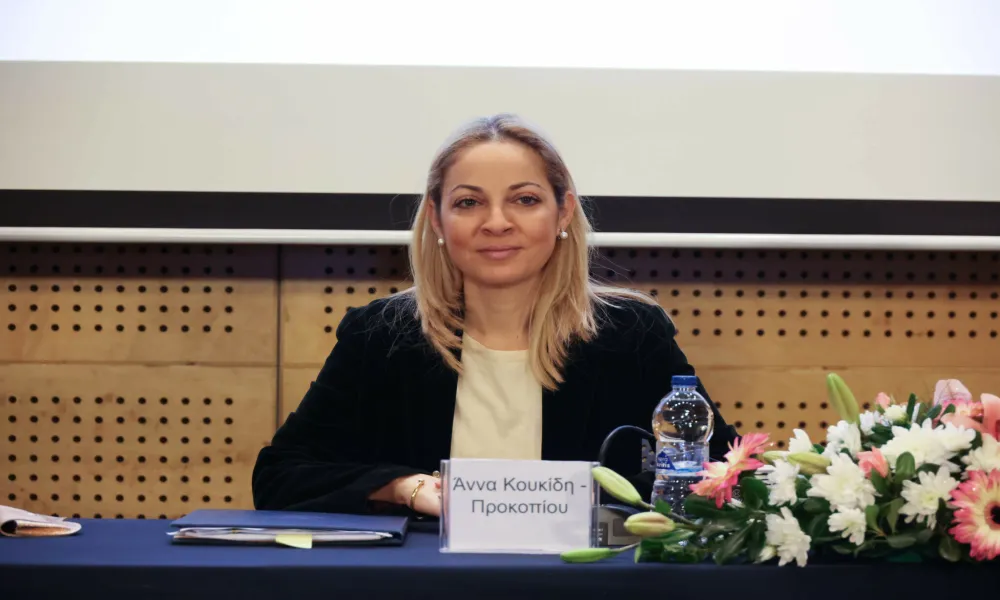

Cyprus continues to record particularly poor results on women's participation in decision-making, a problem directly linked to the country's last place ranking in the European Union's gender equality index, according to Anna Prokopiou, founder of the NGO network Women Act, speaking on Politis Radio.
"We still cannot easily accept women in decision-making centres," Prokopiou said, describing the data as "not at all flattering for a European country" and pointing to the underrepresentation of women as a longstanding structural problem rather than a temporary gap.
Women Act operates as a Cyprus-origin NGO based in Greece, with the aim of empowering women and promoting their presence in public life. Its network includes political figures and prominent women from various fields, with the goal of encouraging more women to engage actively in public life. Prokopiou said the organisation also seeks to exert pressure on the executive to appoint more women to positions of responsibility.
A slow and uneven history
To illustrate the depth of the problem, Prokopiou drew on Cyprus's own political record. The first woman ever elected to the House of Representatives in Cyprus was a Turkish Cypriot, she noted, and it was not until 1981 that a Greek Cypriot woman was elected to parliament, representing Diko in Kyrenia. The late Stella Soulioti was the first woman minister of the Republic of Cyprus, but 33 years passed before another woman was appointed to cabinet, when Klaire Angelidou took office in 1993. A further ten years elapsed before the appointment of Dina Akkelídou.
These facts, Prokopiou said, reflect stereotypes that remain embedded in Cypriot society and continue to make it difficult for women to be accepted in positions of power and in the centres where decisions are made.