
Fifty-two years after the Turkish invasion of Cyprus, the official narrative of the Greek Cypriot side remains selective, omitting parts of the island's history that contributed to the tragedy. That narrative does not fully incorporate the bloody events of the 1960s or the responsibility borne by elements of the Greek Cypriot leadership for the oppression of Turkish Cypriots.
It is beyond dispute that the junta-backed coup and the actions of EOKA B provided the immediate trigger for Turkey's invasion. Ankara justified its intervention by citing the collapse of constitutional order and the need to protect Turkish Cypriots, claiming it was acting as a guarantor power to restore legality. Had the coup not taken place, and had EOKA B not carried out killings of Turkish Cypriot civilians, Turkey would have found it far more difficult to justify military action at that particular moment.
Yet the invasion was not simply a reaction to the events of 1974. Anyone looking beyond that year and examining the historical record can see that a Turkish intervention had long been a possibility.
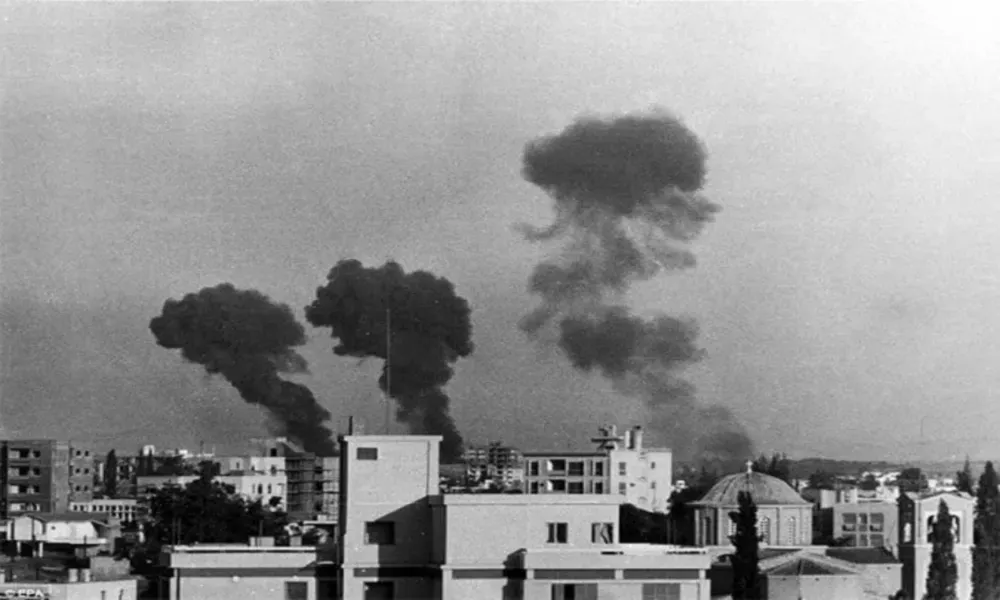
Turkey threatened military action in 1964 following the attack on the Turkish Cypriot enclave of Mansoura-Kokkina in the Tylliria region. Turkish aircraft even dropped napalm bombs in the area. That intervention was ultimately averted after US President Lyndon Johnson sent his well-known letter to Turkish Prime Minister İsmet İnönü.
Cyprus again came close to invasion in 1967. The battle of Kofinou provoked a strong reaction from Ankara, which once more threatened military intervention. Diplomatic efforts by Greece at the United Nations, together with pressure from the United States, helped prevent an invasion, while an agreement was reached for the withdrawal of the Greek military division from the island.
These episodes are largely absent from the official narrative. As a result, we fail to learn from history and develop genuine self-awareness. The confrontation between Greek Cypriot and Turkish Cypriot extremists was leading inexorably towards disaster. International actors repeatedly helped prevent the worst outcomes, but the failure to resolve the underlying problem continuously recreated the conditions that ultimately led to the peak of Cyprus' tragedy.
We should speak of a culmination of the tragedy because there were already dead and displaced people before the Turkish invasion.
Why does a fuller reading of history matter?
Because the problem will continue indefinitely if we fail to understand its causes and if we continue to devote all our energy to assigning blame solely to others.
In a few days, the UN Secretary-General will visit Cyprus in what may be a final effort to bring the two sides back to the negotiating table and seek a solution to the Cyprus problem. It is a problem that led the island to bloodshed and remains unresolved because we refuse to confront difficult truths.
Historical self-awareness is the first step. Reconciliation with Turkish Cypriots is the second.