
Three United Nations special rapporteurs have expressed serious concerns over the obstruction of the 'Imagine' programme in Cyprus, having sent official letters on 4 March to the leaders of the south and the north. The rapporteurs requested explanations and clarifications on a range of issues and granted both sides a 60‑day deadline to respond, informing the two leaders that their replies would be made public through the UN Special Procedures reporting system. According to information obtained by Politis, neither side has responded to the letters to date.
In their correspondence, the three UN experts express particular concern about the future of the 'Imagine' programme, warning of the risk of reversing progress made since 2017, when the programme was first implemented to help foster trust between the two communities. They note that 'Imagine' has faced verbal attacks, delays and political obstruction during its implementation.
Letter to Christodoulides
The letter addressed to Nicos Christodoulides focuses on specific issues. It refers to the significant delay in the circulation of a Ministry of Education circular to schools concerning participation in 'Imagine' activities for the 2025–26 school year. The rapporteurs point out that the circular was issued only on 18 February 2026, halfway through the academic year. They note that this marked the first such delay since the programme began, as in previous years the circular had been issued in September.
A second issue raised in the letter concerns public disinformation campaigns and divisive rhetoric targeting the programme and bicommunal educational visits by pupils. The rapporteurs underline reports that media outlets, politicians, public figures and nationalist groups within the south have spread misinformation and divisive rhetoric, particularly regarding visits to the northern part of the island. These attacks, they say, appear to have created a “climate of fear,” leading schools to withdraw from planned bicommunal activities.
The UN experts ask Christodoulides to explain the reasons for the delay in issuing the education circular. They also request clarifications on measures taken to counter misinformation and hostile rhetoric, progress in implementing recommendations of the Technical Committee on Education, and broader steps taken through education and institutional reforms to prevent the recurrence of violence and serious human rights violations.
Letter to Erhürman
The letter addressed to Tufan Erhürman focuses on different issues, including the continued suspension of the north's participation in the programme since October 2022. The rapporteurs recall that participation was halted through a circular citing elements of the programme considered incompatible with the policy of “sovereign equality” and “two separate states.” They note that the programme has not been reinstated in schools and request an explanation.
They also ask Erhürman to clarify whether a review of the decision is under way and to explain what measures are being taken in the fields of education and culture to prevent the recurrence of violence and serious human rights violations.
The programme
In their letters, the three special rapporteurs provide a historical overview, noting that the 'Imagine' programme began in 2016 and was placed under the auspices of the bicommunal Technical Committee on Education in 2017, with the consent of both leaders. They state that the programme is implemented by the Association for Historical Dialogue and Research and the Home for Cooperation, with funding from the German Federal Foreign Office.
They outline the programme’s objectives, which include promoting intercultural dialogue, critical thinking, equality, the elimination of discrimination, pluralism, anti‑racism, mutual understanding and the creation of a culture of peace and solidarity. They note that more than 8,000 pupils and 2,600 educators have participated. The rapporteurs add that 'Imagine' is recognised in UN reports as a key confidence‑building measure contributing to peace and reconciliation in Cyprus and describe it as “the most important functional mechanism that systematically cultivates trust between the north and the south.”
Serious concerns
The UN experts express serious concern that these negative developments undermine guarantees of non‑recurrence of violence and weaken efforts towards peace and coexistence. They stress that states have an obligation under international law to support educational and cultural initiatives that promote dialogue, mutual understanding and democratic citizenship.
They emphasise that education systems and public discourse play a decisive role either in promoting reconciliation or entrenching division and hostility. In this context, they underline the obligation of states and authorities to promote human rights education, intercultural dialogue, mutual understanding and coexistence, as well as to address hate speech, incitement and divisive rhetoric that may undermine social cohesion and peace‑building efforts.
They further state that “states should adopt policies in the fields of culture and the media that promote mutual understanding, cultural diversity and coexistence.” They recall repeated calls by the UN Security Council on both sides in Cyprus to intensify efforts in education, strengthen the Technical Committee on Education, support bicommunal cooperation, jointly review educational material and enhance the meaningful participation of young people in the peace process.
The rapporteurs warn that failure to take such measures may carry serious consequences under international human rights law, stating that “negligence in these matters, whether by action or omission, may lead a state to breach international law.”
The intervention by the three UN special rapporteurs constitutes one of the most significant international human rights actions in recent years concerning peace education and bicommunal cooperation in Cyprus. Through their letters, they formally place both leaderships under international human rights scrutiny and explicitly call for the resumption and protection of the operational framework of the 'Imagine' programme.
The letters and any official responses are to be published through the UN Special Procedures reporting system and may be included in future reports to the UN Human Rights Council.
Why 'Imagine' is off the agenda
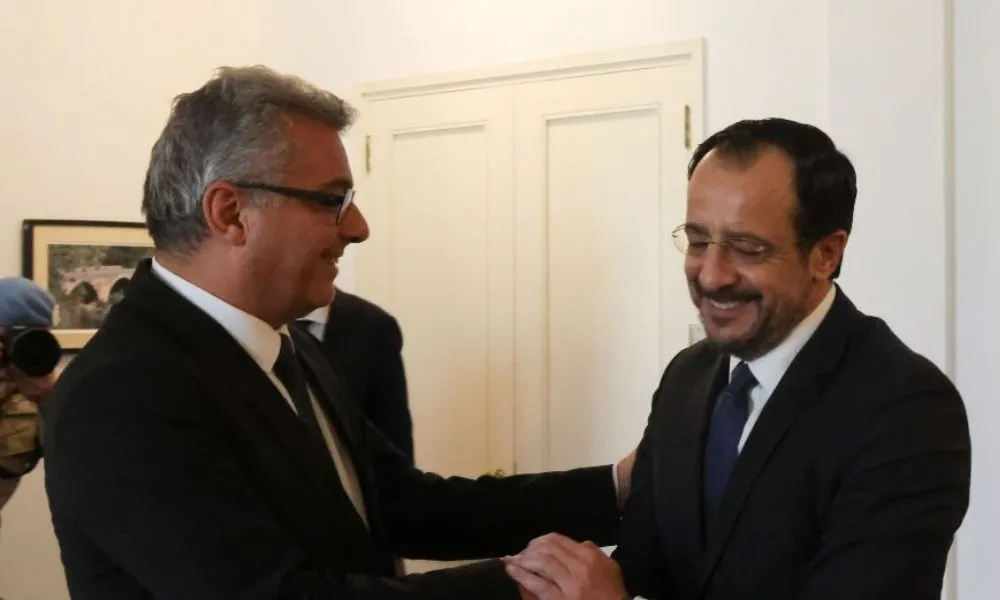
According to information obtained by Politis, the “Imagine” programme is not currently on the agenda of discussions between the two leaders, despite calls by UN Secretary‑General António Guterres for progress on confidence‑building measures. The same sources say that neither Nicos Christodoulides nor Tufan Erhürman has raised the issue during recent meetings in Nicosia.