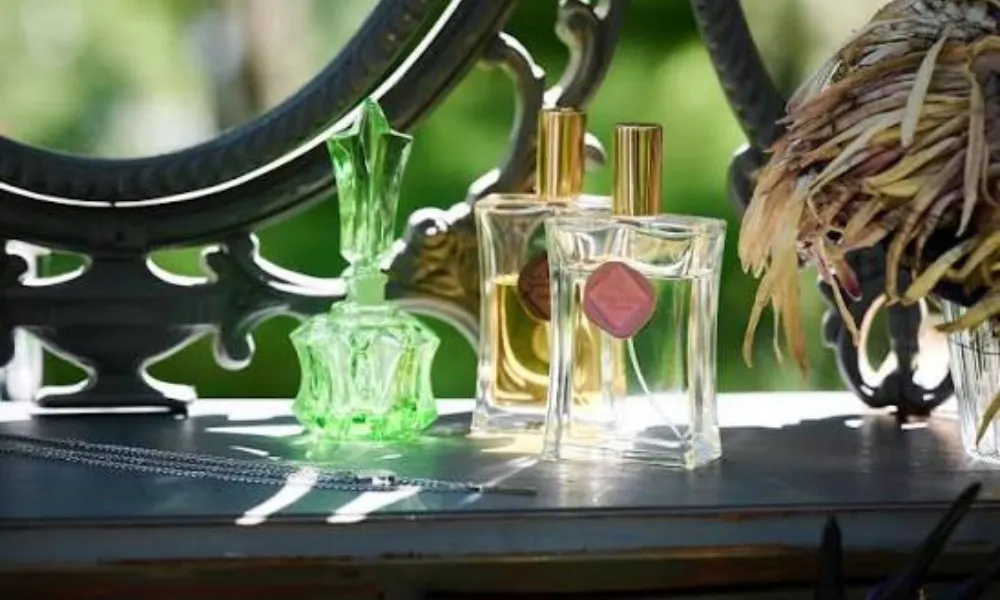

In a market crowded with brands that lead with story and packaging, Philio Hermann has built something deliberately quieter. The artist and perfumer founded Hermann, a niche perfume house based in Nicosia, in 2014, on a simple but uncompromising premise: the fragrance itself comes first, and everything else, candles, diffusers, even the brand's signature perfume jewellery, exists only to carry that scent into the world.
For Hermann, perfumery isn't one creative outlet among several. It's the language everything else is translated from. "I do not create 'products,'" she says. "I create olfactory compositions." That distinction, small as it sounds, shapes every decision the house makes, from what gets released to what gets quietly shelved as a concept that never earns its place as an object.
On finding scent as her language
Hermann is, at its heart, a niche, artisanal perfume house. Can you take us back to the moment when scent became your primary language of expression, rather than simply one element among many?
"There was a moment when I realised that scent could say what words and images could not. I had always worked visually and conceptually, but fragrance felt different. It was invisible, yet it entered people directly. It bypassed the explanation. At some point, I stopped treating perfume as one medium among many and began treating it as the core. Everything else became an extension of that invisible language."
On staying faithful to the formula
You describe perfumery as the core from which everything else flows, from candles and diffusers to perfume jewellery. How do you ensure that each extension remains faithful to the original olfactory philosophy?
"Everything begins with the formula. If the scent does not stand alone as a perfume, it does not become a candle or a diffuser. I do not create 'products.' I create olfactory compositions. The object, whether wax, glass, or jewellery, simply carries that composition into different spaces. The philosophy remains intact because the scent remains untouched."
On perfume as ritual
Your perfume jewellery transforms scent into something wearable and ritualistic. What drew you to this idea of fragrance as both object and experience?
"Perfume has always felt intimate to me. Jewellery is also intimate. Both sit close to the body. Perfume jewellery came from the desire to make scent visible without losing its mystery. It transforms fragrance into ritual. You choose it, you fill it, you wear it. It becomes almost ceremonial."
On Cyprus as creative ground
Cyprus is both your home and creative base. How does the island influence your approach to scent, whether through memory, landscape, rhythm or restraint?
"Cyprus gives me light and restraint. The island has intensity, heat, stone, salt, jasmine at night. But it also has silence. That balance shapes my compositions. I avoid excess. I allow space in my formulas. The landscape teaches you that minimalism can still be powerful."
On what comes first: scent or story
Many contemporary perfume brands rely heavily on storytelling or visual identity. For you, where does the scent itself sit in that hierarchy?
"Scent is not part of the hierarchy. It is the foundation. Storytelling and visual identity can support a perfume, but if the formula is weak, everything collapses. I would rather have a quiet bottle with a strong composition than the opposite."
On what "artisanal" really means
As an independent perfumer, what is one aspect of artisanal perfumery that you feel is often misunderstood by the wider audience?
"People often confuse artisanal with small. For me, artisanal means deliberate. It means fewer releases, more editing, more time. It means saying no. Independence allows that discipline."
On the quiet moments fragrance is made for
Ritual seems to play a quiet but important role in your work. How do you think about the daily moments in which your creations are meant to exist?
"I am interested in the small thresholds of the day, the moment before stepping out, the pause when you return home, the quiet minutes when you reset yourself. Fragrance lives beautifully in those transitions. It does not need to dominate the room. It needs to accompany you. For me, ritual is not performance. It is repetition. It is choosing to mark time gently, through scent."
On what surprises her most
Looking at how people engage with Hermann, what has surprised you most about the way your perfumes and scented objects are worn, used or interpreted?
"What surprises me most is how emotionally attached people become. They do not speak about notes. They speak about memory. About a person. About a moment. That reminds me that perfume is not decoration. It is emotional architecture."
On knowing when an idea is ready
Hermann feels intentionally focused rather than expansive. How do you decide when an idea deserves to become a product and when it should remain a concept?
"If an idea is only interesting visually, it remains a concept. If it holds olfactory depth and emotional weight, then it may become a product. I am comfortable not producing everything I imagine. Restraint protects identity."
On what she wants Hermann to represent
Looking ahead, what would you like Hermann to represent within the wider landscape of niche perfumery, both in Cyprus and beyond?
"I would like Hermann to represent thoughtful perfumery from Cyprus. Not loud. Not trend driven. But culturally rooted, emotionally intelligent, and technically precise. If it can stand internationally while remaining deeply local, then I will feel it has done its job."
About Hermann: Founded in 2014 by Philio Hermann, Hermann is a niche perfume house based in Nicosia, Cyprus, extending scent beyond the bottle through candles, diffusers and signature perfume jewellery.