Harper Orhon, whose father had been the first to be killed in Nicosia on the 20th of July 1974 at the beginning of the war, Edjvet Orhon, writes about his memories of the opening of the checkpoints in 2003…
Edjvet Orhon was in Nicosia and was the first to be killed on the 20th of July 1974, at the beginning of the war. He had been the teacher of my husband Zeki Erkut, at high school and he was highly respected and loved by the community. He was married to Mrs. Ozgul and they had two kids: Nilgun Orhon and Harper Orhon. Nilgun was about 12 years old when her father was killed and Harper, much younger…
Harper Orhon grew up as an orphan, his father killed in the war but both himself and his sister Nilgun Orhon chose the path of peace and reconciliation instead of hatred and enmity with Greek Cypriots. His sincere writing is exemplary always in search of truth…
Today I want to share with you something he wrote recently on the occasion of the 23rd anniversary of the opening of the checkpoints on 23 April 2003. This is what he wrote:
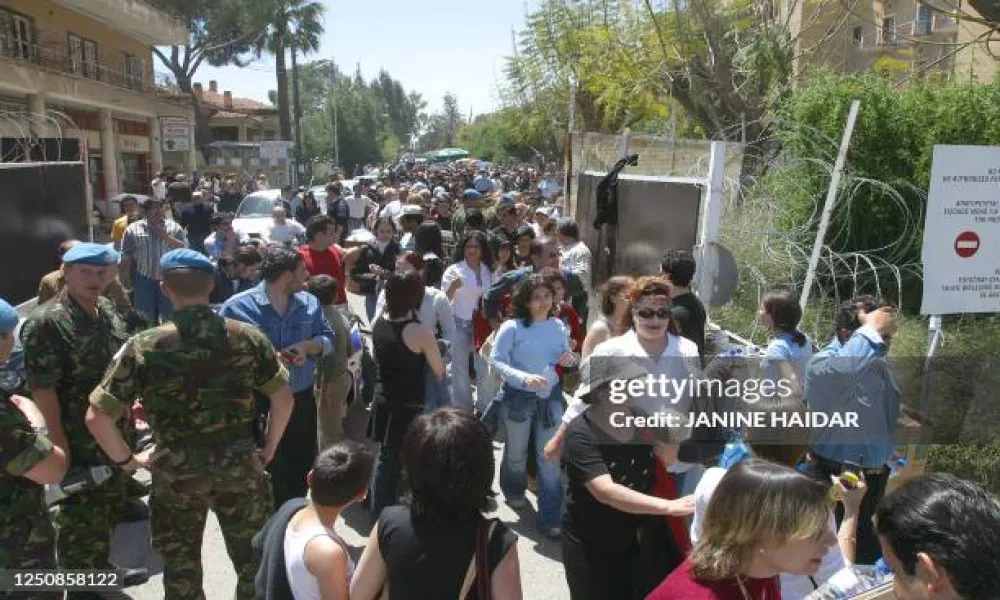
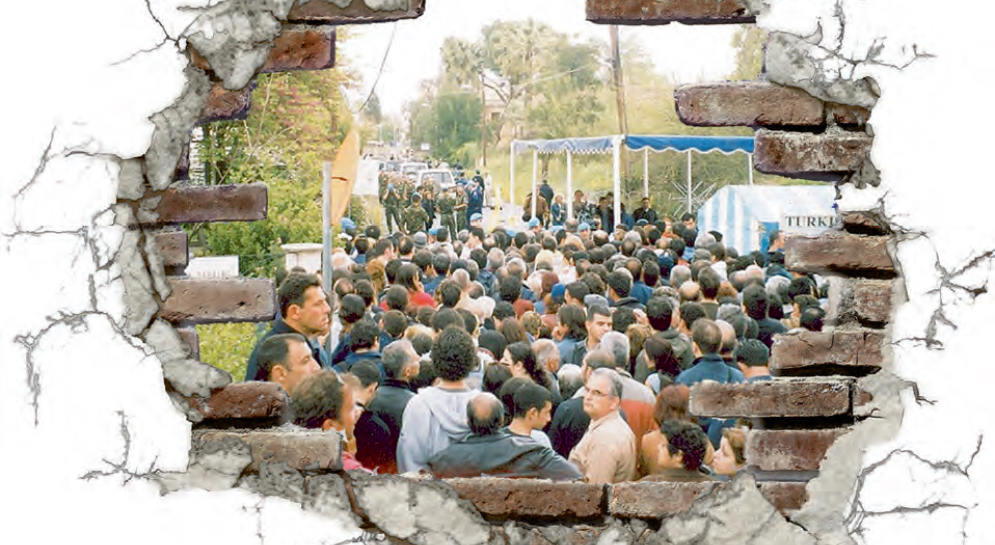
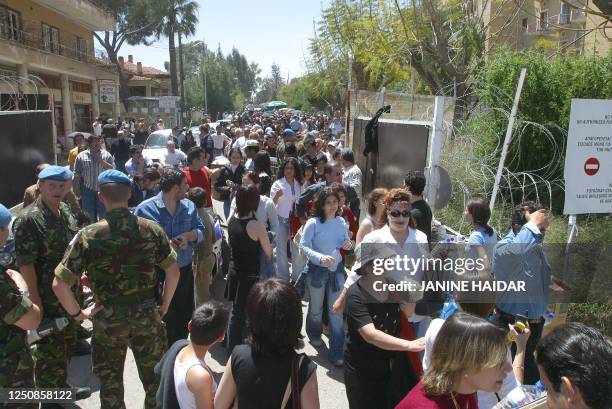
“All of a sudden they said the checkpoints are open and mutual crossings began. We did not understand what had happened that the “doors” opened. We watched the congestion at the checkpoint on TV…
We were living in a Greek Cypriot house, we did not build it, we did not put its bricks, neither did we paint it… The only thing we did was to replace the deteriorated wooden floors with marble slabs, that’s all. We did not plant the roses in the garden, neither the local tangerines nor the lemon tree that would give lemons throughout all seasons. We did not plant the verigo grapes on the arbour (talvar), the grapes covering the whole “talvar”, as hard as plums… All of this was ready… I only planted the apple tree. At an empty place in the garden… I had uprooted that apple tree that was drying out from the “Anayasa Restaurant” that had been burned during the war…”
The left behind the coffee in brikki
“So when the checkpoints opened, we were waiting at home to see whether the owners would come. Who were they, what kind of people were they? The owner of the house was a soldier, just like my father, had he also been killed in this senseless war? They had left, leaving their photographs behind, just as they had left their gas stove, their refrigerator, their clothes and even their memories… When we entered this house, the coffee in the “brikki” (djezve/coffeepot) was still in it. It had dried out and cracked, this coffee in the brikki… We knew the Greek Cypriots who left their memories behind in this house from their photographs… Just like my mother had left our house behind in Omorphita (Kaymaklı) 10 years ago back in 1963… We too were going to see our house in Omorphita, who knows what my mother was hearing from the echoes of the memories of the voices coming out of the walls. For instance, I had not been born in that house, I had no memories from our house in Kaymakli (Omorphita) – the only memories I had was eating the green almonds collected from the almond tree from that garden…
With the opening of the checkpoints, some people appeared, walking in the street with timid glances, as though they were guilty. We were looking at them and they were gazing at us… My mother said, “I guess they are Greek Cypriots…”
Our eyes locked and they found the courage to ask about their house, saying it is in the military zone: “How can we see it?”
My mother said, “We too, cannot enter there…”
They bowed their heads helplessly…”
A cardboard full of photos
“Next day, the owner of the neighbouring house came. Her house had been demolished and an apartment building was built where it had stood. She asked us about her house… Her eyes were full of tears… My mother invited her in, sat her down and my grandmother made coffee for her. After a little bit of conversation, my mother brought up a cardboard box from downstairs… It was really a heavy cardboard box.
We had been the first ones to come to this neighbourhood. My mother had collected all the photographs from the house at the back, from the side, wherever she could find any photos, she collected and kept them in this cardboard box.
My mother opened the box and by coincidence the first thing that was on top was the photo album of the Greek Cypriot woman we had invited to our house. She started crying. My mother was crying, my grandmother was crying, the Greek Cypriots were crying… The memories came alive with the once lost photographs in the consciousness of those who had had to flee…
My mother was asking them, “Can you give these photos to their owners?” They took the photos with joy, later on we would find out that they did find the owners of the photos… My mother was someone whose husband had been killed by Greek Cypriots…”
Reflections is a mirror
Taking courage from them, the owners of our house came too. The man had been retired from the Greek Cypriot Army as a major. We invited them in the house that they had got with love and admiration, they entered the house as though they were strangers. They sat in the armchair that they had left behind, maybe 29 years after, they felt their own warmth on those armchairs. They looked at the mirror they had left behind. They saw themselves in that mirror after 29 years. Maybe they had looked one last time at that mirror with the look they had on those days. Maybe they had a shiny skin without wrinkles. Now even the marks on their faces changed, their look has changed, maybe even the mirror did not recognize these faces looking at it. Or maybe they wanted to see the way they had looked in that mirror. This was not possible since our reflections had mixed in this mirror, on top of their reflections…
They looked at the photo of my father as a ranked soldier between two bronze candlesticks and roses, after the mirror. Who knows what the man thought. Maybe the same “mammou” (midwife) had helped him to come to earth, who had helped my father to come to earth… Maybe they waited at the same traffic lights, waiting for the green light to go and they could pass. Maybe shots from his unit had killed my father…”
A tray from Beirut
“First, they thanked for the photos. They were very grateful, many memories came alive with the album containing black and white photos. On the table in the middle of the room, there was a copper tray. The old woman kept looking at it. My grandmother asked her whether she had any memories with that tray. “Yes” she said, they had got it from Beirut with her husband. Just like my grandmother and her daughters got some presents with my grandfather… Actually, what parallel lives they led. Without being aware of each other. Not with friendship but with enmity… While they were leaving, my grandmother gave that tray to the woman. I don’t know what they thought of us…”
We were wiped out
“Now that house has also been demolished and in its stead an apartment block was built. The voices within the walls are gone, the invisible footsteps on the marbles are wiped out. The joyful laughter of children is gone.
23 years passed by since that day.
I look behind. We too do not exist in our own country. We do not have any shared memories in the eyes of those passing from the street, our smell is also gone from the streets. In my country now languages are spoken that I don’t know, faces and dressing I don’t know are walking over our memories. A “Hello” doesn’t come from a familiar voice. There are no longer any window shutters in green over the windows or familiar eyes looking behind them. The eyes full of love disappeared all of a sudden from the neighbourhoods where we were born and grew up in. Everything has been wiped out.
Greek Cypriots stole our memories and we stole theirs and then others stole those again. No, no, not stole but wiped out our memories with their languages and cultures, we were wiped out. It was said “multiculturalism” but we got lost in that. But 23 years ago we were so hopeful. Checkpoints opened in one night, so peace will come in one night we said. It didn’t happen for the past 23 years. 23 years ago remained like a faded writing in a faded piece of paper…
They too were wiped out together with longing and hope…”