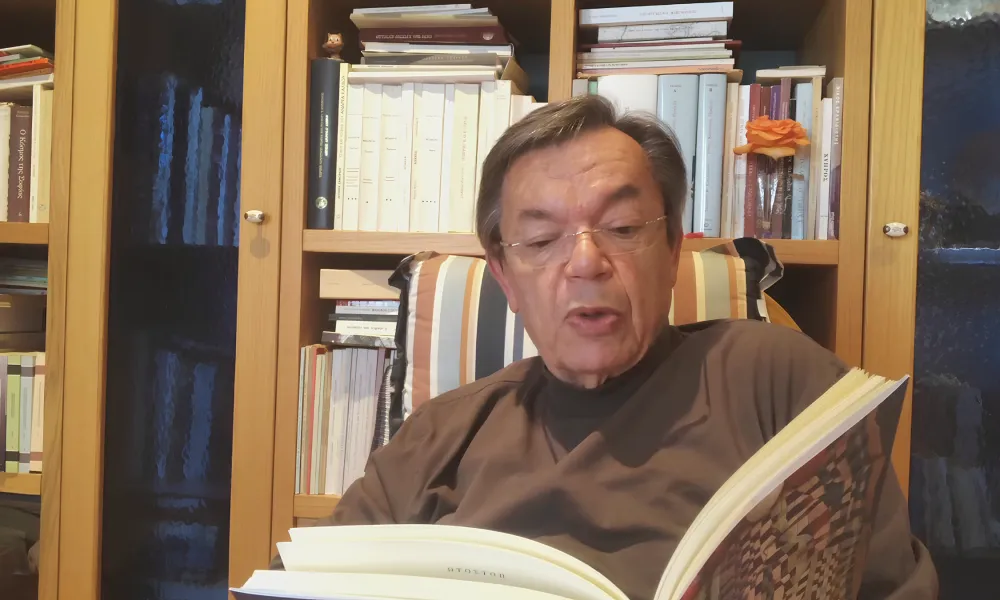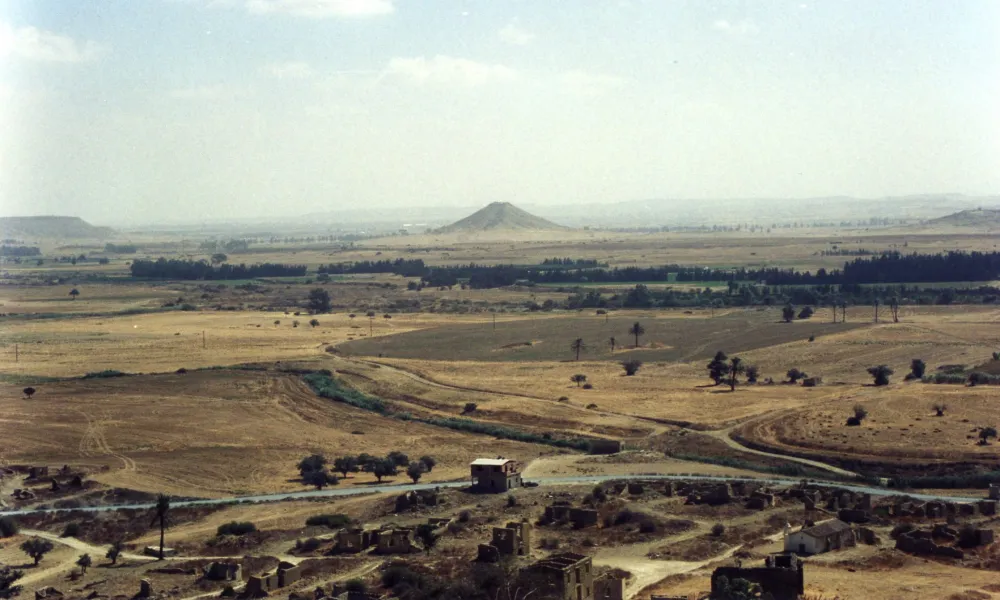
Our friend Ibrahim Aziz from Potamia village, remembers stories from Potamia and Louroudjina…
Ibrahim Aziz, from the 1960s until March 2015, could not visit Louroudjina… In his social media post of 14.3.2015, in summary, he wrote the following:
“My Louroudjina visit is now engraved on my heart… I could not visit the village for at least 58 years… All through those years, I had watched it from afar, from on top of the hills around it…
I had graduated from the Secondary School of Louroudjina and then moved on to the Nicosia Turkish Cypriot Lyceum to continue my studies. I graduated in 1956 from the Lyceum. I had gone to the Secondary School of Louroudjina by chance.
When I had graduated from our village elementary school in Potamia at the age of 12, my father was thinking hard about what to do with me. He wanted me to study but he had no financial means to do that. He had grown up as an orphan, his father had died when my father was only two and a half years old. He grew up next to his uncles from his mother’s side, grazing sheep, working as a builder in the village. His only richness was his family and his kids. Because he had grown up without a father, he didn’t want his children to miss out on anything.
He had nine kids, only one of them was a girl, the one older than me.
He never let his children go without food, without bread.
He never allowed his children to go barefoot.
Even if our shoes and clothes had been patched, we had them and they were always very clean. Our mother and father were loving and caring, with big hearts and generous… I went to London in May 1958. After the 58 generation of the left group members of AKEL became the target of the TMT leadership and its snipers.
Fazıl Onder (who had been a left activist of the times) had been shot and knifed from his back…
We did not compromise our ideals of the left. We found the way out on the way to London. From there, I went to university studies in Sofia. I came back to our homeland in 1965. After Kavazoghlou was ambushed as well… I did not leave my country since then. And I could not go and enter Louroudjina again… “The Pashas” and the guns prevented me… They even prevented me from visiting the grave of my elder brother in Louroudjina.
The memories of my secondary school years remained in my heart.
The pain of losing my brother in a car accident…
They were not wiped out…
Finally last Friday, I could visit Louroudjina. My friend Ismail Karabocek accompanied me. Thanks dear friend… My visit to Louroudjina is engraved in my heart…”
The story of Antrikko from Potamia
In another post on his social media on the 13th of November 2022 under the heading “Real stories and testimonies”, Ibrahim Aziz tells the story of Antrikko from Potamia… Ibrahim Aziz says:
“His nickname was Pashis (“Bashi”). Antrikko was known in Potamia with that nickname.
He was found heavily wounded on the side of the hill overlooking Louroudjina. On that particular day, because his father was sick, he had taken out the flock to graze. He was found unconscious, heavily wounded on the slope by coincidence. The ball had rolled down from the top of the hill down to the slope and when a youngster ran to get the ball, he had found Antrikko unconscious and in blood, he had called out everyone at the football field for help. The doctors had found that the knife wounds had been just one centimetre away from his heart and after a major surgery, would save his life.
On top of the hill was the football field of ATEOS (“Athletic Hellen-Turkish Sports Club”). This was a mixed club of Turkish Cypriots and Greek Cypriots. The founder of the club, Mr. Saffet was looking for a football field in the village. Because he could not find a place with a reasonable price, he said, “We will build the football field on top of the hill”. With this suggestion all the team players and the villagers started working. The top of the hill was flat and was wide and long enough to accommodate a football field… People started taking the tools from their homes to work there voluntarily in order to break up and clear bushes, stones, and rock formations there. It wasn’t so difficult to take out the bushes and clean up the big and small stones from top of the hill. Everyone had come with their guspos (pickaxes), spades and wheelbarrows and with excitement in their hearts in order to conquer the land that belonged to the state. The most difficult part was to break down the “havara” rocks and clean it up. For this you needed “sfina” and sledgehammers and there were those tools in the village. The villagers who used to cut “buri” and sand rocks on the hills of Agios Sozomenos would lend their tools to the youngsters or they would also participate in the clean up operation. In a short while, a wide area that would fit a football field was cleaned up entirely. Saffet measured up the boundaries of the field, iron stakes were driven in on the corners, cords were tied to these stakes and with gypsum powder, lines were drawn, goal posts were put up and the village got its own football filed. There were flat fields in the village. But apart from the expenses of rent, there were also problems about the timelines of rent.
As Mr. Saffet was giving his ordinary lesson on a Saturday night for the match that would take place the following day (Sunday), due to these difficulties he had suggested that we should build the football field on top of the filed. That was it! Decision was taken! We immediately began working with excitement and pleasure.
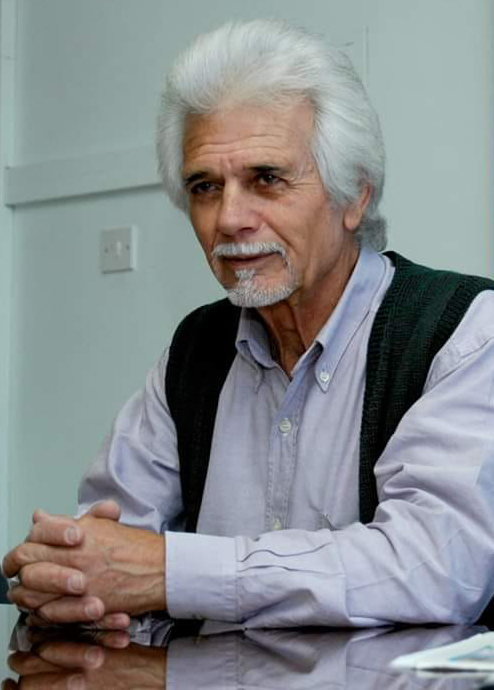
Ibrahim Aziz
Even though the wideness of the hill was sufficient to accommodate a football field, during the match, the ball would often roll down from both sides to the slopes. That day, this was what had happened. Antrikko was laying down unconsciously on the slope overlooking towards Louroudjina. He was almost dying. But it was not the time for him to die. When he woke up after the surgery in the operation room, he told what had happened. It was two persons who had ruthlessly and barbarously attacked his young body with knives. They had approached him while he was on the slope. They had assumed he was dead and left him there.
This was the time that such murders were taking place in our wounded homeland. It was the days of “One from you and one from us…” That is if a “Turk” or a “Greek” was killed somewhere else, a “Turk” or a “Greek” was killed in order to take revenge – these were the days of suffering as though from a brain disease… Thus, when Antrikko was attacked and even though he had not opened his eyes to speak to say what had happened, some stupid nationalist “Greeks” somewhere had made a plan to kill the “Turks” living in Potamia. According to this plan, a group of armed Greek Cypriots had come secretly near the village and had hidden in an orange garden on the edge of the village in order to kill everyone in the “Turkish” club of the village.
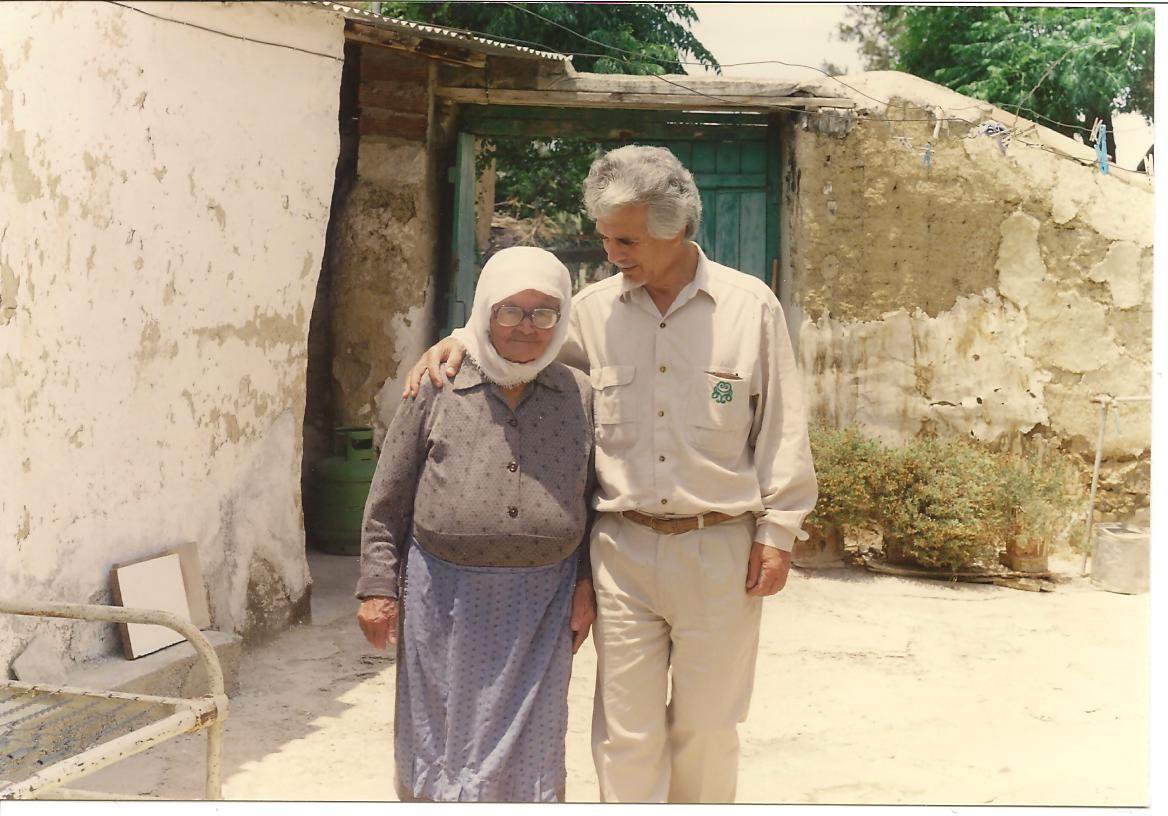
Ibrahim Aziz with his mother.jpg
Somehow news about the planned massacre reached the priest of the village. The village priest had always stood against killings in the village and he had found a way to reach out to the leaders of the armed group that he did not believe that the Turkish Cypriots of Potamia had taken part in the attempted murder of Antrikko and he had prevented the massacre of the “Turks” of the village in the club with machine guns.
Antrikko survived and spoke. He spoke about those who attacked him, they were living in Louroudjina, he knew them and he also gave their names…
On the one hand, we were living through the madness of “We need dead Turks in order to make our case known to the world”… And on the other hand, we were living through the stupidity of the saying “Turks are the obstacles on the cause of ENOSIS…”
And still we are living through the irrationality of not closing the wounds caused by this madness and stupidity, what a shame!”