
By Neuza de Oliveira *
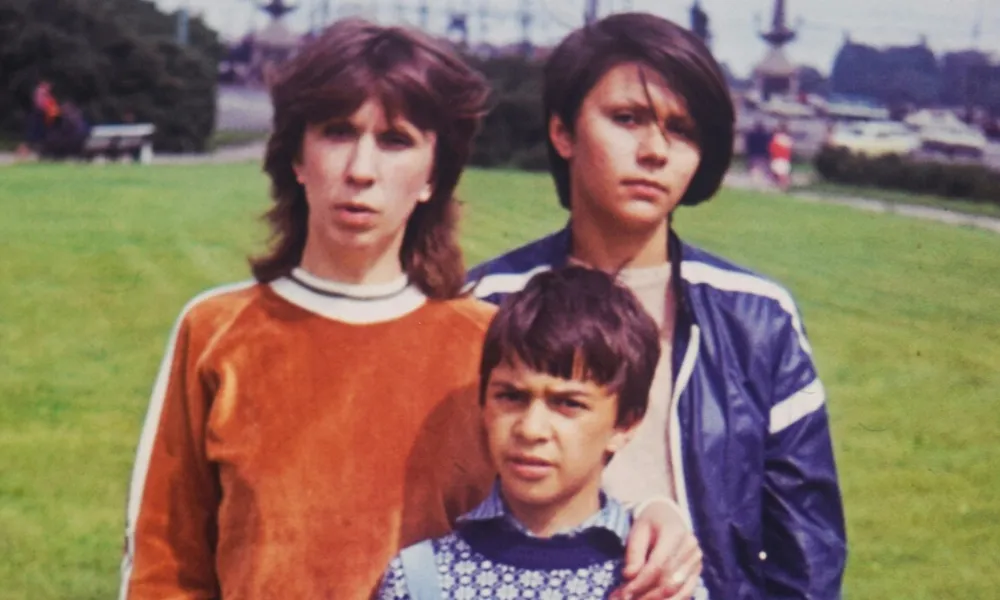
Play was free and unsupervised. We were told to go outside and play, find something to entertain ourselves with, and come back home when it got dark. Afternoons were spent riding our bikes until we got tired, showing up unplanned at a friend's house to hang out. Video games were an anticipated shared experience - all of us huddled over a single remote, eagerly waiting our turn, staring at our box TVs. Saturday mornings were slow, spent watching our favourite TV show with cereal or toast we prepared ourselves – we knew better than to bother our parents early in the morning. Modern parenting advice would call this neglect, but to those who lived it, it tasted of freedom and exploration. And unsurprisingly, parents were happier too.
Independence Milestones
Let's go back to your own childhood, to when you'd ride your bike to your friend's house, not having to rely on your mum to drive you. How old were you when you were able to do this? Chances are that if you grew up in the 80s, you could do this by age 7. Today's children aren't given the opportunity to go anywhere unsupervised until age 11 or 12, if they're lucky. Today we have so little trust in our communities and such little faith in our children that we deem them incapable of many of the things we were given the chance to do at the same age. So we coddle them, do things for them that they could be capable of learning to do themselves... and then complain of exhaustion and about our children taking over our lives. As Radiohead's song goes, "You do it to yourself, you do". I believe we desperately need to remind ourselves that as parents our job is to make ourselves redundant, to set-up our children with tools that will allow them to thrive without needing us at their beck-and-call.
The Age of Intensive Parenting
Parents are busier than ever. Women are working 300 more hours annually than was typical in the late 70s, and spending more time with their kids than our own parents did. European data shows that in 1965, the average mother spent 54 minutes a day looking after her children, which somewhat increased by the 80s, but from the 90s skyrocketed to reach an estimated 104 minutes per day in 2012. This also jumped for fathers who were estimated to spend 59 minutes a day with their children in 2012. So the time European children are spending with their parents has doubled since the mid-60s, except in France, which we’ll discuss later.
We have quite literally made our children the centres of our lives as parents, so it's no wonder they reflect the narcissistic traits we've encouraged. We plan our activities around their preferences and spend our limited free time shuttling them between scheduled events like a taxi service, believing constant stimulation will prepare them for future success. However, recent cohorts of university students reveal that, once faced with adult life, these young adults often lack basic life skills and the resilience to develop them, struggling with pressures they're unaccustomed to.

So why, after our heavy-duty financial and time investment into our children, are they failing to thrive when we launch them into independent living? Because we do EVERYTHING for them right up until the moment they leave our homes and then we smilingly throw them into the wilderness. We don't give them the opportunity to start doing things for themselves and learn independence whilst still safely under our roof, allowing for a manageable learning curve with less anxiety involved. We don't allow them little failures that they can learn from. We mandate that everyone is equally deserving of that sports day medal, just for participation, so they are unfamiliar with the harsh realities of occasional failure. They don't know how to deal with discomfort, with uncertainty, or with struggle because they rarely get the opportunity to. They end up lacking the resilience we never allowed them to build, which we then mock them for by labelling them 'snowflakes'. Each one of us contributed to building the society that created these beautiful, unique and delicate snowflakes.
Coddled young minds
This phenomenon is perfectly captured by Jonathan Haidt and Greg Lukianoff’s book ‘The Coddling of the American Mind’, in which they described a culture of ‘Safety-ism’, a society-wide, unhealthy parental obsession with the overprotection of children and young adults; even emotional safety is sacred. Under this new mode of thinking, parents overestimate the actual danger of activities, unrealistically fearing the worst consequences; for example, if children go to the park alone, they’ll either get run over crossing the street or get abducted by a predator. Parents today feel the need to shield their children from disagreements and uncomfortable feelings – we negotiate sharing with other children at the playground on their behalf, for example, to remove conflict and disappointment.
This safety-ism has led to children growing up more slowly. The expected markers for growing up – like going to the park without an adult, getting a driver's licence, developing romantic relationships, or getting a job – are happening later and later. Tasks as simple as grabbing a few groceries from the shop for mum, walking home alone after school, and, goodness forbid, arriving to an empty house for a little while are relegated to later years.
![]() Alone together online
Alone together online
Those born 1995–2012, who have typically grown up more sheltered, are seemingly very sensible young people, generally drinking less alcohol compared to the generations preceding them. But their risk aversion also means that they build fewer close friendships, have fewer meaningful romantic partnerships, and have less sex than we did at the same age. They're ultimately 'living' less. Reportedly, only 56% of Gen-Z had a romantic relationship in their teens, compared to 75% of Gen Xer. With fewer close friendships and limited romantic relationships, 80% of Gen-Z claim to have felt very lonely in the past year. In 1980s America, half of 17-year-olds used to meet up with their friends every day; in recent years, that has dropped to about 30%. Unlike our generation, they are spending more time alone, alone together on their screens... which is a loooong conversation all on its own.
Their general intolerance of psychological discomfort, a result of not being allowed exposure to uncomfortable feelings, makes them increasingly vulnerable to anxiety disorders. Intensive parenting has produced many advancements in our children's academic output, but look at the mental health outcomes of our teens and parents today, and tell me that the trade-off is worth it. Teen depression, anxiety rates (and suicides for boys and self-harm rates for girls) have all dramatically increased for this generation under the era of childhood and teen social media access and minimal outdoor play.

![]() Learning from the Dutch and French
Learning from the Dutch and French
Dutch children are consistently ranked as the happiest in the world by UNICEF reports. They are distinct in encouraging early independence, where children commonly cycle to parks and their friends’ houses independently, as we did back in the 70s and 80s; even young children explore playgrounds without parents hovering. Their family life has a predictable routine with family meals being a staple, providing children with comforting stability and plenty of connection time with their families. Dutch parents involve their children in decisions, making children feel heard, and they don’t shy away from awkward mutual conversations around topics like drugs and sex, so they are not overly emotionally sheltered either. Fewer academic pressures also mean they get to enjoy a less burdened childhood, with more emphasis on independence, respect and relationships.
When it comes to the happiest parents, the French seem to have the formula down, and their kids’ happiness isn’t that far behind the Dutch’s either. Remember how French parents haven’t joined the trend of time-intensive parenting relative to their European neighbours? They’re actually spending less time with their children in recent years than French parents did in 1965, which at the time was much higher than their European counterparts.
French parents have ample governmental support with childcare, including subsidised childcare and flexible school hours. They seem to have managed to balance child-free time with affectionate parenting and calmly asserted, strict boundaries, allowing French parents to maintain their own identities and preventing their lives from being consumed by parenting. They have a very strict framework with regard to meal times and bedtimes, for example, but are very permissive regarding how their children keep themselves entertained – children have decision-making power over their free time – no micromanaging in sight!
Like the Dutch, they encourage their children’s independence and teach their children the skill of waiting (for their meal to be ready, for their parents’ conversation to end before speaking) and discipline them with the same ease with which they look so effortlessly stylish. They don’t do parental guilt. They understand that a more relaxed way of life – that extends to long work lunches with wine and throwing the notion of ‘perfect’ parenting out the window – leads to greater happiness for all.
*Neuza de Oliveira, is a mother of two and a graduate student of Clinical Psychology in Cyprus, following her BSc from Goldsmiths, University of London. Driven by an endless curiosity about people and the stories that shape them, her writing explores the delicate balance between modern parenting, childhood resilience, and mental health.