
Ghislaine Maxwell, the longtime associate of Jeffrey Epstein who is serving a federal sentence for sex trafficking of minors and related offences, has renewed her request for a presidential pardon from Donald Trump, offering in return what her legal team describes as full and truthful testimony.
Maxwell invoked her Fifth Amendment right against self-incrimination during a deposition before the House Oversight Committee on Monday, declining to answer questions. However, her lawyers say that could change under one condition: clemency from the US president.
Offer of testimony
In a statement posted on X during the hearing, Maxwell’s attorney David Oscar Markus said his client is willing to provide a complete account if granted leniency.
“Ms Maxwell is prepared to speak fully and honestly if she is given clemency by President Trump,” Markus said. “Only she can provide the full picture. Some may not like what they hear, but the truth matters. For example, both President Trump and President Clinton are innocent of any wrongdoing.”
He added that “only Ms Maxwell can explain why, and the public deserves that explanation.”
Maxwell refused to answer questions posed by House Oversight Committee Chair James Comer, a Republican, as well as other members of the panel. Her lawyer cited a pending habeas corpus appeal, arguing that her conviction was based on what he described as a fundamentally unfair trial.
Trump under scrutiny
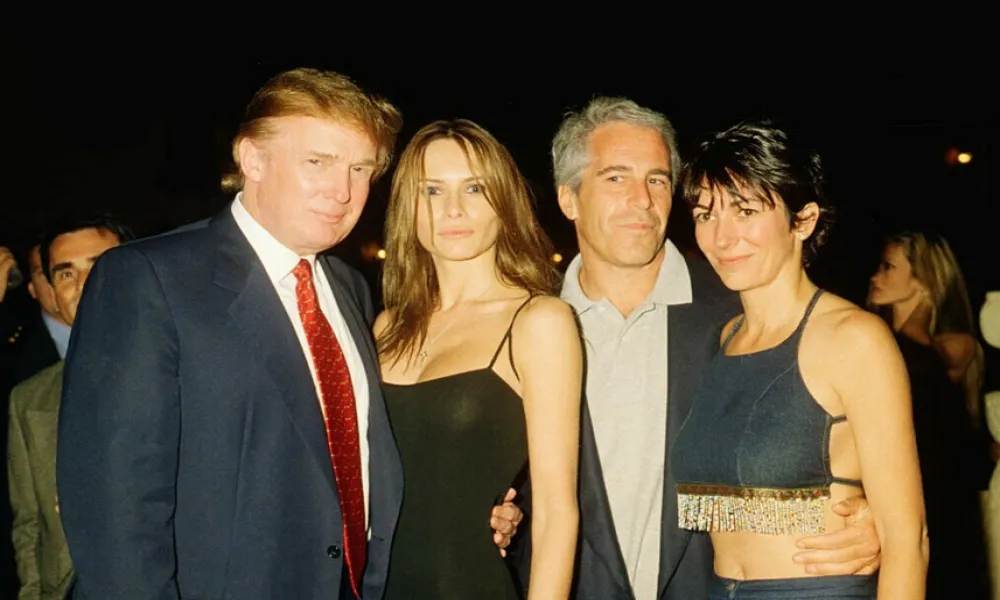
Trump has faced scrutiny over his documented past associations with Jeffrey Epstein and over the handling of the so-called “Epstein files” by the US Department of Justice. The president has denied ever visiting Epstein’s private island or engaging in any illegal conduct.
According to Maxwell’s legal team, Trump now has an opportunity to clear his name.
Under US law, the president has the authority to grant pardons for federal criminal convictions, meaning Trump could pardon Maxwell if he chose to do so. However, such a move, particularly amid ongoing political controversy surrounding the Epstein case, would likely prove highly contentious.
The White House has not yet responded to Maxwell’s renewed request.
Trump’s past remarks
Trump has previously left open the possibility of a pardon. During a meeting with UK Prime Minister Keir Starmer in July, he told reporters he had “the right” to pardon Maxwell, but added that it was “not something I have thought about.”
“I have the right to give her a pardon, but nobody has asked me,” he said at the time.
In 2020, following Maxwell’s arrest, Trump told reporters he had met her “many times over the years” and added, “I wish her well, whatever it is.” In a later interview with Axios, he repeated: “I wish her well. I would wish you well. I would wish a lot of people well. Good luck. Let them prove somebody was guilty.”
When pressed on why he would wish well someone charged with sex trafficking of minors, Trump responded: “First of all, I don’t know that.”
In October, after the Supreme Court declined to hear Maxwell’s appeal, Trump said he would “have to look at” any pardon request and “talk to the Justice Department.” In November, he said he had not thought about it “for months,” adding: “I don’t rule it in or out. I’m not thinking about it at all.”
Maxwell was transferred in August from a federal prison in Florida to a minimum-security women’s facility in Texas, a move that drew criticism from Democrats who alleged preferential treatment.
Her latest offer places the possibility of a presidential pardon back at the centre of an already politically charged case.