
Just days before the two semi-finals and the grand final of the 70th Eurovision Song Contest, the head of the Cypriot delegation, Evie Papamichael, and Cyprus Broadcasting Corporation (CyBC) director general Thanasis Tsokos speak to Politis about the model used to select Cyprus’s entry, the real cost of participation and the political undercurrents testing the limits of the institution.
Big money
The main reason Cyprus has moved in recent years to direct assignment of its Eurovision entry to songwriters – following proposals from record labels and evaluation by a CyBC artistic committee – rather than holding an open competition and national final, is primarily financial, explains Papamichael.
CyBC experimented in the past with open competitions, but the demands of modern Eurovision have sent production costs soaring. “Production expenses are so high that unfortunately CyBC’s budget cannot sustain them,” she says. Behind a three-minute televised act now lies an investment of many tens of thousands of euros.
According to Papamichael, staging alone requires sums exceeding €150,000, funds that largely come from collaborating Greek record labels. “You cannot go into a small studio like CyBC’s and produce something on a large scale,” she notes.
A partnership of expertise
For these reasons, Cyprus has in recent years effectively shifted a large part of the selection process to major Greek record labels. Tsokos describes the model as a “partnership of expertise”.
CyBC, he says, brings decades of experience in the contest, while the labels provide access to the contemporary music market and production know-how. “CyBC puts forward the brand, and an initial selection is made by the major Greek record companies,” he explains.
The labels propose artists’ names and the final choice is made by an CyBC committee. The committee consists of five members, whose names are published after the contest. The selection process remains closed, something Tsokos says also serves to protect the artists themselves.
“There is a desire for names not to be made public, so that the impression is not created that ‘CyBC rejected a particular artist’,” he explains. This is why names are released only after the event.
CyBC acknowledges that Eurovision has become an extremely expensive television “hobby” that small countries struggle to support on their own.
The ‘formula’
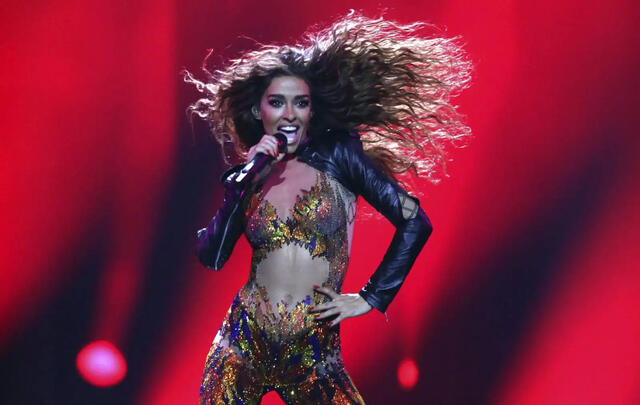
In recent years, Cyprus has developed a fairly distinct identity in the contest. Contemporary pop production, strong visual staging and songs with a clear commercial orientation have led many to believe that, following Eleni Foureira’s success with ‘Fuego’, Cyprus is trying to replicate a winning “formula”.
Papamichael rejects this interpretation. “We did not follow any formula,” she says, insisting that each year is assessed separately, depending on the artist and the song considered most suitable.
Tsokos, for his part, implicitly acknowledges that the contest now operates within a very specific musical framework. “Our goal is to present a song worthy of the other entries and to achieve a strong result in the voting,” he says.
He also accepts that many Eurovision songs now function more as “instant hits” rather than enduring successes, a debate that resurfaces every year after the contest. “I agree,” he says when the issue is raised, adding that “it is the responsibility of the record label, the artist and CyBC to ensure that the song is embraced even after the contest”.
Optimistic about ‘Jalla’
As for this year’s entry, both appear cautiously optimistic. Papamichael speaks of “a great deal of work” carried out over recent months, while avoiding predictions. “Eurovision is unpredictable,” she repeats.
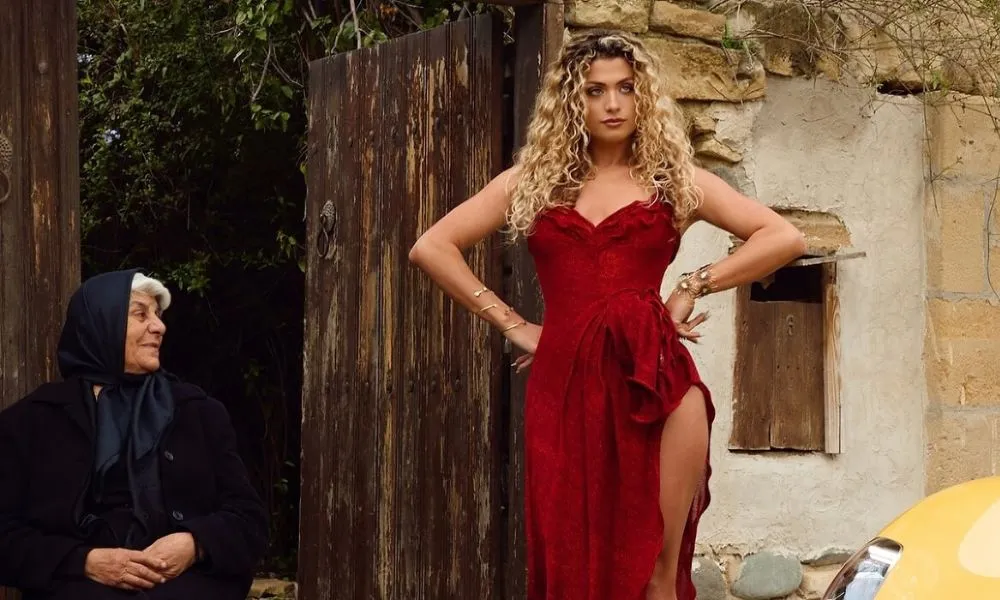
Tsokos highlights the presence of this year’s representative, Antigoni Buxton, and the “passion” she brings to the entire delegation. “I rule nothing out,” he says, leaving open even the possibility of a win.
The question may sound theoretical, but it is debated every year in conversations and gatherings, whether among Eurovision fans or not: could Cyprus host Eurovision? Both answer in the affirmative.
Papamichael believes Limassol would be the most suitable option, mainly because of hotel infrastructure, recalling that the Junior Eurovision Song Contest was successfully hosted in 2008 at the Spyros Kyprianou Arena in Limassol. Tsokos also expresses confidence that Cyprus now has both the infrastructure and the expertise to host such an event.
The political shadow
If the artistic dimension is one level of Eurovision, the other is undoubtedly political. This year’s contest takes place in an exceptionally charged climate due to Israel’s participation and the reactions recorded across several European countries.
Five countries decided to boycott this year’s contest for this reason, while more than 1,000 artists have signed an open letter calling for a boycott of Eurovision 2026, protesting Israel’s participation. In their letter to the EBU, they stressed that for a third consecutive year “Israel is welcomed on stage despite the ongoing genocide in Gaza, while Russia remains excluded for its illegal invasion of Ukraine”.

Tsokos is unequivocal. “Eurovision is a musical and cultural contest, not a political arena,” he says. He adds that the issue was discussed at EBU level and among directors general of public broadcasters, where an “overwhelming majority” supported Israel’s participation.
Regarding the countries that withdrew this year in protest against Israel’s participation – Iceland, Ireland, Spain, Slovenia and the Netherlands – Tsokos believes these were purely symbolic gestures, arguing that such actions do nothing to benefit the people of Gaza. He expresses hope that they will return to the contest and notes that Cyprus acted correctly by not entering what he describes as a “political adventure”.
He also cites Turkey’s participation as an example, saying that “the first country that should have an issue with Turkey is Cyprus”, in an attempt to explain why he considers it dangerous to bring national and geopolitical conflicts into the contest.
CyBC’s position, as he articulates it, is clear and centres on protecting Eurovision as a “brand of unity and entertainment”, far removed from political confrontation.