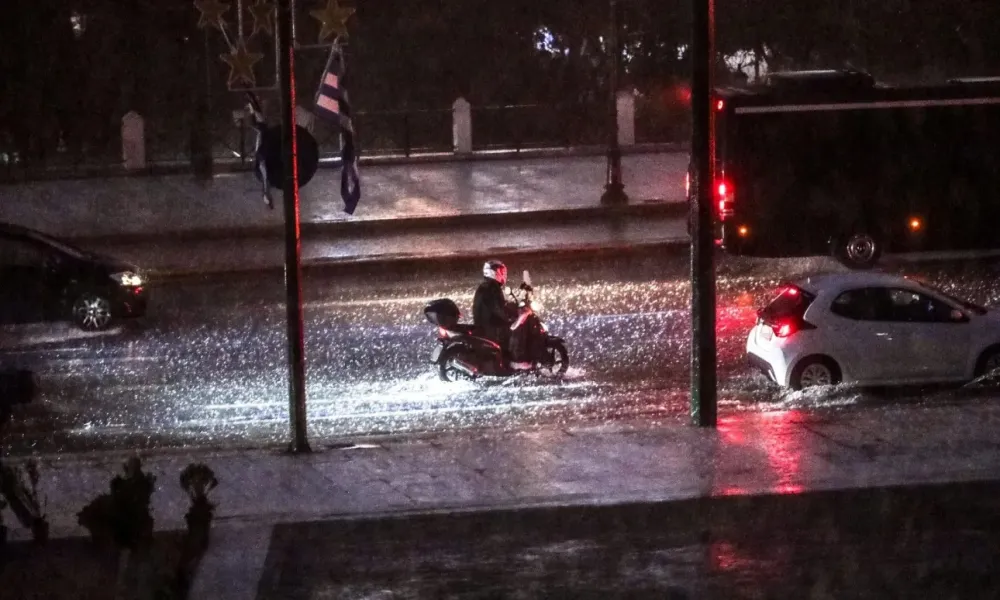
The naming of severe weather events has become familiar to the public in recent years. So far this season, named storms Adel and Byron have swept through the region, causing disruption before moving on. The question now is: what comes next?
How named storms are decided
Since 2021, the Hellenic National Meteorological Service, in cooperation with the Meteorological Services of Cyprus and Israel, has operated as the Eastern Mediterranean Group, responsible for naming named severe weather systems expected to produce significant impacts during both the cold and warm seasons.
The group coordinates closely, holding weekly or ad hoc meetings to assess forecast data from numerical weather models and observational sources. When a system is expected to bring particularly intense phenomena such as heavy rainfall, strong winds or storms, a name is jointly agreed upon.
If a storm has already been named by another regional group, such as the Central Mediterranean Group, that name must be retained if the system later affects the Eastern Mediterranean.
Why storms are named
The practice of naming storms serves a clear public purpose. By assigning names, meteorological services aim to raise public awareness through traditional media and social platforms, helping citizens better recognise and prepare for potentially dangerous conditions.
The system also supports emergency services by improving coordination and communication around severe weather risks, ultimately helping to protect lives and property.
The idea of naming storms in Europe dates back to 1995, when a group of weather forecasters from several national meteorological services began working towards a shared framework for communicating extreme weather risks. This initiative later became part of EUMETNET, the network of European national meteorological services.
Europe was divided into regional groups based on shared geographical and meteorological characteristics, allowing for consistent naming practices across borders.
The list of names for 2025-2026
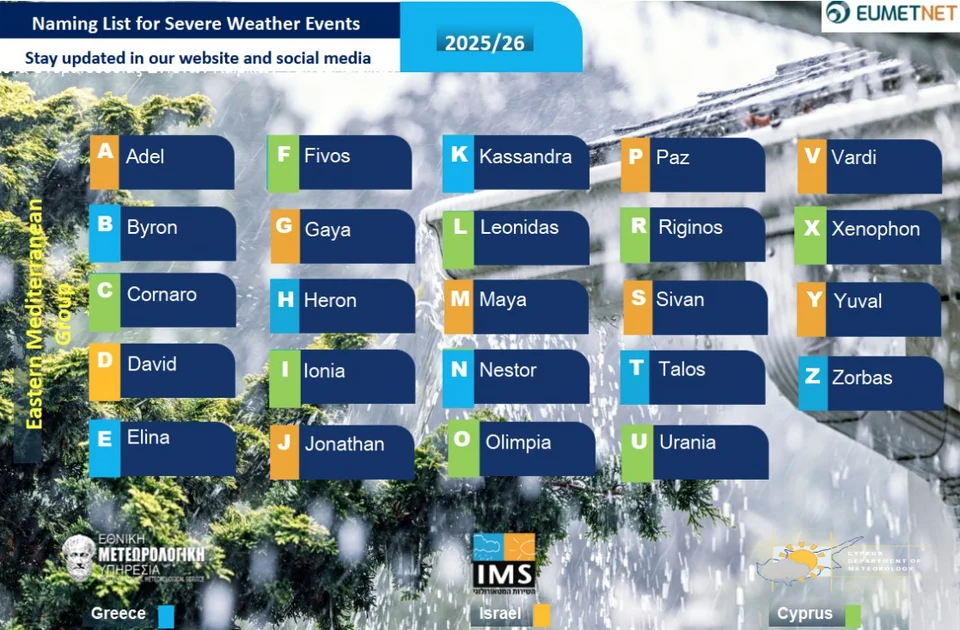
For the period October 2025 to September 2026, the Eastern Mediterranean Group has compiled the following list of names, to be used in alphabetical order. The names reflect the linguistic traditions of Greece, Cyprus and Israel and are written in Latin characters:
Adel, Byron, Cornaro, David, Elina, Fivos, Gaya, Heron, Ionia, Jonathan, Kassandra, Leonidas, Maya, Nestor, Olimpia, Paz, Riginos, Sivan, Talos, Urania, Vardi, Xenophon, Yuval, Zorbas.
With Byron now past, the next named storm to affect the region will be Cornaro, should conditions meet the criteria for naming.
Source: EUMETNET