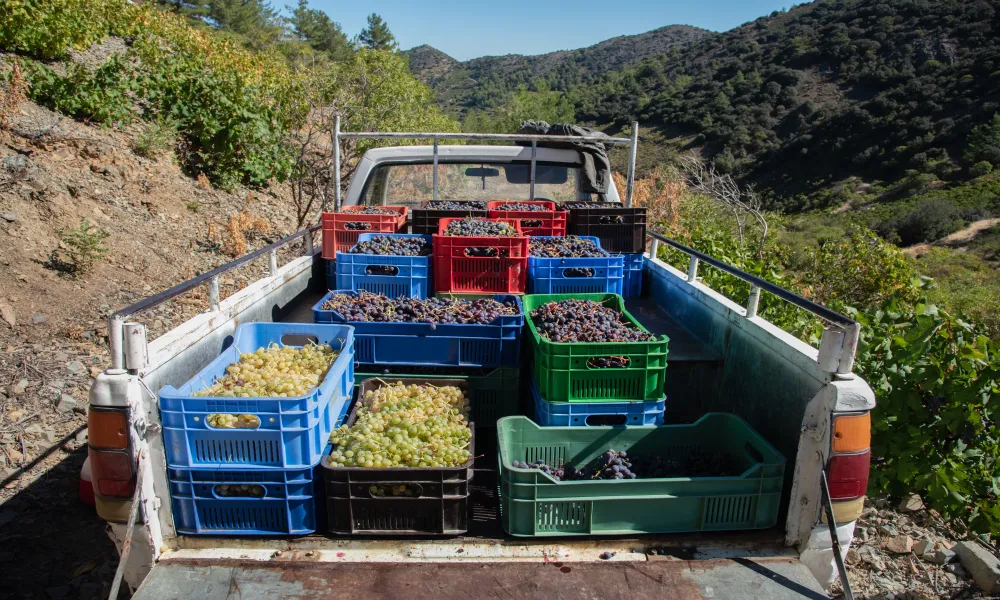
Vineyards, olive groves and long-standing cultivations were burned within hours, leaving terraces and blackened trunks as reminders of a difficult year for communities whose livelihoods depend on the land. After the assessment of the damage, attention is now turning to what this means for the future of Cyprus’s viticulture and winemaking.
Fire damage and prolonged drought
According to Dr Georgios Neophytou, Head of the Viticulture and Oenology Section at the Department of Agriculture, approximately 3,000 decares of vineyards were destroyed this year, a significant portion of them within grape-producing zones of the Limassol mountains. Cyprus’s total vineyard area stands at around 70,000 decares, so the loss is not expected to dramatically affect annual production, which typically ranges between 6 and 7.5 million litres. For families whose income and identity are tied to their vineyards, however, the impact extends beyond economic terms.
Industry figures note that the biggest challenge of recent years has not been fire alone but drought. Winemaker Sofoklis Vlassides, whose vineyards are located in Koilani, said that although this year’s production may be slightly higher than last year’s, it remains well below normal levels due to three consecutive years of low rainfall.
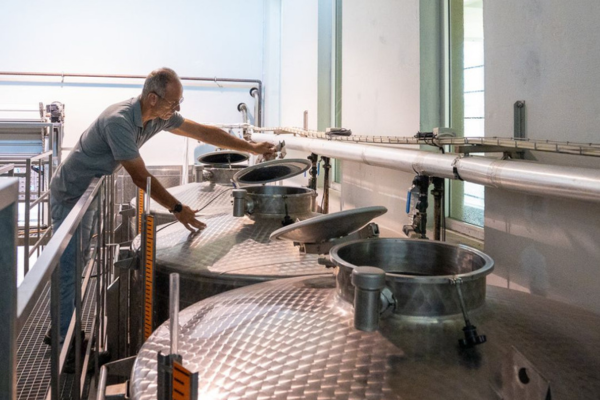
International statistics reflect a similar global pattern. For a third consecutive year, the 2025 supply of wine grapes was significantly below average worldwide. France recorded its lowest harvest since 1957, and Spain saw a 30-year low. Despite this, wine production increased slightly in several countries, including Cyprus, offering limited relief after three difficult years.
Support measures for affected growers
The Ministry of Agriculture has activated a support scheme for affected regions, offering compensation for income loss and covering up to 80 percent of replanting costs for fire-damaged vineyards. Dr Neophytou noted that vines can recover and re-establish, as they are a dry-farming crop adapted to Cyprus’s climate. The long-term challenge, he stressed, is the future of the vineyard landscape at a time when fewer young people are choosing agricultural work. Beyond financial support, he highlighted the need for incentives that can help people return to the land in both economic and social terms.
Cypriot wine on an upward trajectory
Consumption of Cypriot wine has been rising steadily over the past decade. Vlassides noted that local consumers increasingly choose domestic labels and that tourists visiting wine regions now seek authentic experiences that include learning about production methods. Wine tourism has grown significantly in recent years.
He estimated that roughly 50 percent of wine bottles sold in supermarkets come from local producers. Cyprus produces between 6 and 7 million litres of bottled wine annually, while total wine consumption (restaurants, hotels, supermarkets and other outlets) ranges between 15 and 20 million litres.
Despite the challenges, Vlasides said that vineyards can recover with proper care: vines regenerate over time, provided there is consistent maintenance. He added that the region’s producers may view this period as an opportunity to expand plantings to strengthen the local viticultural landscape.

Exports remain low, at around 4 to 5 percent of production. According to Vlassides, Cyprus’s production capacity does not allow for a significantly larger international presence: without more vineyards, he warned, the market may reach its limit. He expressed concern that in ten years the island might not be able to meet its own domestic demand.
The evolution of Cypriot winemaking
Cypriot wine is undergoing a phase of steady improvement. Dr Neophytou explained that the industry has transitioned from four large industrial wineries of the 1970s and 1980s to today’s landscape of numerous small, family-run wineries. This shift has led to major gains in both quantity and quality.
Vlassides described the growth of small wineries as a gradual process: early stages resembled infancy, requiring years for producers to learn proper winemaking techniques and additional years to develop wines with distinct character and value. He noted that this evolution is ongoing, with new wineries and new wines continually enriching the sector.
This article is based on reporting published in Politis newspaper.