By Petros Zarounas
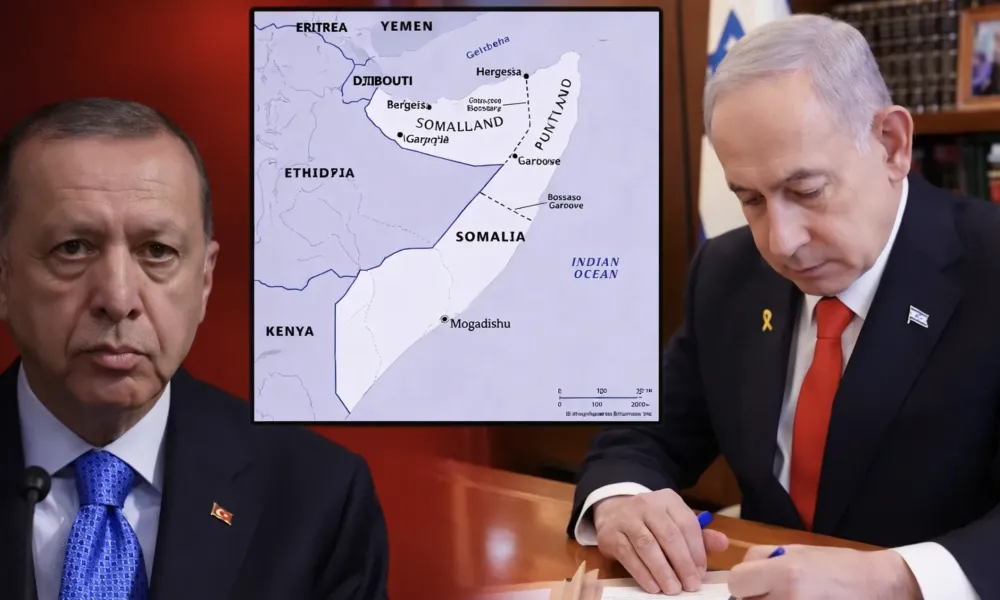
The recognition of secessionist Somaliland by Israel further intensifies the geostrategic competition between Turkey and Israel. A rivalry encorporating Ajerbaijan, Cyprus, Syria, Lebanon, Gaza, the Persian Gulf and pertinent to this argument, the Horn of Africa, where Somaliland lies.
This is an Israeli strategic move, aimed at dealing with the Huthi threat and protecting international shipping in the Bam El Madep strait on the one hand and on the other, balancing out the Turkish political, financial and military presence in Somalia.
Ankara's Somalian involvement is part of a wider plan to extend influence across the African continent and more specifically, creating a missile test site and a space centre, by utilising the fact that the coutry lies on the equator, a geographic location which facilitates such activities.
Israeli's action has caused backlash from international organisations such as the EU, the African Union, the Arab League and the Islamic Conference. The strongest reaction came from countries that are directly affected, such as Somalia, Turkey, Egypt, Djibouti and Saudi Arabia.
The issue was discussed at Security Council level, which took no concrete action, but 14 out of 15 member states condemned Israel. It was also brought up during the Netanyahu-Trump meeting in Florida. The United States are sticking with their 'one Somalia' policy for the time being, in spite of several decision making players inside the country, supporting a change in course.
This new development has an impact on the Cyprus issue, as it turns from part of Greco-Turkish rivalry to a gradual Turkey-Israel geopolitical competition. By selling Barak MX missiles to the Republic of Cyprus and their subsequent deployment to the island, Cyprus air defences essentially become an extension of the Israeli ones, given the powerful radar system that comes with the missiles and its connection with Israeli systems.
The Israel-Cyprus energy connection is also on the way, with the implementation of the GSI system, part of which will connect the two countries. Beyond that, a natural gas pipeline construction is also taking place, connecting the Energean findings in the Israeli EEZ with the Cyfield energy infrastructure at Vassiliko. All this is taking place with the Aphrodite deposits remaining hostage to Israel due to the Issay pending issue, as it forms an extension of Aphrodite in the Israeli EEZ.
The recent Fidan statements on freezing the Cyprus settlement negotiations and focusing on cooperation in the fields of tourism and energy were very much within this framework. In addition, Holquin's remarks on postponing the multilateral conference, post her Turkish foreign minister meeting, are indicative of Turkish intentions. Instead of claiming rights throughout Cyprus following a confederal solution,, Turkey now seems to be turning its eye towards maintaining the status quo and cementing it through a series of relevant confidence building measures.
Petros Zarounas is an international relations analyst and an ALMA MP candidate in Larnaca.