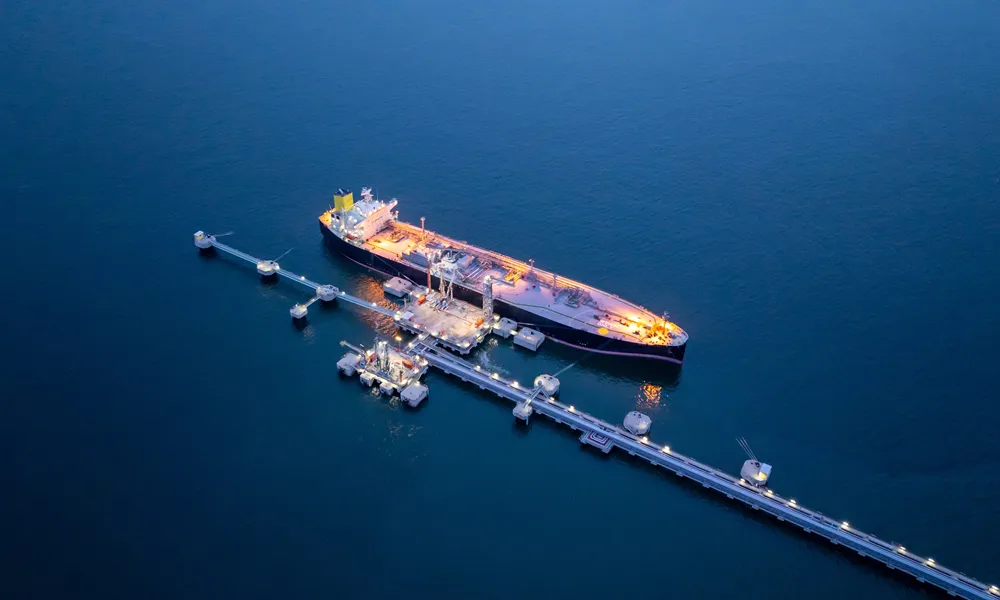
A project declared “urgent” by the cabinet, a mooring facility and two subsea LPG pipelines off Zygi in the Vasiliko area, has suffered significant delays and cost escalations, according to a special report by the Audit Office. Auditor General Andreas Papaconstantinou calls it a textbook case of the state’s inability to deliver a critical development on time and within budget.
The special report, titled 'Audit of the contract award procedures for the construction of a mooring facility and installation of two subsea LPG pipelines in the Zygi (Vasiliko) port area,' reviews the Cyprus Ports Authority (CPA/ALK) as the contracting entity. While acknowledging the project’s particular complexities, the Audit Office finds:
-
Years of drift before “urgency”: Initial discussions began in 2015. The cabinet formally decided to proceed on 27 October 2021, classifying the project as urgent. The contract was finally signed in June 2024 with completion slated for August 2025.
-
92% prep, 8% execution: Only about 10 of 120 months were actual implementation. “The rest was consumed by discussions and preparation,” the auditor general notes.
Tender changes and competition concerns
After an 18-month gap between commissioning the tender documents and publication, material changes were made after the call went out:
-
Contract duration doubled from five to ten months.
-
Estimated cost revised up by 12.2% (from €4.1m + VAT to €4.6m + VAT), just 11 days before the submission deadline.
The Audit Office warns these late shifts may have deterred bidders. Only two offers were ultimately submitted, both with grounds for rejection, according to the report, yet the tender was not cancelled and reissued. Continuous amendments (six circulars) and three deadline extensions (total +63 days, from 3 March to 5 May 2023) point to “insufficient preparation,” the report adds.
Implementation status
Ten months after works began, when the project should have been finished, payments stood at roughly 50% of the net contract value. After the contractual completion date (2 August 2025), the CPA instructed a route change for the pipelines without prior approval from the Central Committee for Changes and Claims (KEAA), implying significant time impacts. The project now proceeds with an open-ended time and cost horizon, the audit says.
Under the contract, the cost is already 28.7% higher than the original estimate and 14.7% higher than the final pre-award estimate. The auditor expects further increases due to late completion and the pipeline re-routing.
The review was triggered by a complaint from an unsuccessful economic operator in tender 4/2023. Beyond procurement compliance from call to award, the Audit Office also examined potential construction delays given the project’s ongoing status.
What the Ports Authority says
In its response, the Cyprus Ports Authority argues that, due to the project’s specialised nature and urgent need, it proceeded with accelerated procedures for design, tender and execution. It acknowledges:
-
Contract time doubled (5 → 10 months) as necessary for successful delivery despite the urgency label.
-
Estimated value raised and bid deadlines extended to address numerous clarifications and secure competition under difficult market conditions (pandemic and geopolitical shock).
The CPA says it has since raised bid bond amounts, increased daily delay damages, and capped any contractor bonus, while insisting all decisions complied with internal procedures and applicable rules. It attributes delays primarily to project complexity and exogenous factors, stressing the project’s significance for energy policy and its commitment to safe, successful completion despite setbacks.
Liquefied petroleum gas (LPG) is a hydrocarbon mix, mainly propane and butane. It is produced during natural gas and oil extraction and through oil refining. LPG is gaseous at ambient conditions but is liquefied by modest pressurisation for easier storage and transport. Naturally odourless, it is odorised so leaks are detectable. Common uses include autogas and bottled gas for industrial, commercial and household needs. LPG is not the same as natural gas (mostly methane) and not LNG (liquefied natural gas).